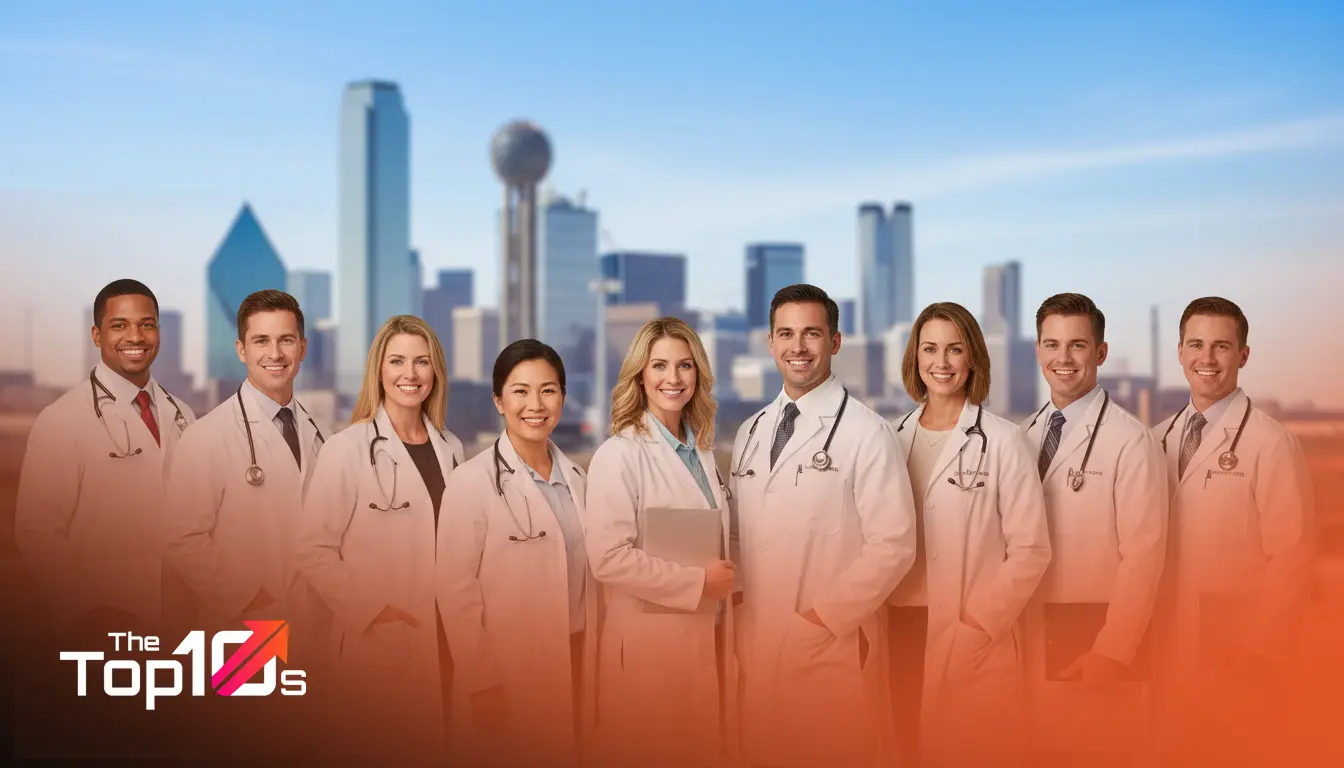
Ever stood in the cereal aisle, completely paralyzed by the sheer number of choices? Now, imagine that feeling, but instead of choosing between cornflakes and bran, you’re trying to make a decision about your health. That is what hunting for the best doctors in Dallas often feels like. We live in a city with a massive medical district, world-class teaching hospitals, and thousands of private practices. It’s a blessing, sure, but it’s also overwhelming.
You aren’t just looking for a medical degree on a wall. You want someone who listens before they type, someone who sees you as a person rather than a chart number, and frankly, someone who knows their stuff inside and out. Whether you are new to the Metroplex or just tired of feeling unheard by your current provider, you need a starting point.
This isn’t just a random list. We have analyzed patient sentiment, clinical expertise, and peer recognition to highlight top-rated physicians in Dallas who are setting the standard for care right now. Let’s cut through the noise and find the right partner for your health.
🚀 Quick Takeaways
- Credentials are just the baseline: Board certification is non-negotiable, but bedside manner is what keeps patients coming back.
- Location matters in DFW: Dallas traffic is real. A great doctor 45 minutes away might not be sustainable for chronic care.
- Hospital affiliation counts: Doctors attached to major systems like UT Southwestern or Baylor Scott & White often have better access to advanced technology.
- Specialization is key: General practitioners are vital, but knowing when to see a specialist saves time and ensures accurate diagnosis.
How We Identified These Medical Leaders
Creating a list of medical specialists in Dallas requires more than a quick Google search. We looked for patterns that signal genuine excellence rather than just good marketing. High ratings are one thing, but we prioritized consistency over a few years.
Here is the criteria framework we used:
- Peer Recognition: Do other doctors trust this person with their own families?
- Patient Retention: Are people sticking with this provider for the long haul?
- Technological Adoption: Is the practice stuck in 1995, or are they utilizing modern diagnostics?
- Wait Times vs. Face Time: We looked for the balance between administrative efficiency and the actual time spent with the patient.
List of 10 Best Doctors in Dallas
| SNO | Name | Best For |
|---|---|---|
| 1 | Dr. Rod J. Rohrich | Patients seeking high-complexity rhinoplasty or restorative procedures who want a surgeon with decades of academic and clinical leadership. |
| 2 | Dr. David Winter | Adults who want a primary care physician with a deep network of specialist referrals and a focus on longevity. |
| 3 | Dr. Christopher Dreiling | Families looking for a long-term partner in their child’s development, from newborn stages through adolescence. |
| 4 | Dr. James Park | Individuals with a family history of heart disease or those needing complex catheter-based procedures. |
| 5 | Dr. Daniel Cooper | Athletes of all levels and anyone suffering from chronic knee or shoulder instability. |
| 6 | Dr. Ellen Turner | Patients dealing with persistent acne, sun damage, or those looking for preventative anti-aging strategies. |
| 7 | Dr. Joyce O’Shaughnessy | Women facing breast cancer diagnoses who want access to the latest research and therapies. |
| 8 | Dr. Steven Vernino | Patients with complex, undiagnosed neurological symptoms or autoimmune-related nervous system issues. |
| 9 | Dr. Daniel Davis | Those struggling with Crohn’s, colitis, or persistent digestive issues requiring long-term management. |
| 10 | Dr. Christopher Crow | Tech-savvy patients who want a proactive, data-driven approach to family health. |
Top 10 Doctors in Dallas: The 2026 Watchlist
The following physicians represent a diverse range of specialties. They have consistently demonstrated high levels of care, expertise, and community trust.
1. Dr. Rod J. Rohrich (Plastic Surgery)
If you have lived in Dallas for any length of time, you have likely heard this name. Dr. Rohrich represents the pinnacle of plastic and reconstructive surgery. He served as the Chair of Plastic Surgery at UT Southwestern and has an international reputation. But accolades aside, patients often note his straightforward, artistic approach to reconstruction and aesthetics.
Best For: Patients seeking high-complexity rhinoplasty or restorative procedures who want a surgeon with decades of academic and clinical leadership.
2. Dr. David Winter (Internal Medicine)
Dr. Winter is something of a local legend, often seen discussing health topics on local news. However, his celebrity doesn’t overshadow his clinical work at Baylor Scott & White. He is known for a diagnostic approach that feels like detective work—thorough, curious, and reassuring. He practices internal medicine with a focus on preventive care.
Best For: Adults who want a primary care physician with a deep network of specialist referrals and a focus on longevity.
3. Dr. Christopher Dreiling (Pediatrics)
Finding a pediatrician who can calm a screaming toddler and reassure a panicked parent simultaneously is a rare skill. Dr. Dreiling has mastered this balance. Located in the Presbyterian Hospital complex, his practice is often praised for accessibility. Parents appreciate that he speaks to the child, not just about them, fostering trust from a young age.
Best For: Families looking for a long-term partner in their child’s development, from newborn stages through adolescence.
4. Dr. James Park (Cardiology)
Heart health requires precision, and Dr. Park at Texas Health Presbyterian is synonymous with interventional cardiology excellence. His approach combines aggressive intervention when necessary with lifestyle modification. Former patients frequently mention his ability to explain complex vascular issues in plain English, removing the fear factor from heart disease.
Best For: Individuals with a family history of heart disease or those needing complex catheter-based procedures.
5. Dr. Daniel Cooper (Orthopedics)
When you are the head team physician for the Dallas Cowboys, the pressure is on. Dr. Cooper handles high-stakes sports medicine but brings that same level of scrutiny to everyday injuries. Specializing in knee and shoulder issues, he is the go-to guy when “resting and icing” simply isn’t fixing the problem.
Best For: Athletes of all levels and anyone suffering from chronic knee or shoulder instability.
6. Dr. Ellen Turner (Dermatology)
Skin issues can be deeply personal, affecting confidence as much as physical health. Dr. Turner runs a practice that blends cosmetic advancements with rigorous medical dermatology. She advocates for patient education, ensuring you understand why a breakout is happening, not just how to cover it up. Her focus on non-invasive treatments has garnered a loyal following.
Best For: Patients dealing with persistent acne, sun damage, or those looking for preventative anti-aging strategies.
7. Dr. Joyce O’Shaughnessy (Oncology)
Facing a cancer diagnosis is terrifying. Dr. O’Shaughnessy, associated with Texas Oncology, specializes in breast cancer and is known for her involvement in cutting-edge clinical trials. She offers hope through science. Patients describe her as “relentless” in finding the right treatment protocol while remaining incredibly compassionate.
Best For: Women facing breast cancer diagnoses who want access to the latest research and therapies.
8. Dr. Steven Vernino (Neurology)
Neurological conditions are often invisible and frustrating. Dr. Vernino, a leader at UT Southwestern, specializes in autonomic disorders and autoimmune neurology. He is the doctor you see when other doctors are stumped. His detailed evaluations are legendary, often catching nuances that others miss.
Best For: Patients with complex, undiagnosed neurological symptoms or autoimmune-related nervous system issues.
9. Dr. Daniel Davis (Gastroenterology)
Digestive health is central to overall well-being, and Dr. Davis has built a reputation for making uncomfortable conversations easy. Based at Baylor University Medical Center, he specializes in inflammatory bowel disease (IBD). His patients appreciate his willingness to explore dietary and lifestyle changes alongside medication.
Best For: Those struggling with Crohn’s, colitis, or persistent digestive issues requiring long-term management.
10. Dr. Christopher Crow (Family Medicine)
Dr. Crow is a visionary in the “medical home” concept. As a co-founder of Catalyst Health Network, he pushes for care that is connected and proactive. As a practitioner, he emphasizes data and technology to keep patients healthy before they get sick. It is a modern approach to the old-school family doc.
Best For: Tech-savvy patients who want a proactive, data-driven approach to family health.
The “Dallas Factor”: What Defines Local Healthcare?
Healthcare in Dallas has a distinct flavor. We are home to UT Southwestern, one of the premier academic medical centers in the country. This means you have access to research and clinical trials that people in smaller cities simply don’t get. However, the sheer size of the DFW metroplex introduces a logistical challenge.
When choosing a provider, you have to consider the “commute tax.” Is the best doctor in Dallas worth a 90-minute drive in rush hour traffic on the North Dallas Tollway? For a yearly checkup, maybe. For weekly allergy shots? Probably not. Regional availability is improving, and you can even compare our local standards to other major Texas hubs. For instance, looking at the top 10 doctors in Corpus Christi 2026 edition shows how state-wide care networks are evolving, but Dallas remains the central hub for specialized, high-acuity care.
Common Myths vs. Facts
Myth: The best doctors are always at the biggest hospitals.
Fact: While big systems have resources, many top-tier specialists run private practices to maintain autonomy and offer more personalized care.
Myth: A doctor with a long wait time is too busy to care about you.
Fact: Often, a long waitlist indicates high demand due to excellence. However, you should check if they employ Nurse Practitioners (NPs) or Physician Assistants (PAs) to handle routine matters so you aren’t left hanging.
Myth: You need a PPO to see the good doctors.
Fact: While PPOs offer flexibility, many top-rated physicians are in HMO networks. It just requires a bit more paperwork and a referral from your primary care physician.
How to vet a Doctor (Beyond the Star Rating)
So, you have a name. How do you verify if they are the real deal? Don’t just rely on Yelp, where a bad parking experience can tank a medical score. Here is a smarter way to vet:
- Check the Board Certification: Go to the American Board of Medical Specialties website. Verify they are certified in the specialty they are practicing.
- Look for Disciplinary Actions: The Texas Medical Board has a public search function. It’s worth a five-minute check to see if there are any red flags on their license.
- Call the Front Desk: Ask a simple question: “What is the protocol if I have an urgent question after hours?” The answer will tell you everything you need to know about their culture of care.
- Consultation Interview: For specialists, book a consult. Ask them, “How many times have you performed this specific procedure in the last year?” Volume often correlates with competence.
Emerging Trends in Dallas Healthcare (2026 Outlook)
The landscape is shifting. We are seeing a massive move toward concierge medicine in neighborhoods like Highland Park and Preston Hollow. This model involves paying a membership fee for 24/7 access and longer appointments. While not for everyone, it’s a growing sector for those frustrated by the volume-based insurance model.
Additionally, Hybrid Telehealth has become the standard. The top doctors listed above aren’t just in the office; they are using secure portals for follow-ups, reviewing labs via video calls, and using AI-assisted tools to track patient vitals remotely. If a prospective doctor doesn’t offer a digital portal in 2026, they are already behind the curve.
Frequently Asked Questions
Do these top doctors accept Medicare?
Most of the doctors affiliated with major systems like Baylor, THR, and UT Southwestern accept Medicare. However, private practitioners, especially in dermatology and plastic surgery, may have different policies or opt-out entirely. Always verify before booking.
How far in advance do I need to book?
For high-demand specialists like Dr. Vernino or Dr. Rohrich, lead times can range from three to six months. For primary care physicians like Dr. Winter or Dr. Crow, you can often get in within a few weeks, or sooner if seeing a PA is an option.
What if I don’t have insurance?
Many Dallas physicians offer “cash-pay” or “self-pay” rates. These are often lower than the billed insurance rates. Transparency is improving, and thanks to recent legislation, you have the right to a Good Faith Estimate before treatment.
Is it better to see a D.O. or an M.D.?
In terms of licensing and ability, they are equal. D.O.s (Doctors of Osteopathic Medicine) often have extra training in the musculoskeletal system and a holistic view, while M.D.s (Doctors of Medicine) focus heavily on allopathic, evidence-based treatments. Both are excellent choices for top-tier care.
Taking the Next Step for Your Health
Your health is your most valuable asset, and choosing the person to safeguard it is a serious decision. The doctors listed here represent the best of Dallas, but the “right” doctor is subjective. It’s the one who makes you feel safe, heard, and understood.
Don’t wait for an emergency to find a provider. Take action this week:
- Review your insurance network.
- Pick two names from this list or your own research.
- Schedule a “new patient” appointment just to establish a relationship.
You deserve healthcare that works as hard as you do. Dallas has the talent; you just need to make the connection.