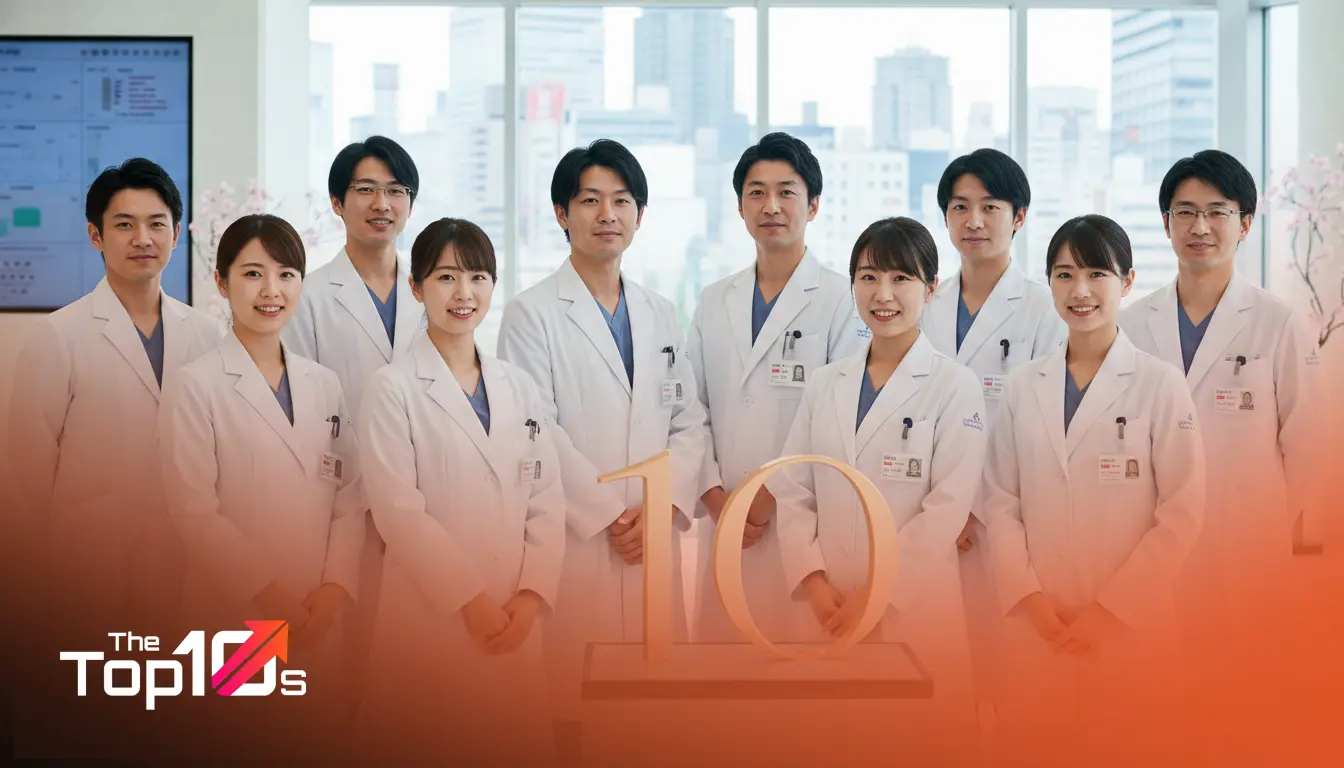
Japan boasts one of the highest life expectancies on the planet. You don’t get to those numbers by accident; it takes an incredible healthcare infrastructure and some of the finest medical minds in existence. But here is the problem most people face: finding the right specialist when you actually need one feels overwhelming. Whether you are an expat living in Tokyo or a medical tourist looking for advanced treatment, the sheer number of clinics and hospitals can leave you paralyzed with indecision.
You might be wondering who actually stands out in a sea of white coats. Japan’s medical culture is distinct—it values team conformity over individual “rockstar” status—which makes identifying specific top-rated physicians in Japan a bit of a treasure hunt. But they are there. We are talking about pioneers in gastric surgery, leaders in regenerative medicine, and neurosurgeons with hands steady enough to operate on the finest vessels in the human brain.
This guide cuts through the noise. We aren’t just listing names; we are looking at the specialists who are shaping modern medicine. If you need to find the best doctors in Japan for a complex procedure or a second opinion, this is where you start.
🚀 Quick Takeaways
- Specialization Matters: Japan is famous for gastric cancer treatment and regenerative medicine.
- The System is Different: Doctors often rotate between university hospitals; tracking them requires knowing their current affiliation.
- Language Barriers: Not every top doctor speaks fluent English, though many listed here have international experience.
- Referrals are Key: Accessing top-tier specialists usually requires a referral letter (Shokaijo) from a general clinic.
How We Selected These Medical Leaders
Picking a “top 10” list in a country with over 300,000 physicians requires a specific lens. We didn’t just look at who has the fanciest website—mostly because many Japanese medical legends don’t even have one. Instead, we focused on indicators that signal genuine authority and peer respect.
First, we looked at clinical volume and outcomes. The surgeons and physicians on this list handle high-risk cases that other doctors turn away. They aren’t just practicing; they are often teaching the next generation of medical specialists in Japan.
Second, we considered international recognition. Has this doctor published research that changed how a disease is treated globally? Do they sit on international boards? This is often a good proxy for English proficiency and a modern approach to patient care, which is vital for international patients.
Finally, we looked at reputation within the medical community. In Japan, doctors are judged heavily by their peers. The names below are the ones other doctors whisper when asked, “Who would you let operate on your family member?”
List of 10 Best Doctors in Asia
| SNO | Name | Best for |
|---|---|---|
| 1 | Dr. Takeshi Sano | Gastric Oncology |
| 2 | Dr. Takanori Fukushima | Neurosurgery |
| 3 | Dr. Shigeo Komatsumoto | Cardiology |
| 4 | Dr. Koichi Tanaka | Liver Transplantation |
| 5 | Dr. Masakazu Yamagishi | Cardiology & Internal Medicine |
| 6 | Dr. Kokichi Sugihara | Colorectal Surgery |
| 7 | Dr. Akio Matsubara | Urology |
| 8 | Dr. Shigeru Kinoshita | Ophthalmology |
| 9 | Dr. Mami Hiraoka | Dermatology & Aesthetic Medicine |
| 10 | Dr. Nobuyuki Koyama | Pulmonary Medicine |
Top 10 Doctors in Japan
Here are ten standout physicians representing various specialties, ranging from oncology to neurosurgery. These individuals represent the pinnacle of Japanese medical care.
1. Dr. Takeshi Sano – Gastric Oncology
Japan has historically had high rates of stomach cancer, which paradoxically means they have the best surgeons in the world for treating it. Dr. Takeshi Sano is a titan in this field. Serving as the Hospital Director at the Cancer Institute Hospital of JFCR (Japanese Foundation for Cancer Research), he has performed thousands of gastrectomies.
His approach combines aggressive surgical precision with a deep understanding of post-operative quality of life. Patients seek him out not just for survival, but for the chance to live normally after cancer. If you are dealing with complex gastric issues, his team represents the gold standard.
2. Dr. Takanori Fukushima – Neurosurgery
Often referred to as “God’s Hand” in Japanese media, Dr. Fukushima has gained legendary status for his work in keyhole brain surgery. While he splits time between the US and Japan, his influence on Japanese neurosurgery is undeniable. He developed the “Fukushima Keyhole Operation,” a technique designed to treat brain tumors and aneurysms with minimal trauma to the patient.
He is the specialist you want when told a tumor is “inoperable.” His ability to navigate the complex structures of the skull base has saved countless lives that others had given up on.
3. Dr. Shigeo Komatsumoto – Cardiology
Heart health requires a blend of rapid intervention and long-term strategy. Dr. Komatsumoto, associated with the prestigious St. Luke’s International Hospital in Tokyo, is a leading figure in cardiovascular medicine. St. Luke’s is historically known for its Western-style approach to patient interaction, making it a preferred spot for international residents.
Dr. Komatsumoto is known for his diagnostic acumen. He doesn’t just treat the symptom; he looks at the cardiovascular system holistically. His work is particularly relevant for patients managing chronic heart conditions who need a physician capable of navigating complex medication regimens and lifestyle adjustments.
4. Dr. Koichi Tanaka – Liver Transplantation
Dr. Tanaka is a revolutionary figure in the world of living-donor liver transplantation. Based in Kyoto, his work expanded the possibilities for patients with end-stage liver disease who could not wait for a cadaveric donor. His techniques have been adopted worldwide, but receiving care under his direct lineage of medical practice remains a privilege.
This is the doctor for critical hepatic cases. His reputation is built on taking on high-risk transplants and succeeding where statistics suggested failure was likely.
5. Dr. Masakazu Yamagishi – Cardiology & Internal Medicine
Another heavy hitter in the cardiac space, Dr. Yamagishi has made significant waves in researching atherosclerosis and ischemic heart disease. He serves at the Osaka University Graduate School of Medicine. His focus leans heavily into the imaging and early detection side of cardiology.
You go to someone like Dr. Yamagishi when you want to prevent a heart attack before it happens. His utilization of advanced intravascular imaging helps identify vulnerable plaque in arteries that standard tests might miss.
6. Dr. Kokichi Sugihara – Colorectal Surgery
With dietary changes, colorectal cancer rates have shifted, and Dr. Sugihara has been at the forefront of this battle. Formerly associated with Tokyo Medical and Dental University, he has led major study groups that define the guidelines for treating colorectal cancer in Japan.
His strength lies in deciding the “limits” of surgery—knowing exactly how much tissue to remove to ensure a cure while preserving function. He is an ideal choice for patients facing difficult decisions regarding rectal cancer and colostomy possibilities.
7. Dr. Akio Matsubara – Urology
Men’s health, specifically regarding prostate and kidney issues, is Dr. Matsubara’s domain. Working out of Hiroshima University, he has contributed extensively to the understanding of urological cancers. The field of urology in Japan has advanced rapidly toward robotic surgery (using the Da Vinci system), and Dr. Matsubara’s department is a leader in these minimally invasive techniques.
Patients appreciate his straightforward communication style and his commitment to reducing the side effects of cancer treatments, such as incontinence or nerve damage.
8. Dr. Shigeru Kinoshita – Ophthalmology
Vision restoration is a rapidly evolving field. Dr. Kinoshita, associated with Kyoto Prefectural University of Medicine, is a global pioneer in corneal regeneration. He has conducted groundbreaking work on cultivating corneal endothelial cells to restore sight without full transplants.
For patients suffering from corneal diseases that cause blindness, Dr. Kinoshita represents the cutting edge of what is biologically possible. He isn’t just a surgeon; he is a scientist pushing the boundaries of regenerative medicine.
9. Dr. Mami Hiraoka – Dermatology & Aesthetic Medicine
Moving toward quality of life and skin health, specialized dermatologists are in high demand. While many clinics focus purely on vanity, top-tier specialists like those at major university hospitals in Tokyo focus on severe dermatological conditions and reconstructive aesthetics.
Leading figures in this space in Japan are celebrated for their subtle approach. They prioritize skin health and natural results over the “overdone” look often seen elsewhere. This makes them highly sought after for both medical dermatology and anti-aging treatments.
10. Dr. Nobuyuki Koyama – Pulmonary Medicine
Respiratory health is critical, especially given the urban density of cities like Tokyo. Specialists in this field, often found at major hubs like the Tokyo Medical University Hospital, manage everything from asthma to lung cancer. Leading pulmonologists here are expert at distinguishing between environmental allergies and serious pathology.
If you have a persistent cough that other doctors can’t explain, a top Japanese pulmonologist is your best bet. They utilize advanced bronchoscopy techniques to see exactly what is happening inside the lungs.
What Defines a Great Doctor in Japan?
You might notice a pattern in the list above. The concept of a “great” doctor in Japan differs slightly from the West. It isn’t just about charisma; it is about shokunin kishitsu—the craftsman’s spirit. It is an obsession with mastering the technical details of the craft.
The “Omotenashi” of Medicine
We often hear about omotenashi (hospitality) in hotels, but it applies to top-tier medicine too. The best doctors practice a form of care that anticipates the patient’s needs. They might not chat about your weekend, but they will have triple-checked your blood work before you even walk in the room.
Technological Integration
Japan is a robotics superpower. The leading physicians are rarely working with just a scalpel anymore. They are operating robotic arms, using AI to scan X-rays, and employing proton beam therapy for cancer. A top doctor here is almost always a technologist as well.
How to Choose the Right Specialist for You
Knowing the names is one thing; getting an appointment is another. The Japanese healthcare system is egalitarian, but it has hoops you need to jump through. Here is how to navigate it without losing your mind.
The Referral Rule (Shokaijo)
You cannot simply walk into a university hospital and demand to see Dr. Sano. You need a referral letter, known as a Shokaijo. You start at a local clinic. If that doctor agrees your case is complex, they write the letter. This ticket opens the doors to the big hospitals.
Check the Hospital, Not Just the Doctor
Unlike in the US where doctors have private practices, most top Japanese doctors are employees of large hospitals. If you are looking at medical options across Asia, comparing specialists is smart. Just as you might research the top 10 doctors in China for Traditional Chinese Medicine or specific surgeries, understanding Japan’s strengths in robotics and oncology is key. Always check the hospital’s reputation for your specific condition, as the doctor leads a team there.
Consider Communication
Don’t assume English is spoken fluently. While medical terminology is often in English or German, conversational nuances can be lost. If you don’t speak Japanese, look for doctors who have completed fellowships abroad (usually listed in their bio) or hire a medical interpreter. It is worth the extra cost for peace of mind.
Frequently Asked Questions
Do Japanese doctors speak English?
Many top specialists at major hospitals in Tokyo and Osaka speak English, especially those who have studied abroad. However, nursing staff and receptionists often do not. It is wise to bring a Japanese speaker or use a translation app for administrative tasks.
Is healthcare expensive in Japan?
Compared to the United States, it is very affordable. If you are a resident, National Health Insurance covers 70% of costs. Even paying 100% out of pocket (for tourists) is often cheaper than US copays for similar high-level procedures.
Can I choose my own doctor in a Japanese hospital?
Generally, no. You are assigned to a department. However, with a specific referral letter (Shokaijo) addressed to a specific doctor, and by paying an extra “elective doctor fee” (sentei ryoyo), you can often request a specific specialist.
What is Japan best known for medically?
Japan leads the world in cancer treatment (specifically gastric and colorectal), regenerative medicine (stem cells), and diagnostic imaging (MRI/CT density is the highest in the world).
How long is the wait time for top doctors?
It varies. For a famous specialist, you might wait 1 to 3 months for a non-emergency consultation. However, the Japanese system prioritizes based on urgency, so critical cases are seen much faster.
Next Steps for Your Health Journey
Finding the right doctor isn’t just about Google searches; it’s about understanding the system. The specialists listed here represent the best of what Japan has to offer—precision, dedication, and world-class technology. But remember, the “best” doctor is the one who is best for your specific condition.
If you are facing a medical issue in Japan, start by visiting a reputable general clinic and discussing your need for a specialist. Ask for that referral letter. Do your homework on the hospital departments. Your health is your most valuable asset, and in Japan, you are in a place where that asset can be well protected.