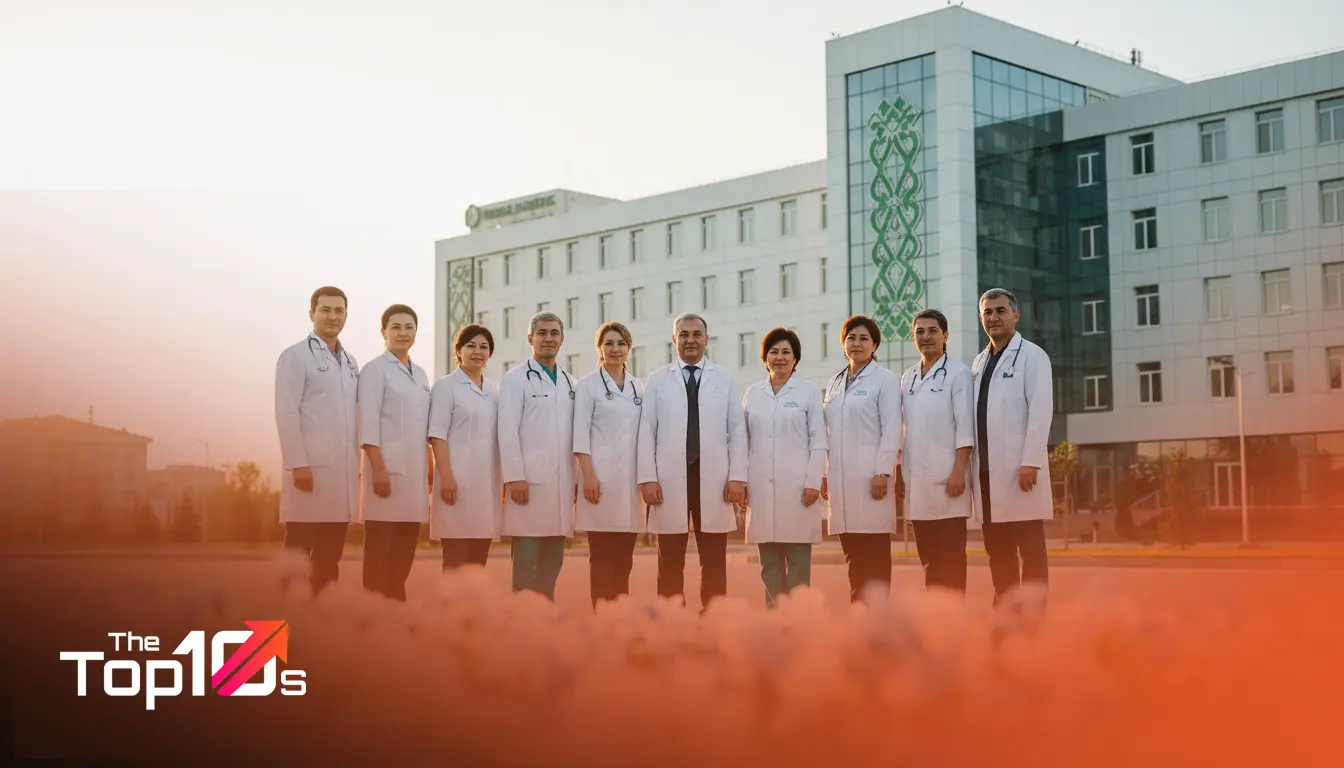
Let’s be honest: finding a medical professional you actually trust is stressful enough in your hometown. Trying to locate the best doctors in Uzbekistan when you are unfamiliar with the local healthcare system? That brings a whole new level of anxiety.
You might be waking up with a persistent ache that won’t go away, or perhaps you need a specialist for a chronic condition. Suddenly, you aren’t just looking for a white coat; you are looking for expertise, clear communication, and peace of mind. The medical sector in Tashkent and beyond has shifted dramatically over the last decade. We are seeing a move away from outdated Soviet-era protocols toward modern, evidence-based medicine.
Whether you are an expat living in Tashkent or a local resident seeking a second opinion, knowing who holds the highest standards of care is vital. This guide cuts through the noise to highlight top-rated physicians in Uzbekistan who are leading their fields.
Quick Takeaways: Healthcare in Uzbekistan
- Location Matters: The vast majority of top-tier specialists and modern clinics are concentrated in Tashkent.
- Language Barriers: While many doctors speak Russian and Uzbek, finding fluent English speakers often requires visiting private international clinics.
- Specialization is Key: General practitioners exist, but the system leans heavily toward direct access to specialists.
- Private vs. Public: For faster service and modern diagnostics, private medical centers generally offer a smoother patient experience.
How We Identified These Medical Leaders
Selecting a medical provider isn’t a popularity contest. It requires looking at hard facts mixed with patient outcomes. To compile this list of medical specialists in Uzbekistan, we looked beyond simple advertisements.
Our criteria focused on four distinct pillars. First, clinical experience. We prioritized physicians who have spent decades refining their craft, often with international training in Europe, South Korea, or Russia. Second, we examined technological adoption. A great doctor needs modern tools to diagnose accurately.
We also considered patient feedback. While online reviews can be skewed, consistent patterns in patient testimonials reveal a lot about a doctor’s bedside manner. Finally, we looked at peer recognition—doctors who are respected by other doctors are usually the ones you want treating you.
List of 10 Best Doctors in Asia
| SNO | Name | Best for |
|---|---|---|
| 1 | Prof. Ravshanbek Kurbanov | Patients with a history of heart failure, complex arrhythmias, or those needing post-surgical cardiac management. |
| 2 | Dr. Zarifboy Ibodullaev | Stroke rehabilitation planning, epilepsy management, and complex headache disorders. |
| 3 | Dr. Lola Alimkhodjaeva | Women’s health screenings, breast cancer treatment, and post-operative oncological care. |
| 4 | Dr. Bekzod Abdullaev | Herniated discs, spinal stenosis, and surgical intervention for nerve compression. |
| 5 | Dr. Akmal Rakhimov | Knee and hip replacements, sports injuries, and complex fractures. |
| 6 | Dr. Feruza Khamidova | Infertility consultations, high-risk pregnancy monitoring, and hormonal disorders. |
| 7 | Dr. Shukhrat Boymurodov | Facial trauma reconstruction, corrective jaw surgery, and complex dental pathology. |
| 8 | Dr. Dilshod Rizaev | LASIK surgery, cataract removal, and glaucoma management. |
| 9 | Dr. Mirzabek Mirzakhmedov | Kidney stone removal, prostate treatment, and male reproductive health. |
| 10 | Dr. Nargiza Alimova | Diabetes management, thyroid disorders, and hormonal imbalances. |
Top 10 Doctors In Uzbekistan
The following professionals represent the upper echelon of Uzbek healthcare across various specialties.
1. Prof. Ravshanbek Kurbanov (Cardiology)
When discussing heart health in Central Asia, Professor Kurbanov’s name frequently surfaces. As a leading figure in cardiology, he has spent years treating complex cardiovascular conditions. His approach blends academic rigor with practical clinical application.
Why he stands out:Professor Kurbanov is known for handling high-risk cases that other clinics might turn away. His work often involves interventional cardiology, focusing on minimally invasive procedures to correct heart defects. Patients appreciate his direct communication style and thorough diagnostic process.
Best for: Patients with a history of heart failure, complex arrhythmias, or those needing post-surgical cardiac management.
2. Dr. Zarifboy Ibodullaev (Neurology)
Neurological issues can be terrifyingly vague, which is why Dr. Ibodullaev’s diagnostic precision is so valued. He is a prominent figure in Uzbek neurology, often cited for his work on cerebrovascular diseases and epilepsy.
Clinical Focus:He doesn’t just treat symptoms; he hunts for the root cause. Dr. Ibodullaev is particularly noted for his expertise in treating stroke survivors and managing chronic migraines. His reputation attracts patients from neighboring regions who haven’t found answers elsewhere.
Best for: Stroke rehabilitation planning, epilepsy management, and complex headache disorders.
3. Dr. Lola Alimkhodjaeva (Oncology & Mammology)
A cancer diagnosis changes everything. Dr. Alimkhodjaeva provides not just medical treatment, but a compassionate framework for navigating oncology. She is highly regarded for her work in breast cancer detection and treatment.
Approach to Care:She emphasizes early detection and organ-preserving surgeries whenever possible. Her practice stays updated with global oncological protocols, ensuring patients in Uzbekistan receive treatment plans comparable to those in Europe. Many women seek her out specifically for her empathetic approach to difficult conversations.
Best for: Women’s health screenings, breast cancer treatment, and post-operative oncological care.
4. Dr. Bekzod Abdullaev (Neurosurgery)
Spinal and brain surgeries allow zero margin for error. Dr. Abdullaev has established himself as a premier neurosurgeon, particularly skilled in spinal column reconstruction and herniated disc treatments.
Professional Highlights:Using microsurgical techniques, Dr. Abdullaev focuses on reducing recovery time. Patients dealing with debilitating back pain often report significant improvements after his interventions. He is frequently associated with modern private clinics equipped with high-precision neuro-navigation systems.
Best for: Herniated discs, spinal stenosis, and surgical intervention for nerve compression.
5. Dr. Akmal Rakhimov (Orthopedics & Traumatology)
Whether it’s a sports injury or age-related joint issues, Dr. Rakhimov is a go-to specialist for getting people moving again. He specializes in arthroscopy and joint replacement.
Why patients choose him:Dr. Rakhimov is known for exhausting conservative, non-surgical options before recommending the operating room. When surgery is necessary, his expertise in knee and hip replacements is widely recognized. He works closely with rehabilitation therapists to ensure the surgery is only the start of recovery.
Best for: Knee and hip replacements, sports injuries, and complex fractures.
6. Dr. Feruza Khamidova (Gynecology & Reproductive Health)
Reproductive health requires a high degree of trust. Dr. Khamidova has built a loyal patient base through her expertise in high-risk pregnancies and infertility treatments.
Key Strengths:She is praised for her ability to explain complex hormonal and physiological issues in plain language. Her clinic often utilizes modern ultrasound technology and lab diagnostics to monitor fetal health and hormonal balances accurately.
Best for: Infertility consultations, high-risk pregnancy monitoring, and hormonal disorders.
7. Dr. Shukhrat Boymurodov (Maxillofacial Surgery)
This specialty sits at the intersection of dentistry and medicine. Dr. Boymurodov is an authority on reconstructive face surgery, often dealing with trauma, congenital defects, and complex dental implants.
Expertise:His work goes beyond aesthetics; it restores function. Whether correcting a jaw misalignment or reconstructing facial bones after an accident, his surgical precision is top-tier. He is also a reference point for difficult dental implant cases that regular dentists cannot handle.
Best for: Facial trauma reconstruction, corrective jaw surgery, and complex dental pathology.
8. Dr. Dilshod Rizaev (Ophthalmology)
Vision correction technology evolves rapidly, and Dr. Rizaev keeps pace. As a leading ophthalmologist, he specializes in microsurgery of the eye, including cataracts and laser vision correction.
Technological Edge:Dr. Rizaev utilizes advanced laser equipment to treat myopia and astigmatism. His high success rate with cataract removal—replacing the lens with artificial alternatives—has restored sight to countless elderly patients.
Best for: LASIK surgery, cataract removal, and glaucoma management.
9. Dr. Mirzabek Mirzakhmedov (Urology)
Men’s health issues often go untreated due to hesitation. Dr. Mirzakhmedov creates a professional environment that encourages patients to address urological problems early.
Clinical Focus:He specializes in endoscopic urology, which means performing surgeries through natural pathways or tiny incisions rather than large cuts. This expertise covers kidney stones, prostate issues, and bladder conditions.
Best for: Kidney stone removal, prostate treatment, and male reproductive health.
10. Dr. Nargiza Alimova (Endocrinology)
With diabetes rates rising globally, a skilled endocrinologist is indispensable. Dr. Alimova is a leading expert in metabolic disorders and thyroid dysfunction.
Patient Care Style:She looks at the whole picture—diet, lifestyle, and medication. Patients appreciate her detailed management plans for diabetes, which focus on preventing long-term complications rather than just stabilizing daily sugar levels.
Best for: Diabetes management, thyroid disorders, and hormonal imbalances.
What Defines a Top-Tier Doctor Here?
Understanding the healthcare landscape in Uzbekistan helps manage expectations. A “great” doctor in this region possesses specific traits that might differ slightly from Western Europe or North America.
Access to Modern Diagnostics
The best physicians refuse to guess. They are usually affiliated with clinics like Akfa Medline, Shox Med Center, or MDS Service, where MRI machines constitute the standard, not a luxury. If a doctor relies solely on physical palpation when a scan is clearly needed, they likely aren’t on the cutting edge.
International Collaboration
Medicine is global. The leading doctors in Uzbekistan frequently attend conferences in Germany, Turkey, or Russia. They bring back updated protocols. You want a doctor who is treating you with 2026 standards, not textbook knowledge from 1995.
Communication Style
Historically, the doctor-patient relationship in the region was very hierarchical—the doctor spoke, and the patient listened. The new wave of top doctors encourages dialogue. They explain why a treatment is necessary.
Choosing the Right Specialist for You
Finding a name on a list is step one. Ensuring they are the right fit for your specific situation is step two. Consider these factors before booking an appointment.
Check Hospital Affiliation
Good doctors tend to congregate. If a physician works at a reputable, accredited hospital, it acts as a secondary vetting process for their credentials.
Consider Regional Options
Sometimes, the specific expertise you need might be scarce. If you travel frequently across Central Asia, it is worth comparing local options with specialists in neighboring countries. For example, comparing the healthcare infrastructure here with neighboring nations can be helpful, especially if you need specific treatments found among the Top 10 Doctors in Kazakhstan. This broader view ensures you get the best care available in the region.
Verify the Scope of Practice
Don’t assume a neurologist handles surgery. In this system, there is a distinct line between a neurologist (diagnosis/medication) and a neurosurgeon (operative). Booking the wrong one wastes time and consultation fees.
Frequently Asked Questions
Do doctors in Uzbekistan speak English?
It varies. In premium private clinics in Tashkent, you will find English-speaking staff and doctors, often those who studied abroad. However, in public hospitals and smaller clinics, Russian and Uzbek are the primary languages. It is often wise to bring a translator if you are unsure.
Is healthcare in Uzbekistan expensive?
Compared to the US or Europe, it is significantly more affordable. However, “expensive” is relative. Top-tier private care requires out-of-pocket payment or comprehensive international health insurance, as state insurance covers public facilities.
Do I need a referral to see these specialists?
In the private sector, usually no. You can book an appointment directly with a specialist without visiting a General Practitioner first. This speeds up the process but places the burden on you to know which type of doctor you need.
Are the medical qualifications recognized internationally?
Most senior specialists hold degrees recognized regionally and often have additional certifications from Europe or Asia. However, if you need documentation for insurance back home, always ask for reports in English or have them officially translated.
What is the wait time for top doctors?
Popular doctors can have waiting lists ranging from a few days to a few weeks. Unlike the months-long waits in some Western countries, access is generally quicker here, provided you are willing to pay private consultation fees.
Next Steps for Your Health
Your health is the one investment you cannot afford to compromise on. If you are experiencing symptoms or simply need a trusted professional for routine care, don’t wait for an emergency.
- Research: Google the doctor’s name to see their current clinic affiliation, as top doctors sometimes move between private centers.
- Prepare: Gather your previous medical history and have it translated into Russian or Uzbek if possible to save time.
- Book: Call the clinic directly. Apps are growing in popularity, but a phone call remains the most reliable way to secure a slot with a senior specialist.
The physicians listed above represent the changing face of Uzbek healthcare—skilled, modern, and patient-focused. Take control of your medical journey by choosing a partner who values your well-being as much as you do.