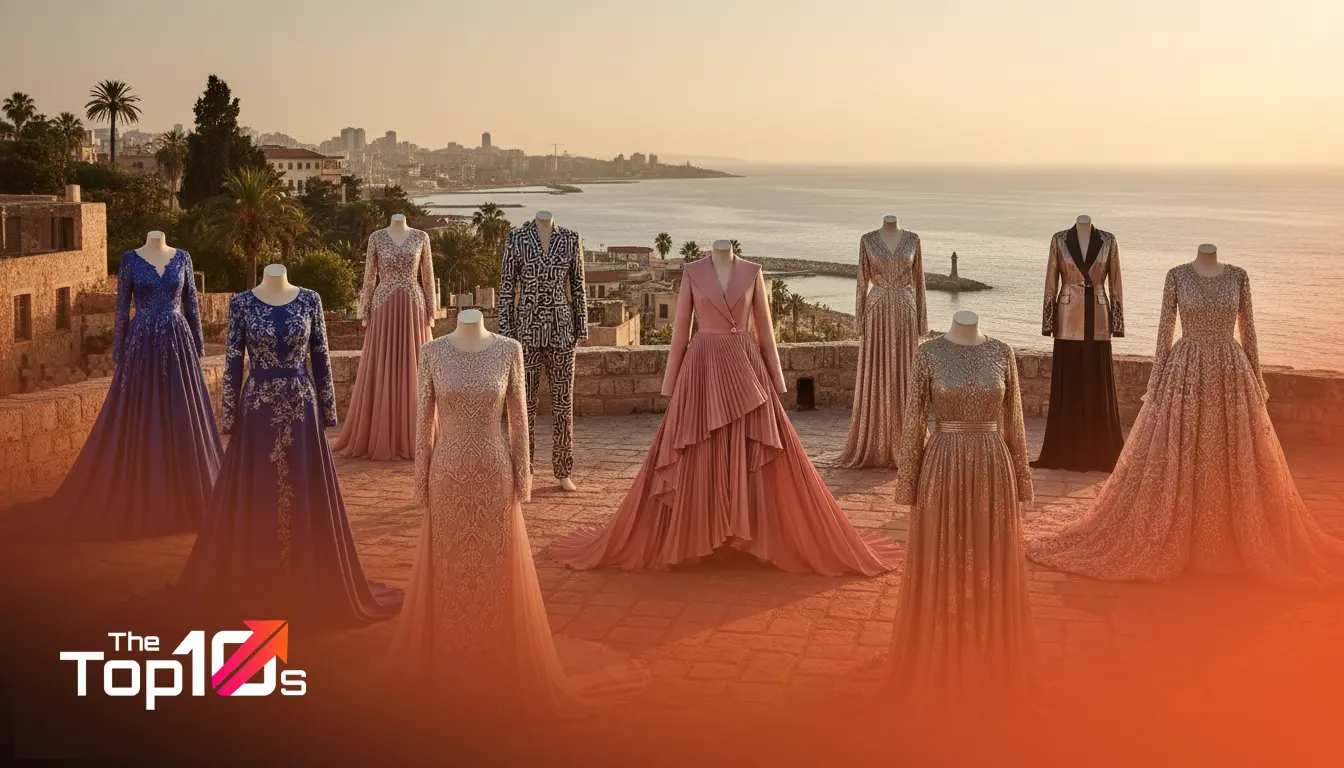
When you watch major red carpet events in Hollywood or royal weddings across Europe, you often spot a specific aesthetic before you even hear the designer’s name. It’s usually characterized by intricate beadwork, dramatic silhouettes, and an unapologetic embrace of femininity. More often than not, that gown hails from Lebanon.
Beirut hasn’t just earned the title of “Paris of the Middle East” by accident. This small nation has produced a disproportionate number of the world’s leading couture talent. For anyone looking to invest in high-end apparel, understanding the best fashion designers in Lebanon isn’t just about following trends; it’s about appreciating a heritage of craftsmanship that goes back generations.
But how do you distinguish between the masters of heavy embroidery and the architects of clean lines? Whether you are a bride-to-be, a boutique owner, or just a lover of fine aesthetics, navigating this rich industry can be overwhelming. There is a lot of noise, and not every studio delivers the quality they promise on Instagram.
Quick Takeaways
- Couture Dominance: Lebanon is primarily famous for Haute Couture and bridal wear, though Ready-to-Wear (RTW) is growing.
- Family Business: Many top houses are multi-generational, ensuring consistent quality and archival knowledge.
- Global Logistics: Most top Lebanese designers have established logistics for shipping and remote consultations worldwide.
- Diverse Aesthetics: While known for beads and sequins, the current scene includes minimalists and architectural designers.
How We Identified Leading Fashion Designers
Ranking creativity is subjective, but evaluating professional standing is not. To compile this list of trusted fashion designers near Lebanon and within Beirut’s bustling studios, we moved past social media follower counts. A million likes doesn’t always translate to a well-constructed garment.
We looked at consistency. The designers selected here have weathered economic storms and shifting trends while maintaining their operational integrity. We evaluated their presence on international fashion calendars, such as Paris Fashion Week, which requires a rigorous level of organizational maturity.
Furthermore, we analyzed the breadth of their collections. A true master understands fabric movement, from rigid organza to fluid silk crepe. We also considered client feedback regarding the fitting process—specifically, how these houses handle the delicate relationship between a client’s body type and the designer’s vision. The names below represent a mix of established legends and innovative modernists who are reshaping the industry.
List of 10 Best Fashion Designers in Lebanon
| SNO | Name | Best for |
|---|---|---|
| 1 | Elie Saab | Haute Couture, Bridal, and Luxury Ready-to-Wear |
| 2 | Zuhair Murad | Red Carpet Couture and Bridal |
| 3 | Reem Acra | Bridal and Eveningwear |
| 4 | Georges Hobeika | Couture and High-End Ready-to-Wear |
| 5 | Rabih Keyrouz | Modern Ready-to-Wear and Couture |
| 6 | Tony Ward | Architectural Couture |
| 7 | Nicolas Jebran | Avant-Garde Couture and Performance Wear |
| 8 | Rami Kadi | Techno-Couture |
| 9 | Sandra Mansour | Luxury Ready-to-Wear and Bridal |
| 10 | Krikor Jabotian | Sculptural Couture |
Top 10 Fashion Designers In Lebanon
This list represents the pinnacle of Lebanese design talent, ranging from global household names to avant-garde creators.
1. Elie Saab
You cannot discuss Lebanese fashion without starting here. Elie Saab is the figurehead who effectively put the country on the global fashion map. Since launching his label in the early 1980s, he has defined a specific look: belted waists, flowing skirts, and embroidery that sparkles under camera flashes without looking costume-like.
Specialization: Haute Couture, Bridal, and Luxury Ready-to-Wear.
Why He Matters: Saab doesn’t just make clothes; he creates fairytales. His strength lies in his consistency. If you buy an Elie Saab gown, you know exactly the level of finish and fit you are getting. He creates for the woman who wants to be the center of attention in a way that feels regal rather than loud. His workshops employ hundreds of artisans, making him a pillar of the local economy and a guardian of traditional embroidery techniques.
2. Zuhair Murad
If Saab is the king of regal elegance, Zuhair Murad is the master of high-octane glamour. His designs are often bolder, sexier, and more dramatic. He isn’t afraid of sheer panels, plunging necklines, or “naked” dresses that rely on strategically placed crystals to cover the body.
Specialization: Red Carpet Couture and Bridal.
Who This Is For: This aesthetic suits the client who wants to make a statement. Murad’s work is a favorite among pop stars and actresses who need their outfits to perform on stage or under harsh lighting. His understanding of the female hourglass figure is exceptional; his corsetry work is built to restructure the silhouette while remaining comfortable enough for a gala evening.
3. Reem Acra
Reem Acra brings a different energy to the table. While she uses embroidery, her approach is often more ethereal and whimsical compared to the heavy beading of her contemporaries. Having started as an embroidery artist in New York before launching her brand, she has a unique perspective that blends Middle Eastern opulence with American pragmatism.
Specialization: Bridal and Eveningwear.
Distinguishing Feature: Her bridal collections are particularly renowned for their “hidden luxury.” She often uses fabrics that feel like water against the skin. Her designs appeal to a sophisticated clientele who values texture and subtle detailing over blinding sparkle. She is the go-to for the “modern princess” look.
4. Georges Hobeika
Georges Hobeika represents the softer, more romantic side of Lebanese couture. His color palettes often lean towards pastels, nature-inspired hues, and floral motifs. There is a youthfulness to his work that separates him from the more serious, heavy couture houses.
Specialization: Couture and High-End Ready-to-Wear.
Artistic Focus: Hobeika is famous for his beadwork that mimics nature—think petals, waves, and butterflies. His construction is rigorous, but the result looks effortless. He is an excellent choice for younger clients or those attending daytime formal events where heavy, dark gowns might feel out of place.
5. Rabih Keyrouz
Rabih Keyrouz is the antidote to the “glitter” stereotype of Lebanese fashion. He is an architect who works with fabric. You won’t find excessive sequins here. Instead, you will find clean lines, geometric cuts, and oversized silhouettes that prioritize the wearer’s movement and comfort.
Specialization: Modern Ready-to-Wear and Couture.
Why Choose Him: He is one of the few Lebanese designers with the “Chambre Syndicale de la Haute Couture” designation in Paris who focuses on minimalism. If you appreciate the construction of Japanese designers or the clean lines of mid-century architecture, Keyrouz is the professional to watch. His clothes are intellectual and chic.
6. Tony Ward
Often referred to as the “Architect of Detail,” Tony Ward grew up in the industry—his father was a celebrated tailor. This background shows in his work. He combines structural innovation with traditional couture techniques. He likes to play with light and shadow, using materials in unexpected ways to create depth.
Specialization: Architectural Couture.
Best Suited For: Clients who want a dress that looks like a piece of sculpture. His designs are incredibly photogenic because of their 3D textures. He bridges the gap between the classic couturier and the modern artist, often using laser-cutting technology alongside hand-sewing.
7. Nicolas Jebran
Nicolas Jebran creates for the fearless. His designs are edgy, often asymmetrical, and incredibly bold. He creates the kind of fashion that demands an attitude to wear. He is a favorite among performance artists like Beyoncé and Madonna because his clothes are constructed to withstand movement while looking fierce.
Specialization: Avant-Garde Couture and Performance Wear.
Design Philosophy: Jebran treats fashion as storytelling. His collections often have strong, sometimes dark or futuristic themes. If you are looking for a traditional bridal gown, he might be too bold, but if you want an editorial look that defies convention, he is the leader in the region.
8. Rami Kadi
Rami Kadi is the futurist of the group. He was one of the first to embrace technology in a way that felt authentic to couture. He has experimented with glow-in-the-dark fabrics, laser-cut acrylics, and even hologram-inspired textiles. Yet, the silhouette remains feminine and flattering.
Specialization: Techno-Couture.
Uniqueness: Kadi appeals to the digital generation. He understands that clothes today are often viewed through a screen, and he designs with that vibrancy in mind. He is perfect for the client who loves traditional shapes (like ballgowns) but wants modern, unexpected materials.
9. Sandra Mansour
Sandra Mansour was the first Lebanese designer to collaborate with H&M, which speaks to her global appeal. Her aesthetic is dreamy, painterly, and deeply artistic. She often sketches her own prints, giving her fabrics a personal touch that you cannot buy off a roll.
Specialization: Luxury Ready-to-Wear and Bridal.
Why She Stands Out: Her studio focuses on “sun-drenched” luxury. It’s less about the evening gala and more about the garden party or the destination wedding. Her clothes feel breathable and light, making her a favorite for summer events in the Mediterranean.
10. Krikor Jabotian
Starting his career in the creative department at Elie Saab, Krikor Jabotian quickly established his own very distinct voice. His work is almost royal in nature. He is famous for textured embroideries and volume—specifically, short front hems with dramatic trains and structured shoulders.
Specialization: Sculptural Couture.
The Look: If you want drama, Jabotian delivers. His designs often reference historical periods but exaggerate the proportions to create something surreal. His finishing is impeccable, and his pieces are often collectors’ items rather than just garments.
What Defines a Great Fashion Designer in Lebanon?
You might wonder why a country as small as Lebanon has such a dense concentration of talent. It isn’t just about good sketching skills; it’s about an ecosystem of production.
The “Petites Mains” Culture
In the French tradition, “petites mains” refers to the skilled hands of the artisans. Lebanon has a massive workforce of highly skilled embroiderers, pattern makers, and tailors. A great designer in Beirut isn’t working alone; they are conductors of an orchestra of artisans. The best designers are those who treat these teams with respect, retaining talent for decades. This continuity ensures that a dress bought in 2024 has the same quality as one bought in 2010.
East Meets West
The magic of Lebanese design lies in its geographical position. Designers here understand the Western desire for cut, fit, and modernity, but they blend it with the Eastern love for ornamentation, richness, and modesty when required. A top-tier professional knows how to dial the opacity of a dress up or down depending on whether the client is in Paris, Riyadh, or New York.
Resilience and Adaptability
Operating a luxury business in Lebanon requires immense logistical creativity due to local infrastructure challenges. The designers who make the top lists are those who have built robust supply chains. They ensure fabrics arrive from Italy and finished gowns reach the US on time, regardless of local instability. This reliability is a hallmark of true professionalism.
How to Choose the Right Fashion Designer for Your Needs
Selecting among these experienced fashion design professionals in Lebanon depends on more than just looking at pictures. You need to align their process with your reality.
Assess Your Timeline
Haute Couture is not fast fashion. A custom gown from names like Zuhair Murad or Tony Ward can take anywhere from three to six months to complete. If you are shopping for a wedding, start eight months out. If you need something faster, look at their Ready-to-Wear (RTW) lines, which often carry the brand’s DNA but are available for immediate purchase or minor alterations.
Budget Reality Check
Be honest about your investment. There is a significant price jump between a custom couture piece and a luxury RTW piece. Couture involves creating a unique mannequin of your body and multiple flights for fittings. If you love the aesthetic but have a stricter budget, designers like Sandra Mansour or the RTW collections of Elie Saab offer high design value at a different price point.
Regional Comparisons
Sometimes, your search for the perfect aesthetic might require looking at the broader region to compare styles. For example, while Lebanese designers are known for high glamour, neighboring markets offer different takes on traditional and modern wear. If you are exploring regional talent, you might also be interested in the top 10 fashion designers in Jordan for a different aesthetic perspective that often blends heritage with contemporary streetwear.
Communication Style
Does the designer listen? During your initial consultation (often paid), gauge whether they are pushing their vision or enhancing yours. The best relationship is collaborative. You are the one wearing the dress; you need to feel comfortable sitting, standing, and dancing in it.
Frequently Asked Questions
Do Lebanese fashion designers ship internationally?
Yes, almost all established fashion houses in Lebanon have extensive experience shipping globally. They work with specialized couriers to ensure insurance and safe handling of high-value garments. Taxes and duties, however, are usually the responsibility of the client.
Can I order a custom dress without visiting Beirut?
Many designers adapted during recent years to offer “virtual couture.” They will guide you (or a local tailor) on how to take over 50 specific body measurements. They then create the dress on a mannequin adjusted to your size. However, for the perfect fit, at least one final fitting in person is highly recommended.
What is the difference between Couture and Ready-to-Wear?
Couture is made-to-measure, meaning the garment is constructed specifically for your body from scratch, often with unique customizations. Ready-to-Wear is produced in standard sizes (US 4, 6, 8, etc.) and is bought “off the rack,” though it can still be altered to fit better.
Are these designers sustainable?
Sustainability is a growing focus. Designers like Rami Kadi have launched collections using recycled plastics, and Maison Rabih Keyrouz focuses on timelessness to fight disposable fashion. However, the nature of couture—made to order with zero overstock—is inherently more sustainable than mass-market fashion.
Next Steps for Your Fashion Journey
Choosing a designer is a personal commitment. It is an investment in art that you live in. Don’t rush the process. Start by reviewing the current collections of the names listed above to see whose current season resonates with you. Follow their social media not just for the photos, but to see how real clients look in their tagged photos—this is the truest test of fit and flattery.
Whether you choose the architectural discipline of Rabih Keyrouz or the fairytale sparkle of Elie Saab, you are buying into a legacy of excellence. Take the time to schedule a consultation, ask about their fabric sourcing, and ensure their timeline matches yours. The right choice will make you feel like the best version of yourself.