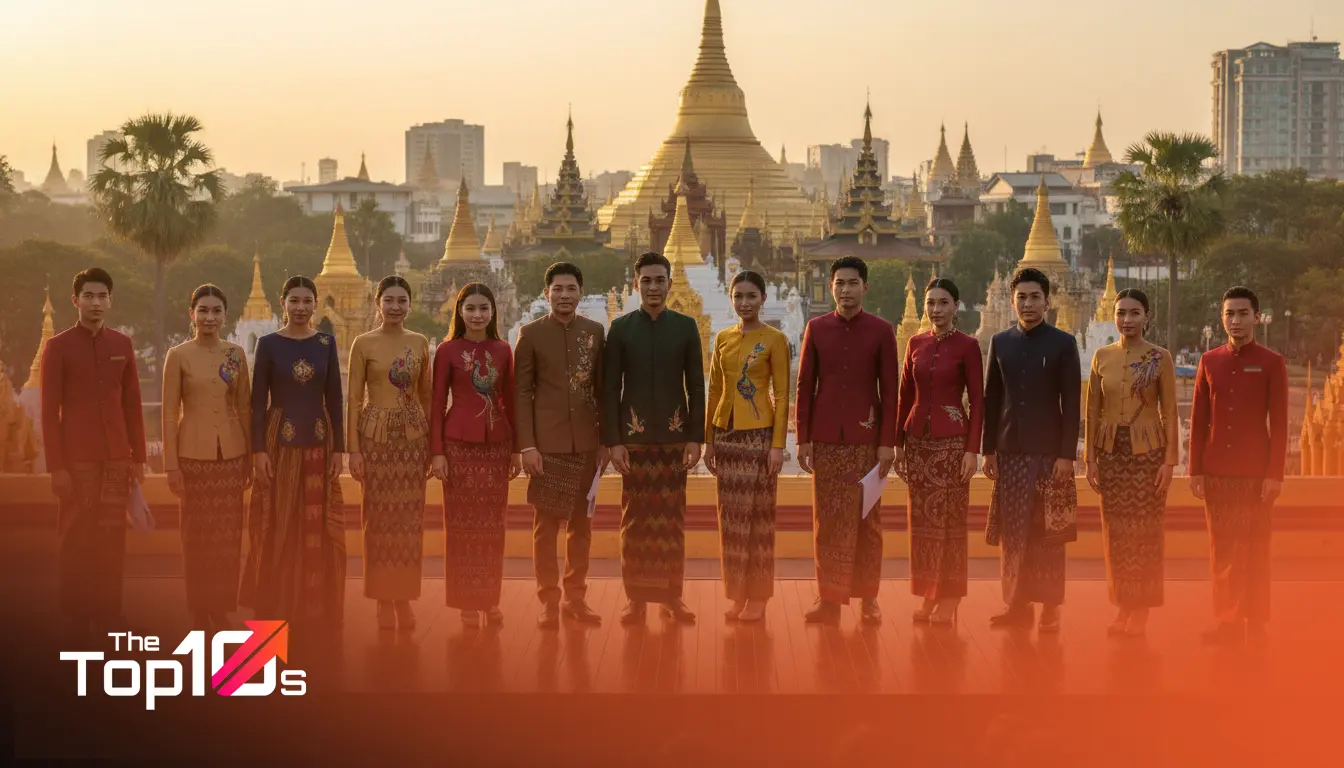
Myanmar’s fashion scene is often misunderstood or entirely overlooked on the global stage, yet it holds one of the most distinct aesthetic identities in Southeast Asia. You might picture the traditional Longyi or the intricate wave patterns of Acheik textiles, but the reality on the ground in Yangon and Mandalay is evolving rapidly. A new wave of creatives is blending centuries-old weaving techniques with sharp, contemporary silhouettes.
Finding the right creative partner in this country isn’t just about picking a name from a directory. It’s about understanding who respects the integrity of lotus silk while daring to cut it into a modern evening gown. Whether you are looking for a bridal masterpiece, sustainable eco-wear, or avant-garde couture, the talent pool here is surprisingly deep and fiercely resilient.
Quick Takeaways
- Heritage meets Modernity: The top designers almost always incorporate traditional Burmese textiles into western cuts.
- Sustainability is Native: Many local creators use naturally sourced fibers like lotus and organza by default, not just as a trend.
- Customization is Standard: Unlike fast-fashion markets, the culture here heavily favors made-to-measure garments.
- Resilience: The industry has adapted to significant political and economic shifts, resulting in resourceful and innovative design solutions.
How We Identified Leading Fashion Designers
Selecting the most influential figures in Myanmar’s apparel industry requires looking beyond Instagram follower counts. Our approach focused on substantive contributions to the local culture and the technical proficiency of the garments produced. We analyzed the market based on a few specific indicators.
First, we looked at longevity and consistency. The economic climate in Myanmar can be volatile, so designers who have maintained their studios and continued producing collections demonstrate serious business acumen and dedication. We also examined their command over local materials. The ability to source high-grade Burmese silk and cotton, and then manipulate these unforgiving fabrics into structured designs, is a major marker of skill.
Finally, we considered their design signatures. We looked for creators who have established a clear visual language that separates them from general tailors. This list reflects professionals who are currently shaping the visual narrative of Burmese fashion.
List of 10 Best Fashion Designers in Myanmar
| SNO | Name | Best For |
|---|---|---|
| 1 | Mogok Pauk Pauk | Clients seeking high-impact bridal wear or red-carpet event pieces that celebrate Burmese heritage loudly and proudly. |
| 2 | Mo Hom (Lotus Hom) | The eco-conscious buyer looking for breathable, high-quality daily wear or resort attire. |
| 3 | Phyo Pyae | Brides and gala attendees who want a romantic, fairy-tale aesthetic with impeccable beading. |
| 4 | Zun Chagall | Women who want artistic, colorful ready-to-wear pieces that stand out at social gatherings. |
| 5 | Latt Latt | Formal cultural events, government functions, or anyone needing the highest quality traditional silk attire. |
| 6 | The modern professional wanting sharp tailoring with an edge, or cocktail attire that breaks the mold. | |
| 7 | Aung Myat Thu | Pageantry, red carpet events, and high-stakes evening occasions. |
| 8 | Ma Pont (Myit Tar Oo) | Traditional wedding attire for couples and high-end fabric sourcing. |
| 9 | Yone Yone | Cultural enthusiasts and those looking to support indigenous textile art through modern clothing. |
| 10 | Minn Thet San | Young fashion enthusiasts and pop-culture figures looking for trendy, statement pieces. |
Top 10 Fashion Designers in Myanmar
The following individuals and studios represent the vanguard of style in the Golden Land. They range from established couturiers to eco-conscious innovators.
1. Mogok Pauk Pauk
Few names command as much respect in the local industry as Mogok Pauk Pauk. Starting her career with a passion for revitalizing traditional attire, she has become a household name, particularly known for her high-drama creative direction. Her work often serves as a bridge between the theatrical and the wearable.
She specializes in haute couture and bridal wear that refuses to be subtle. You will often see her utilizing heavy embroidery and preserving the ethnic patterns of Myanmar’s diverse regions. Her dedication to the craft goes beyond just clothes; she is a significant figure in training the next generation of seamstresses.
Best Suited For: Clients seeking high-impact bridal wear or red-carpet event pieces that celebrate Burmese heritage loudly and proudly.
2. Mo Hom (Lotus Hom)
Mo Hom brings a cosmopolitan edge to the table, having honed her skills in New York before returning to her roots. Her brand, Lotus Hom, is synonymous with sustainability and the preservation of Myanmar’s natural fibers. She isn’t just making clothes; she is curating an eco-friendly lifestyle.
Her designs are characterized by clean lines, breathable fabrics, and a relaxed elegance that works in tropical climates. She is particularly famous for her use of hand-woven cottons and silks sourced directly from local artisans, ensuring ethical production chains. The aesthetic is contemporary chic—wearable in Yangon, Paris, or Tokyo.
Best Suited For: The eco-conscious buyer looking for breathable, high-quality daily wear or resort attire.
3. Phyo Pyae
If you are looking for intricate detailing and a romantic aesthetic, Phyo Pyae is a name you need to know. Rising to prominence with a focus on bridal and evening wear, this designer has mastered the art of embellishment without crossing into gaudiness.
The strength of this studio lies in beadwork and lace manipulation. Phyo Pyae often takes classic Western silhouettes—mermaid cuts, A-lines—and infuses them with local craftsmanship. The result is a garment that feels international in standard but local in soul. The fit and finish from this label are consistently praised for their precision.
Best Suited For: Brides and gala attendees who want a romantic, fairy-tale aesthetic with impeccable beading.
4. Zun Chagall
Zun Chagall approaches fashion with the eye of a painter. Her collections often feature distinct color palettes that tell a story, moving away from the rigid structures of traditional dress into something more fluid and artistic. She is known for modernizing the htamein (traditional skirt) for the younger generation.
Her expertise lies in textile design and color theory. Rather than relying solely on pre-existing market fabrics, she often plays with textures and prints that give her ready-to-wear collections a unique visual signature. It is accessible luxury that feels artistic rather than mass-produced.
Best Suited For: Women who want artistic, colorful ready-to-wear pieces that stand out at social gatherings.
5. Latt Latt
Latt Latt represents the gold standard of traditional elegance. For decades, this name has been associated with the finest silk weaving and the most dignified interpretations of Burmese formal wear. This is where the elite go when they need to adhere to cultural protocol while looking expensive.
The focus here is on the purity of the silk and the precision of the weave. Latt Latt does not chase fleeting trends. Instead, the studio doubles down on the classic “Acheik” patterns, executing them with a level of detail that factory-made textiles cannot replicate. It is timeless fashion in the truest sense.
Best Suited For: Formal cultural events, government functions, or anyone needing the highest quality traditional silk attire.
6. Charlotte Barjou
Bringing a French-Burmese fusion to the list, Charlotte Barjou offers a perspective that is distinctly edgy. Her work often challenges the conservative norms of local fashion, introducing bolder cuts, asymmetry, and a darker, more urban color palette.
She excels in tailoring and structure. Her jackets, trousers, and structured dresses speak to a woman who is confident and perhaps a bit rebellious. While she respects local materials, she treats them with a European sensibility, creating a hybrid style that appeals heavily to the expat community and modern Burmese women.
Best Suited For: The modern professional wanting sharp tailoring with an edge, or cocktail attire that breaks the mold.
7. Aung Myat Thu
Aung Myat Thu has carved out a niche for sleek, sophisticated evening wear that highlights the female form. His designs are often spotted at high-profile pageants and celebrity events, marking him as a go-to for “camera-ready” fashion.
His strength is in drapery and silhouette. He understands how to construct a gown that moves well. While he works with traditional fabrics, he is not afraid to mix them with satins and chiffons to create movement. His aesthetic leans towards the glamorous and polished.
Best Suited For: Pageantry, red carpet events, and high-stakes evening occasions.
8. Ma Pont (Myit Tar Oo)
Operating under the Myit Tar Oo banner, Ma Pont is a legend in the realm of silk weaving and traditional design. This is less about “fashion” in the western sense and more about the mastery of the national costume. The sheer variety of patterns produced under her guidance is staggering.
Her expertise is strictly in the realm of traditional formal wear. The studio creates matching sets for couples (often used in weddings) and is renowned for the quality of their dyeing processes. Colors from this house tend to remain vibrant for years.
Best Suited For: Traditional wedding attire for couples and high-end fabric sourcing.
9. Yone Yone
Yone Yone is a celebration of ethnic diversity. This designer focuses heavily on the textiles of the various ethnic states within Myanmar, such as Kachin, Chin, and Shan patterns, bringing them into mainstream urban fashion.
The design philosophy here is about preservation through adaptation. Yone Yone applies these geometric, hand-loomed ethnic patterns to modern blouses, skirts, and dresses. It is a way for wearers to connect with the country’s diverse heritage without wearing a full costume.
Best Suited For: Cultural enthusiasts and those looking to support indigenous textile art through modern clothing.
10. Minn Thet San
Representing the younger energy of the industry, Minn Thet San creates clothes that are fun, youthful, and vibrant. He often experiments with volume and texture, moving away from the fitted silhouette that dominates the older market.
His work is characterized by playfulness. You might see oversized bows, interesting sleeve constructions, or unexpected color blocks. He designs for the woman who wants to have fun with her wardrobe and isn’t afraid to be looked at.
Best Suited For: Young fashion enthusiasts and pop-culture figures looking for trendy, statement pieces.
What Defines a Great Fashion Designer in Myanmar?
Understanding the fashion landscape in Myanmar requires a shift in perspective. Unlike Western markets where “design” often means sketching a new silhouette, here, great design is inextricably linked to textile mastery. A top-tier designer must understand the physics of a hand-loom. They need to know how a Lun Raya (100-shuttle) woven silk behaves compared to a factory-produced polyester.
Furthermore, the ability to navigate the “East meets West” dichotomy is crucial. The most successful creatives are those who can take the modesty required by local culture—often covering shoulders and knees—and still make a garment feel sexy and modern. It is a balancing act of respecting conservative roots while pushing boundaries.
If you are exploring Southeast Asian aesthetics beyond the Golden Land, looking at the top 10 fashion designers in Cambodia offers a fascinating contrast in silk usage, particularly in how they approach ikat patterns compared to the Burmese acheik.
How to Choose the Right Fashion Designer for Your Needs
Commissioning a piece in Myanmar is often a collaborative process. Here is how to ensure you get the best result.
Assess the Fabric Expertise
Before you commit, ask the designer about their sourcing. Do they have their own weavers, or do they buy from the open market? Designers who control their own weaving production (like Mogok Pauk Pauk or Latt Latt) can offer exclusivity in patterns that you won’t see on anyone else.
Distinguish Between “Tailor” and “Designer”
This is a common point of confusion. A skilled tailor can copy a picture you bring them. A designer will look at your body type, the occasion, and your personal style to propose a creation you hadn’t thought of. If you know exactly what you want, a high-end tailor is fine. If you want a vision, you need one of the names on this list.
Understand the Timeline
Hand-woven silk takes time. Intricate beadwork takes time. A true couture piece in Myanmar can take anywhere from three weeks to three months depending on the complexity of the fabric production. Always clarify the lead time immediately, especially if the fabric needs to be woven from scratch.
Frequently Asked Questions
Is it expensive to hire a top fashion designer in Myanmar?
Compared to Western couture, it is relatively affordable, but it is not “cheap.” For a top-tier designer using high-grade silk and custom embroidery, prices can range from $300 to over $2,000 per piece. The value lies in the labor-intensive hand-weaving and hand-finishing.
Can these designers create western-style clothing?
Yes, most of the designers listed, particularly Charlotte Barjou and Mo Hom, are adept at Western patterns. However, their unique value usually comes from integrating local touches into those Western shapes.
Do I need to be in Myanmar to work with them?
While in-person fittings are always superior, many of these designers have adapted to international clients. They can work with detailed measurements sent remotely, though shipping logistics should be discussed in advance.
What is the most popular fabric used by these designers?
Silk remains the queen of fabrics in Myanmar, specifically “Acheik” (wave pattern) silk. However, lotus silk (extracted from lotus stems) is a rare and prized luxury fabric used by eco-conscious designers like Mo Hom.
Next Steps for Your Fashion Journey
Exploring the work of the best fashion designers in Myanmar offers a window into a culture that deeply values craftsmanship. Whether you are looking for a show-stopping bridal gown or a sustainable tunic, the talent is there.
Don’t just browse their social media feeds. Reach out to them. Start a conversation about materials. Ask about the story behind their current collection. Fashion here is personal, and the best results come when you engage with the designer’s process. Pick a name from this list that resonates with your style, and challenge them to create something that tells your story through their lens.