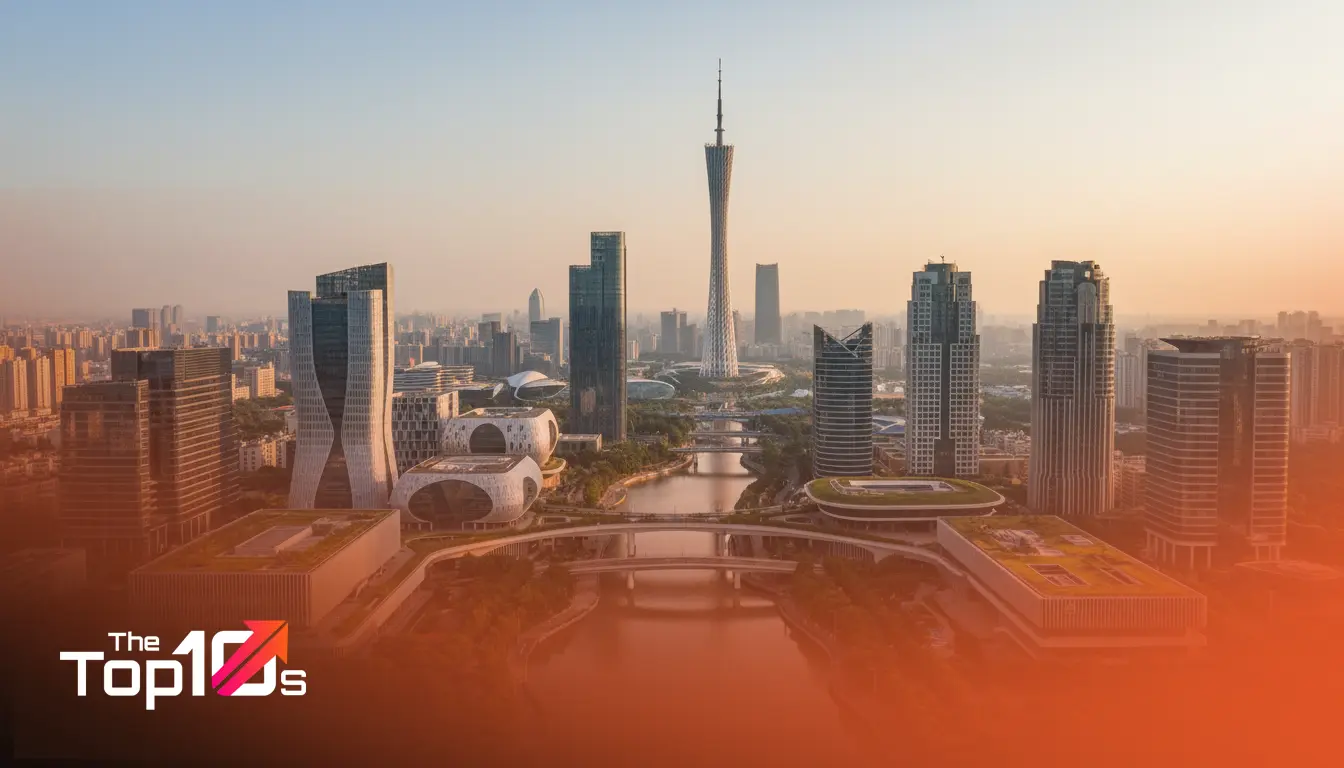
Guangzhou isn’t just a manufacturing hub anymore; it has quietly morphed into a global canvas for architectural experimentation. If you walk through Zhujiang New Town, you aren’t just looking at office buildings—you are witnessing a dialogue between traditional Lingnan culture and hyper-modern ambition. But for a homeowner, a developer, or a business owner standing on an empty plot of land or staring at a bare shell, the sheer scale of this city can be paralyzed.
Here is the reality: finding someone who can navigate the complex local planning bureaus of the Tianhe District while understanding the nuance of natural ventilation in a humid subtropical climate is rare. You don’t just need a designer; you need a strategist. Whether you are planning a high-concept retail space in Liwan or a private villa in Panyu, the gap between a rendering and a built reality is often wider than clients expect.
This guide cuts through the noise. We aren’t just listing names; we are looking at who actually delivers habitable, sustainable, and aesthetically enduring work in Southern China. Below, you will find professionals who understand that architecture in Guangzhou is about managing light, heat, and density just as much as it is about style.
Quick Takeaways: Scouting Talent in Canton
- Climate is King: The best local architects prioritize cross-ventilation and shading to combat the humidity.
- Scope Matters: Large international firms dominate skylines, but boutique local studios often handle residential renovations better.
- Regulatory Navigation: Success depends heavily on the architect’s ability to interface with local urban planning authorities.
- Portfolio Depth: Look for completed projects in Guangdong province, not just conceptual drawings.
How We Identified Leading Architects
Curating a list of architectural talent requires looking beyond glossy magazine covers. In a market as saturated as Guangzhou, reputation is built on the construction site, not just the drawing board. Our selection methodology focuses on tangible indicators of professional capability and design integrity.
We analyzed firms and principal architects based on their track record of completed projects within the Pearl River Delta. A major factor in this assessment is adaptability—how well a designer modifies their vision to fit strict local zoning laws and the demanding climate. We also considered peer recognition within the industry and the longevity of their practice. Stability counts for a lot here; you need a team that will still be around when the final inspection happens.
Furthermore, we looked for a balance between aesthetic innovation and technical pragmatism. The professionals listed below have demonstrated an ability to manage complex budgets and timelines, a skill set that often separates the dreamers from the builders.
List of 10 Best Architects in Guangzhou
| Name | Best for |
|---|---|
| Rocco Design Architects | Institutional clients, cultural centers, and large-scale commercial developers looking for iconic status |
| Aedas (Guangzhou Office) | Commercial developers and complex mixed-use projects requiring intricate circulation planning |
| IAPA Design Consultants | Boutique hotels, art galleries, and high-end residential renovations where atmosphere is paramount |
| WilkinsonEyre | Corporate headquarters and landmark towers that require cutting-edge engineering solutions |
| O-office Architects | Cultural institutions, art foundations, and clients who want a narrative-driven design rather than a generic luxury look |
| Gensler | Multinational corporations, massive interior fit-outs, and large-scale urban planning |
| Urbanus | Educational campuses, public housing innovations, and civic projects |
| SOM (Skidmore, Owings & Merrill) | High-performance office buildings and clients prioritizing LEED certification and energy efficiency |
| DOMANI Architectural Concepts | Luxury retail brands, showrooms, and experimental commercial spaces targeting a younger demographic |
| Guangzhou Design Institute | Government projects, standard residential developments, and local infrastructure |
Top 10 Architects In Guangzhou
The following list represents a mix of international heavyweights with strong local offices and specialized studios that have left a significant mark on Guangzhou’s urban fabric.
1. Rocco Design Architects
Led by Rocco Yim, this firm is arguably one of the most influential forces in the region. Their work often bridges the gap between cultural heritage and futuristic form. You might recognize their handiwork in the Guangdong Museum, which treats the building like a carved antique container.
Why they stand out: They excel at large-scale cultural and institutional projects. Their approach isn’t just about putting a building on a site; it’s about connecting that building to the surrounding city streets. They are particularly strong at creating public spaces that encourage social interaction.
Best suited for: Institutional clients, cultural centers, and large-scale commercial developers looking for iconic status.
2. Aedas (Guangzhou Office)
Aedas operates globally, but their Guangzhou team has a distinct flavor. They are masters of the high-density mixed-use development. In a city where land is at a premium, Aedas knows how to stack retail, office, and hospitality functions into a single, cohesive vertical ecosystem.
Area of Specialization: Their portfolio leans heavily into commercial skyscrapers and transit-oriented developments. If you need to integrate a shopping mall with a metro station and a hotel, this is the team.
Best suited for: Commercial developers and complex mixed-use projects requiring intricate circulation planning.
3. IAPA Design Consultants
If you prefer a scale that feels more intimate, IAPA offers a refreshing alternative. Founded by Australian-Chinese architects, this boutique firm brings a unique sensibility to heritage preservation and modern renovation. They frequently work on repurposing older industrial buildings or creating boutique hospitality spaces.
Design Philosophy: Their work often features raw materials—exposed brick, concrete, and timber—blended with modern minimalism. It feels grounded and tactile.
Best suited for: Boutique hotels, art galleries, and high-end residential renovations where atmosphere is paramount.
4. WilkinsonEyre
This UK-based firm made history with the Guangzhou International Finance Center (Guangzhou IFC). While they are an international entity, their understanding of structural engineering in the context of Guangzhou’s geology is profound. They bring a high-tech aesthetic that focuses on elegance and slim profiles.
Technical Strength: Their architects work closely with engineers to push boundaries. The diagrid structure of the IFC is a testament to their ability to marry physics with art.
Best suited for: Corporate headquarters and landmark towers that require cutting-edge engineering solutions.
5. O-office Architects
Based in Guangzhou, O-office is the darling of the intellectual design crowd. They are famous for transforming the ID Town Art District from an old factory. Their approach is almost archaeological; they dig into the history of a site and build new layers on top of it rather than wiping the slate clean.
Notable Approach: They refuse to do “cookie-cutter” designs. Every project is a specific response to the site’s history and the client’s narrative.
Best suited for: Cultural institutions, art foundations, and clients who want a narrative-driven design rather than a generic luxury look.
6. Gensler
Gensler is the giant in the room. As one of the world’s largest architecture firms, their resources are unmatched. In Guangzhou, they have been instrumental in shaping the Pearl River New City. Their strength lies in data-driven design; they research how people use spaces and design strictly around those metrics.
Key Advantage: They handle everything from the building shell to the interior branding. It provides a seamless experience for corporate clients who want a unified identity.
Best suited for: Multinational corporations, massive interior fit-outs, and large-scale urban planning.
7. Urbanus
Urbanus is an architectural think tank as much as it is a design firm. With roots deep in the Pearl River Delta, they tackle the messy reality of Chinese urbanization. They don’t shy away from “urban villages” or high-density housing issues. Their designs are often socially conscious and intellectually rigorous.
Why consider them: They offer solutions for difficult, irregular sites that other firms might reject. They find value in the chaotic energy of the city.
Best suited for: Educational campuses, public housing innovations, and civic projects.
8. SOM (Skidmore, Owings & Merrill)
SOM is synonymous with corporate prestige. In Guangzhou, their Pearl River Tower is a benchmark for sustainable skyscraper design. They engineered the building to funnel wind through turbines, generating its own power. This level of technical integration is their hallmark.
Sustainability Focus: They don’t just add solar panels as an afterthought; they sculpt the building’s form to work with the environment.
Best suited for: High-performance office buildings and clients prioritizing LEED certification and energy efficiency.
9. DOMANI Architectural Concepts
DOMANI is a younger, edgier firm making waves in the commercial and retail sectors. Their work is often experimental, utilizing stark contrasts, bold geometries, and immersive lighting. They understand the “Instagram moment” without sacrificing functionality.
Visual Style: Expect white spaces, dramatic shadows, and avant-garde forms. They turn retail stores into art installations.
Best suited for: Luxury retail brands, showrooms, and experimental commercial spaces targeting a younger demographic.
10. Guangzhou Design Institute
You cannot talk about architecture in this city without mentioning the local powerhouse. Established in 1952, they have handled thousands of projects. While they may not always grab the international headlines, they are the backbone of local construction. They know the fire codes, the seismic regulations, and the zoning laws better than anyone.
The Practical Choice: For projects that simply need to get done efficiently and compliantly, their expertise is invaluable.
Best suited for: Government projects, standard residential developments, and local infrastructure.
What Defines a Great Architect in Guangzhou?
Architecture in Southern China faces a unique set of challenges that separates the amateurs from the experts. It isn’t enough to just draw a pretty façade; the building has to survive the environment.
Mastering the Subtropical Climate
Guangzhou is hot and humid for a significant portion of the year. A great architect understands passive cooling. They orient the building to catch the prevailing wind while shielding the glass from direct solar gain. If you see a design with massive glass walls facing due west without shading louvers, that’s a red flag. It means the architect is prioritizing the rendering over your electricity bill.
The “Lingnan” Connection
There is a resurgence of interest in Lingnan architectural principles—courtyards, green bricks, and wok-ear walls. However, the goal isn’t to build a museum replica. Top designers interpret these elements for modern life. They use the logic of the courtyard (privacy and ventilation) rather than just the aesthetic. This ties into broader regional trends; for instance, if you are looking at broader developments, similar standards apply to the Top 10 Architects in Shanghai, where local context drives design decisions.
High-Density Solutions
Space is luxury. The best local architects are magicians with floor plans. They know how to make a 90-square-meter apartment feel like 120. They utilize vertical space, clever storage integration, and open-plan layouts that maintain distinct zones. This efficiency is critical in a city where real estate prices continue to climb.
How to Choose the Right Architect for Your Needs
Hiring a design professional is a recruitment process. You are trusting someone with a significant amount of capital and your future comfort. Here is how to evaluate your options.
1. Scrutinize the Construction Documents
Ask to see a set of construction drawings from a previous project. You don’t need to be an engineer to look at the detail. Is it thorough? Are there clear specifications? A portfolio of pretty 3D renders is easy to fake; a 50-page construction set shows they know how to build.
2. The Communication Test
Projects go wrong when communication breaks down. During your initial consultation, do they listen more than they talk? Do they explain technical terms in plain language? If they are using jargon to confuse you now, it will be ten times worse when you are arguing over a change order on site.
3. Local Bureau Experience
Ask specifically about their experience with the Guangzhou Urban Planning Bureau. Have they successfully navigated a zoning variance before? Do they have a local registered architect on the team who can sign off on drawings? International flair is great, but local paperwork allows you to break ground.
4. Fee Structure Clarity
Architectural fees can be structured as a percentage of construction cost, a fixed fee, or an hourly rate. Ensure you understand what is included. Does the fee cover site visits? Revisions? 3D modeling? Surprise costs are the fastest way to sour a client-architect relationship.
Frequently Asked Questions
How much do architects in Guangzhou typically charge?
Fees vary wildly based on reputation and scope. Standard practices might charge between 3% to 8% of the total construction cost. Renowned international firms or boutique specialists will often charge a fixed design fee that is significantly higher. Always clarify if engineering and interior design are included in that percentage.
Do I need a local architect if I hire an international firm?
Yes, usually. International firms (Design Architects) often partner with a Local Design Institute (LDI) to produce the legal construction documents and ensure code compliance. The LDI stamps the drawings for government approval.
How long does the design process take for a custom home?
For a custom villa or extensive renovation, expect the design phase—from concept to final construction drawings—to take anywhere from 4 to 8 months. Permitting in Guangzhou can add several months to this timeline, so patience is required.
Can architects help with finding a contractor?
Absolutely. A seasoned architect will have a shortlist of reliable contractors they have worked with previously. This recommendation is gold; it means the contractor understands the architect’s standards and quality expectations.
Is sustainable design mandatory in Guangzhou?
China has implemented strict green building standards (the Three-Star system). While not every private home needs to be certified, commercial and large residential projects must meet specific energy efficiency codes. Your architect must be familiar with these regulations.
Building Your Vision
Selecting an architect in Guangzhou is about more than just finding a style you like. It represents a partnership that will last for months, or perhaps years. The right professional acts as your advocate, translating your needs into a structure that stands up to the climate, the regulations, and the test of time.
Don’t rush the interview process. Visit their completed buildings if you can. Talk to their former clients. The effort you put into vetting your team now will pay dividends when you walk through the doors of a finished space that feels exactly the way you imagined it would. For more insights on global architectural standards, resources like the Royal Institute of British Architects (RIBA) or the American Institute of Architects (AIA) offer excellent guides on client-architect relationships that apply worldwide.