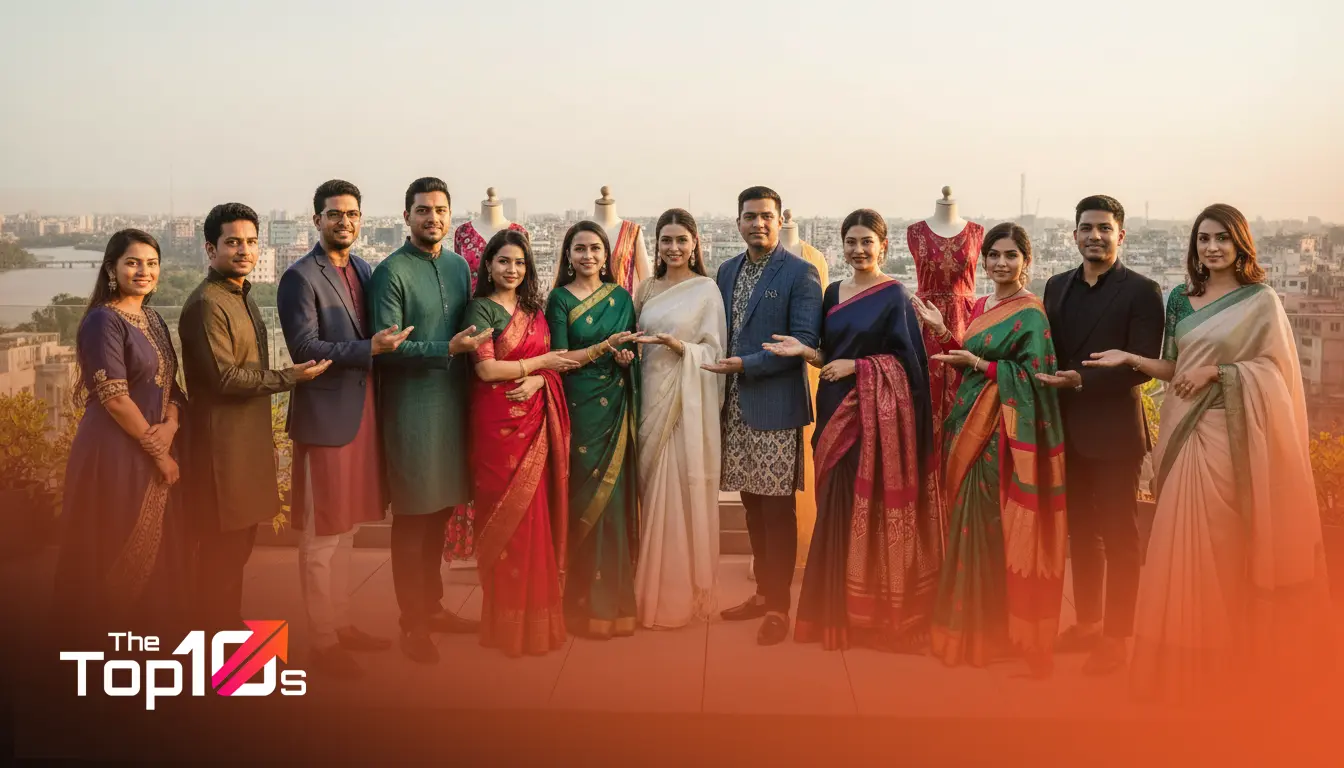
Bangladesh often gets recognized as a manufacturing powerhouse for the global apparel industry, but that reputation sometimes overshadows the incredible artistry happening within its own borders. If you look past the factory floors, you will find a vibrant, pulsating creative scene driven by visionaries who are redefining South Asian style.
You might be surprised to discover that the local fashion scene isn’t just about replicating trends; it is about reviving dying crafts. The best designers here are essentially historians and innovators wrapped in one. They take centuries-old fabrics like Muslin and Jamdani and reimagine them for a contemporary audience that values both heritage and wearability.
Finding the right creative partner for your wardrobe—whether for a wedding, a gala, or just elevating your daily style—requires knowing who specializes in what. Some excel at the structural complexity of menswear, while others are masters of bridal embroidery that tells a story. This guide cuts through the noise to highlight the creative minds shaping the industry right now.
Quick Takeaways: The Bangladeshi Fashion Scene
- Heritage Revival is Key: The top names almost always incorporate local weaves like Gamcha, Khadi, or Jamdani into high fashion.
- Bridal Dominates: Due to cultural demand, many designers focus heavily on intricate wedding couture.
- Sustainability isn’t a Buzzword: For many Bangladeshi designers, “slow fashion” is the default mode of production, utilizing handloom weavers.
- Fusion is the Standard: Expect to see a blend of traditional Bengali silhouettes with Western cuts and draping styles.
How We Identified Leading Fashion Designers
Selecting the top talent in a country rich with textile history isn’t a task taken lightly. We didn’t just look at Instagram follower counts or social buzz, as those metrics can often be misleading. Instead, our analysis focused on the tangible contributions these individuals have made to the industry.
We examined the depth of their portfolios. A designer’s ability to evolve over decades while maintaining a distinct signature is a strong indicator of expertise. We looked for consistency in craftsmanship—how well a garment holds up, the quality of the finishing, and the complexity of the pattern making.
Another critical factor was their role in textile preservation. The most respected figures in Dhaka and Chittagong are those who work directly with rural artisans, ensuring that traditional weaving techniques survive in a mechanized world. We also considered client sentiment regarding reliability, fit, and the ability to translate a client’s personality into cloth.
List of 10 Best Fashion Designers in Bangladesh
| SNO | Name | Best For |
|---|---|---|
| 1 | Bibi Russell | People who want to wear a piece of history and support artisan communities directly. |
| 2 | Humaira Khan | The cosmopolitan woman looking for versatile wardrobe staples that stand out without screaming for attention. |
| 3 | Maheen Khan | Buyers who value understated elegance and ethical production standards over flashy trends. |
| 4 | Mehruz Munir | Grooms looking for a tuxedo or suit that fits perfectly, and women seeking edgy, non-traditional evening gowns. |
| 5 | Sarah Karim | Brides who want a fairy-tale aesthetic with intricate, hand-done detailing. |
| 6 | Emdad Hoque | Saree connoisseurs who appreciate storytelling through textile art. |
| 7 | Rina Latif | The elite buyer looking for a show-stopping outfit for a red-carpet event or a high-profile wedding. |
| 8 | Shahrukh Amin | Men who want to look culturally appropriate during festivals without looking dated. |
| 9 | Tenzing Chakma | Art lovers and those looking for a bohemian, colorful aesthetic that carries deep cultural meaning. |
| 10 | Kuhu Plamondon | Women with a bold personality who aren’t afraid of color and artistic expression. |
Top 10 Fashion Designers in Bangladesh
Here are the creatives currently setting the benchmark for style, quality, and innovation in Bangladesh.
1. Bibi Russell
You cannot discuss Bangladeshi fashion without starting here. Bibi Russell is less of a designer and more of a cultural movement. Having modeled for high-end international brands in Europe, she returned to Bangladesh with a singular mission: to save the country’s weavers. She is widely credited with elevating the humble “Gamcha” (a local cotton towel fabric) to international runways.
- Specialization: Sustainable fashion, handloom textiles, and ready-to-wear fusion.
- Experience: Over 40 years in the fashion industry.
- Notable Strengths: Her ability to use vibrant, indigenous colors and rough textures to create sophisticated, global-friendly attire is unmatched. She champions “Fashion for Development.”
- Best Suited For: People who want to wear a piece of history and support artisan communities directly.
2. Humaira Khan
Founder of the label Anokhi, Humaira Khan has a knack for understanding what the modern Bangladeshi woman wants to wear. She moved away from heavy, restrictive traditional wear early on, opting instead for breathable fabrics and cuts that allow for movement. Her work often features a masterful mix of prints and solids.
- Specialization: Prêt-à-porter (ready-to-wear), fusion kurtas, and contemporary formal wear.
- Experience: 30+ years establishing a distinct retail presence.
- Notable Strengths: Khan excels at pattern clashing and innovative embroidery placement. Her designs are practical enough for work yet elegant enough for evening events.
- Best Suited For: The cosmopolitan woman looking for versatile wardrobe staples that stand out without screaming for attention.
3. Maheen Khan
As the force behind the renowned brand Mayasir, Maheen Khan has dedicated her career to the promotion of local craft. She served as the President of the Fashion Design Council of Bangladesh (FDCB), actively working to organize the industry. Her design philosophy revolves around the purity of the fabric and the dignity of the artisan.
- Specialization: High-end handcrafted ensembles, heritage weaves, and formal wear.
- Experience: A veteran leader in the design community for over three decades.
- Notable Strengths: Her work with Khadi is exceptional. She manages to make coarse, hand-spun fabrics look regal through precise tailoring and subtle embellishment.
- Best Suited For: Buyers who value understated elegance and ethical production standards over flashy trends.
4. Mehruz Munir
If you are looking for sharp tailoring that rivals Savile Row, Mehruz Munir of Zurhem is the name to know. He brought a distinct, structural edge to the Dhaka fashion scene, which was previously dominated by soft drapes. His approach is architectural, focusing heavily on fit, silhouette, and internationally sourced luxury fabrics.
- Specialization: Luxury menswear, bespoke suits, and structural evening wear for women.
- Experience: Roughly 15 years, quickly rising to prominence.
- Notable Strengths: Munir understands the male physique incredibly well. His suits feature modern cuts—slim lapels, fitted waists—that appeal to a younger, fashion-forward demographic.
- Best Suited For: Grooms looking for a tuxedo or suit that fits perfectly, and women seeking edgy, non-traditional evening gowns.
5. Sarah Karim
Carrying forward a family legacy, Sarah Karim creates clothing that feels like heirloom jewelry. Her label is synonymous with old-school glamour. She focuses intensely on specialized embroidery techniques like Zardozi and Kantha, applying them to flowing chiffons and silks. Her studio is a go-to destination for wedding trousseaus.
- Specialization: Bridal couture and heavy formal wear.
- Experience: deeply rooted in a multi-generational design legacy.
- Notable Strengths: Her color palettes are often soft and pastel-heavy, moving away from the jarring bright reds traditionally seen in local weddings, offering a more contemporary romantic look.
- Best Suited For: Brides who want a fairy-tale aesthetic with intricate, hand-done detailing.
6. Emdad Hoque
Emdad Hoque is a purist who believes the fabric should dictate the design. He is a strong advocate for the local yarn and dyeing industry. His designs often feature block prints and natural dyes, celebrating the earthy tones of rural Bengal. He has played a pivotal role in mentoring younger designers and organizing fashion showcases in the capital.
- Specialization: Ethnic wear, saree design, and textile innovation.
- Experience: A senior figure with decades of contribution to the sector.
- Notable Strengths: Hoque’s sarees are art pieces. He uses motifs inspired by Bengali folklore and nature, making his work instantly recognizable.
- Best Suited For: Saree connoisseurs who appreciate storytelling through textile art.
7. Rina Latif
Rina Latif operates in the realm of ultra-luxury. Her creations are often described as ethereal. She shies away from mass production entirely, focusing on unique, one-off pieces that command high prices and respect. Using rich velvets, intricate laces, and the finest Muslin, she creates garments that feel royal.
- Specialization: Haute Couture and luxury evening wear.
- Experience: A long-standing pillar of the luxury market in Dhaka.
- Notable Strengths: Her finishing is impeccable. You will rarely find a loose thread or a mismatched seam. She blends Victorian aesthetics with Mughal influences seamlessly.
- Best Suited For: The elite buyer looking for a show-stopping outfit for a red-carpet event or a high-profile wedding.
8. Shahrukh Amin
Shahrukh Amin brings a refreshing, youthful energy to traditional attire. Known for his work with the brand Almirah, he revitalized how men view kurtas and panjabis. His designs often incorporate geometric patterns and unexpected color combinations, moving away from the safe beige and white standards.
- Specialization: Men’s ethnic wear and contemporary casuals.
- Experience: Established leader in the retail fashion sector.
- Notable Strengths: He makes traditional wear feel cool. His cuts are slimmer and more flattering for the modern body type, and he isn’t afraid to experiment with collar shapes and plackets.
- Best Suited For: Men who want to look culturally appropriate during festivals without looking dated.
9. Tenzing Chakma
Bringing the rich heritage of the Chittagong Hill Tracts to the mainstream, Tenzing Chakma is a designer with a unique voice. He incorporates the indigenous “Pinon Hadi” weaving styles into modern dresses, skirts, and tops. His work is a vibrant explosion of color and geometric precision, representing the diverse tribal cultures of Bangladesh.
- Specialization: Indigenous textiles and tribal-fusion wear.
- Experience: A pioneer in bridging tribal art with mainstream fashion.
- Notable Strengths: His authentic use of backstrap loom fabrics gives his clothes a texture and durability that machine-made fabrics cannot replicate.
- Best Suited For: Art lovers and those looking for a bohemian, colorful aesthetic that carries deep cultural meaning.
10. Kuhu Plamondon
Kuhu is an artist first and a fashion designer second. She treats fabric as her canvas. Known for her hand-painted sarees and dresses, her work is bold, abstract, and incredibly personal. She doesn’t follow seasonal trends; she paints what she feels, making every piece a wearable painting.
- Specialization: Hand-painted sarees and artistic fusion wear.
- Experience: Decades of experience in both fine arts and fashion.
- Notable Strengths: Her brush strokes are dynamic. Wearing a Kuhu creation guarantees that no one else in the room will have the same outfit.
- Best Suited For: Women with a bold personality who aren’t afraid of color and artistic expression.
What Defines a Great Fashion Designer in Bangladesh?
The criteria for greatness here go beyond just making pretty clothes. The climate, culture, and social calendar play huge roles in design success. A top-tier designer understands the oppressive humidity of the region and chooses fabrics like breathable cottons, Linens, or fine Muslins rather than heavy synthetics.
Cultural context is equally vital. Fashion here often has to walk a fine line between modern aspirations and conservative sensibilities. The best designers know how to play with transparency and layering to create allure without compromising modesty, if the client prefers it.
Furthermore, there is a regional dialogue happening in fashion. If you are exploring regional styles, it is interesting to see how trends overlap with the Top 10 Fashion Designers in India, as there is a shared history of embroidery and textiles, yet Bangladeshi designers maintain a distinct identity through their specific weaving traditions like Jamdani.
How to Choose the Right Fashion Designer for Your Needs
Working with a designer is an investment of both money and trust. Here is how to make sure you get the best result.
Assess Your Timeline
Good design takes time. If you want a custom bridal lehenga or a bespoke suit, do not walk in two weeks before the event. Most top designers in Dhaka require a lead time of 3 to 6 months for heavy couture. For ready-to-wear, you can obviously shop off the rack, but alterations still take days.
Define Your Aesthetic
Don’t go to a minimalist designer asking for heavy glitz, and don’t ask a traditionalist for an avant-garde structural gown. Look at their past three collections. If you don’t see anything that resembles your vision, they aren’t the right fit. It is better to align with a designer whose natural style matches your own.
Understand the Production Process
Ask questions about sourcing. If you are paying a premium, you want to ensure the fabric is authentic. Ask if the embroidery is hand-done or machine-made. A reputable designer will be transparent about their manufacturing process. This is also where you clarify fitting schedules—expect at least two to three trials for custom pieces.
Frequently Asked Questions
Do Bangladeshi fashion designers offer international shipping?
Yes, many established designers and houses like Bibi Productions, Zurhem, and Anokhi have infrastructure for international clients. However, sizing can vary, so it is crucial to provide exact measurements rather than standard sizes when ordering from abroad.
What is the price range for a designer bridal outfit in Dhaka?
Prices vary wildly. A simple designer saree might start around BDT 20,000 ($180), while intricate bridal lehengas from top-tier designers like Sarah Karim or Rina Latif can easily range from BDT 100,000 to over BDT 500,000 ($900 – $4,500+) depending on the craftsmanship.
Can I customize an outfit from these designers?
Most of the designers listed, particularly those in the couture space (like Mehruz Munir or Rina Latif), base their business models on customization. Brands that focus more on retail and prêt (like Almirah or Anokhi) may offer limited alterations but generally stick to their seasonal designs.
Why is Jamdani so expensive?
Authentic Jamdani is a labor-intensive weave recognized by UNESCO as an Intangible Cultural Heritage of Humanity. A single high-quality saree can take two weavers months to complete by hand. When you buy from designers who support these artisans, you are paying for months of skilled labor, not just cloth.
Final Thoughts on Bangladesh’s Fashion Industry
The fashion narrative in Bangladesh is shifting rapidly. It is no longer just about utility; it is about identity, heritage, and artistic expression. The designers listed here are at the forefront of this evolution, proving that Bangladeshi fashion deserves a spot on the global stage.
Whether you are looking for the rustic charm of a handloom piece or the sharp precision of a bespoke suit, the talent is here. Take the time to explore their collections, visit their studios if you can, and choose a designer who resonates with your personal story. Wearing a garment that supports local craftsmanship and makes you feel confident is the ultimate style statement.