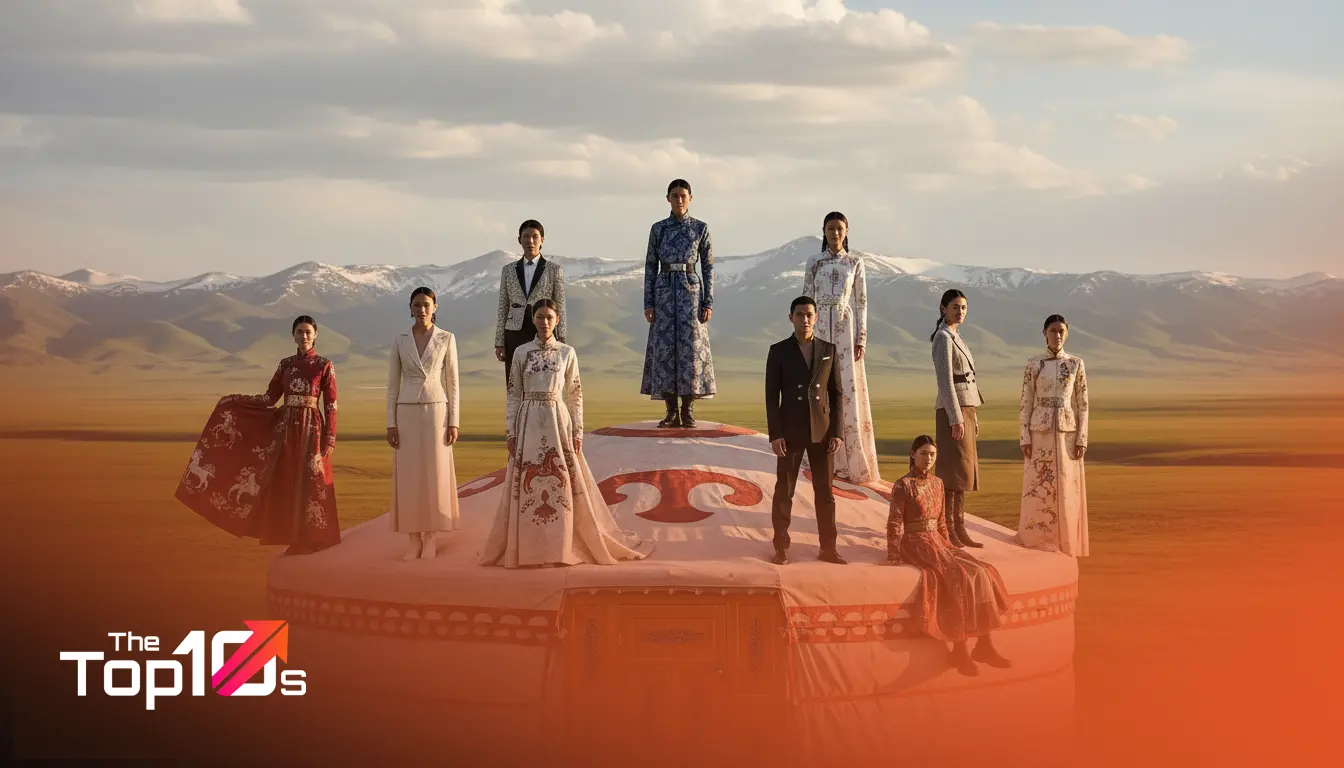
Imagine standing in the vast, windswept steppes of Central Asia, where the temperature can drop forty degrees in a single day. In this environment, clothing has never been just about aesthetics; it is a matter of survival. Yet, stroll through the streets of Ulaanbaatar today, and you will see a striking transformation. The ancient utility of the traditional Deel is being reimagined into high-fashion couture that graces runways from Tokyo to Paris.
Mongolian fashion is currently experiencing a renaissance. It is a fascinating collision of nomadic heritage, Buddhist artistry, and ultra-modern streetwear. For anyone looking to invest in unique apparel, this region offers something rare: a deep connection to raw materials. We aren’t just talking about fabric; we are talking about world-class cashmere, yak wool, and leather processed by the very people who designed the garments.
Navigating this scene can be tricky, though. With so many emerging talents and established houses, finding the best fashion designers in Mongolia requires knowing where to look. Are you seeking a bespoke bridal ensemble or an avant-garde woolen coat? Understanding the philosophy behind the needle makes all the difference in what you end up wearing.
Quick Takeaways
- Material Matters: The top designers almost exclusively work with locally sourced organic fibers like cashmere and yak down.
- Heritage Fusion: Expect to see the “Deel” (traditional tunic) silhouette modernized in nearly every collection.
- Slow Fashion: Most Mongolian design houses operate on a slow-fashion model, prioritizing durability over trends.
- Global Reach: Many of these creators studied in Milan, Paris, or Tokyo, bringing international technical skills back home.
How We Identified Leading Fashion Designers
Selecting the names for this list wasn’t about simply checking who has the most Instagram followers. To truly understand who is moving the needle in Ulaanbaatar and beyond, we looked at the intersection of craftsmanship, consistency, and creativity. We analyzed the longevity of their labels and their ability to sustain a brand in a competitive, resource-heavy market.
Our research focused on creators who demonstrate a mastery of complex textiles. Working with knitwear, for instance, requires a technical proficiency that differs vastly from cutting silk or cotton. We also considered their reception on the international stage. Have they successfully exported their vision while maintaining their cultural identity? Feedback from industry observers and client satisfaction regarding fit and longevity also played a significant role in our evaluation.
List of 10 Best Fashion Designers in Mongolia
| SNO | Name | Best For |
|---|---|---|
| 1 | MICHEL & AMAZONKA | Those who want statement pieces featuring heavy embroidery, distinct cultural motifs, and impeccable tailoring. |
| 2 | Mandkhai Jargalsaikhan (MANDKHAI) | The eco-conscious luxury buyer looking for knitwear that is architectural, bold, and incredibly soft. |
| 3 | Ariunaa Suri | Individuals who prefer an edgy, monochromatic look that functions well in harsh climates. |
| 4 | Tsolo Munkh | Collectors and art lovers who want a garment that serves as a conversation starter. |
| 5 | Oyuna Tserendorj (OYUNA) | Lovers of understated luxury and sophisticated, loose silhouettes. |
| 6 | Nomungerel B. (Monalun) | Clients seeking romantic, ethereal dresses and custom evening wear. |
| 7 | Bayarmaa Bayarkhuu (MONGOL) | Women in leadership roles who want clothing that projects confidence and strength. |
| 8 | Katya Zol | Anyone looking for a modernized Deel that is practical for everyday wear. |
| 9 | Odonchimed (Odon) | Younger buyers looking for unique, one-of-a-kind pieces that stand out on social media. |
| 10 | Bodonchar (Bodon) | Men seeking durable, high-quality outerwear and leather accessories. |
Top 10 Fashion Designers In Mongolia
Here are the creatives redefining what it means to wear Mongolian luxury. Each brings a distinct flavor, from ethno-futurism to delicate bridal couture.
1. Michel & Amazonka
If you are looking for the pulse of modern Mongolian pop culture mixed with high tradition, look no further than the Choigaalaa sisters, Michel and Amazonka. They have arguably become the most visible faces of the country’s fashion evolution, famously designing the uniforms for the Mongolian Olympic team. Their work is often characterized by intricate embroidery that references folklore without feeling dated.
Specialization: Couture and Pret-a-Porter
Experience: Established in 2013, with over a decade of defining the “Ulaanbaatar Cool” aesthetic.
Best For: Those who want statement pieces featuring heavy embroidery, distinct cultural motifs, and impeccable tailoring.
2. Mandkhai Jargalsaikhan (MANDKHAI)
Coming from a family deeply entrenched in the cashmere industry, Mandkhai Jargalsaikhan creates knitwear that defies gravity and expectation. She isn’t just making sweaters; she is sculpting with goat hair. Her label is based between London and Ulaanbaatar, and she is known for her “goat-to-garment” transparency. She controls the entire supply chain, ensuring the fibers are as ethical as they are soft.
Specialization: Structural Luxury Knitwear
Experience: Launching her eponymous label in 2016, she brings a fresh, global perspective to traditional materials.
Best For: The eco-conscious luxury buyer looking for knitwear that is architectural, bold, and incredibly soft.
3. Ariunaa Suri
There is a rugged mystery to Ariunaa Suri’s work. Her designs often feel like they belong in a futuristic nomadic film. She excels at mixing textures—combining rough leather with soft wools—and utilizes a darker, moodier color palette than many of her contemporaries. Her brand philosophy leans heavily on “Ethno-Futurism,” creating garments that are weather-resistant yet runway-ready.
Specialization: Avant-Garde Outerwear and Layering
Experience: A graduate of Bremen University of the Arts in Germany, she has been a staple of the scene since 2011.
Best For: Individuals who prefer an edgy, monochromatic look that functions well in harsh climates.
4. Tsolo Munkh
Tsolo Munkh operates at the intersection of art and apparel. Based largely in Paris, she infuses her Mongolian heritage with French couture techniques. Her pieces are often voluminous, utilizing embroidery and patchwork to tell stories of Buddhism and shamanism. The garments are incredibly detailed, often requiring hours of hand-finishing that puts them squarely in the realm of wearable art.
Specialization: Conceptual Couture
Experience: With experience at the Lavallière and winning international awards, she has been a force since the late 2000s.
Best For: Collectors and art lovers who want a garment that serves as a conversation starter.
5. Oyuna Tserendorj (OYUNA)
While some designers shout, Oyuna whispers. Her brand, OYUNA, is synonymous with minimalism and architectural draping. She treats cashmere not just as a fabric for warmth, but as a medium for structure. Her throws and garments are sold in the most prestigious boutiques worldwide. The aesthetic is clean, modern, and utterly devoid of gimmicks, allowing the quality of the Mongolian fiber to take center stage.
Specialization: Minimalist Cashmere and Home Textiles
Experience: Founded in 2002, she is one of the longest-standing international success stories from the region.
Best For: Lovers of understated luxury and sophisticated, loose silhouettes.
6. Nomungerel B. (Monalun)
Where others might focus on the ruggedness of the steppes, Nomungerel (the creative force behind Monalun) focuses on the softness of nature. Her designs are distinctly feminine, often incorporating silks, organza, and lighter wools. She is a favorite for high-end bridal wear and evening gowns in Ulaanbaatar, known for her delicate color palettes and floral motifs.
Specialization: Feminine Ready-to-Wear and Bridal
Experience: An established name in the local industry for over 15 years.
Best For: Clients seeking romantic, ethereal dresses and custom evening wear.
7. Bayarmaa Bayarkhuu (MONGOL)
Bayarmaa Bayarkhuu takes the history of the Mongol Empire and translates it for the New York Fashion Week runway. Her brand, MONGOL, is bold and unapologetic. She creates garments that feel regal, often using stiffer fabrics and strong shoulders to convey power. Her background in business and finance gives her a pragmatic approach to fashion, ensuring her high-concept designs are also wearable.
Specialization: High-End Ready-to-Wear and Cocktail Attire
Experience: She has been showcasing internationally since 2014.
Best For: Women in leadership roles who want clothing that projects confidence and strength.
8. Katya Zol
Katya Zol was one of the first Mongolian designers to truly crack the American market. Her talent lies in taking the traditional Deel and modifying the cut to suit western sensibilities without losing the garment’s soul. She mixes felt and wool with lighter fabrics, creating a fusion look that works as well in a Manhattan office as it does in a yurt.
Specialization: Cross-Cultural Fusion Wear
Experience: A veteran of the industry who broke ground for many younger designers.
Best For: Anyone looking for a modernized Deel that is practical for everyday wear.
9. Odonchimed (Odon)
Odonchimed brings a youthful, artistic energy to the table. Her designs often feature hand-painted elements and experimental fabric manipulations. There is a sense of playfulness in her work, yet the construction remains rigorous. She represents the new wave of talent that isn’t afraid to break the rules regarding what Mongolian fashion “should” look like.
Specialization: Artistic Streetwear and Casual Luxury
Experience: Rising through the ranks over the last 5-7 years.
Best For: Younger buyers looking for unique, one-of-a-kind pieces that stand out on social media.
10. Bodonchar (Bodon)
Menswear in Mongolia is often overlooked, but Bodonchar is changing that. Focusing on sharp tailoring and leather goods, Bodon creates pieces for the modern nomad. The jackets are rugged, often lined with fur or heavy wool, designed to last a lifetime. The aesthetic is masculine and utilitarian but finished with luxury hardware and precise stitching.
Specialization: Menswear and Leather Goods
Experience: A trusted name for bespoke men’s tailoring in Ulaanbaatar.
Best For: Men seeking durable, high-quality outerwear and leather accessories.
What Defines a Great Fashion Designer in Mongolia?
You might wonder what sets these creators apart from designers in Paris or Milan. The distinction usually lies in their relationship with the environment. A great Mongolian designer respects the source. They understand that the cashmere goat, the yak, and the camel are not just resources, but partners in the process.
Furthermore, excellence here is defined by the ability to balance the “old” with the “new.” A designer who simply copies Western trends tends to fade away quickly. The true masters are those who can take the asymmetric collar of a traditional tunic and apply it to a business blazer in a way that feels organic, not costumey. It is about honoring the nomadic philosophy of zero waste—using every scrap of leather and wool effectively.
Just as you see regionally specific mastery elsewhere, such as with the top 10 fashion designers in Brunei who master different textiles, Mongolian designers are defined by their mastery of warmth and durability without sacrificing elegance.
How to Choose the Right Fashion Designer for Your Needs
Picking a designer is personal. Here is a framework to help you decide which of the names above fits your lifestyle.
Assess Your Climate
Are you living in a place with harsh winters? If so, prioritize designers like Ariunaa Suri or Mandkhai, who specialize in thermal regulation through heavy knits and felts. If you live in a temperate zone, the lighter silks of Monalun might be more appropriate.
Define the Occasion
Are you attending a gala, or do you need a power suit for the boardroom? For events requiring high drama and cultural homage, Michel & Amazonka are the gold standard. For daily office wear that signals quiet luxury, Oyuna is unmatched.
Check the Production Timeline
Many of these designers operate small studios. Custom pieces (bespoke) can take weeks or even months to produce. Always ask about lead times upfront. Unlike fast fashion, this is slow art; patience is often part of the purchase price.
Frequently Asked Questions
Is Mongolian fashion clothing expensive?
Generally, yes, but for good reason. You are paying for premium raw materials like Grade-A cashmere and yak wool, which are expensive commodities. Additionally, the labor is often ethical and artisanal. Prices are comparable to mid-range to high-end luxury European brands.
Do these designers ship internationally?
Most of the established brands like Oyuna, Mandkhai, and Michel & Amazonka have e-commerce platforms that ship globally. Smaller ateliers might require direct contact via email or Instagram to arrange shipping.
What is the difference between Cashmere and Yak wool?
Cashmere is incredibly soft and lightweight, known for its loft. Yak wool is slightly more robust, warmer than Merino wool, and extremely breathable. Many Mongolian designers are now championing Yak down as a more sustainable, equally luxurious alternative to cashmere.
Can I get a custom Deel made?
Absolutely. Most designers in Mongolia, even the high-fashion ones, offer bespoke services. A custom modern Deel is a popular request and allows you to choose your fabric weight and embroidery patterns.
Are these brands sustainable?
Sustainability is inherent to the nomadic lifestyle. Most designers listed use natural, biodegradable fibers and produce in limited quantities to avoid waste. However, certifications vary, so it is always good to read their specific sustainability statements.
Next Steps for the Conscious Buyer
Mongolian fashion offers a refreshing departure from the homogenized trends seen in many western capitals. It offers warmth, history, and an undeniable coolness. If you are ready to explore this world, start by following these designers on social media to get a sense of their current collections.
Look for their “About” pages to understand their sourcing transparency. If you are planning a purchase, consider starting with a classic accessory—like a scarf from Oyuna or a vest from Mandkhai—to test the quality before investing in a full ensemble. By choosing one of these designers, you aren’t just buying clothes; you are keeping a rich, artistic heritage alive and thriving.