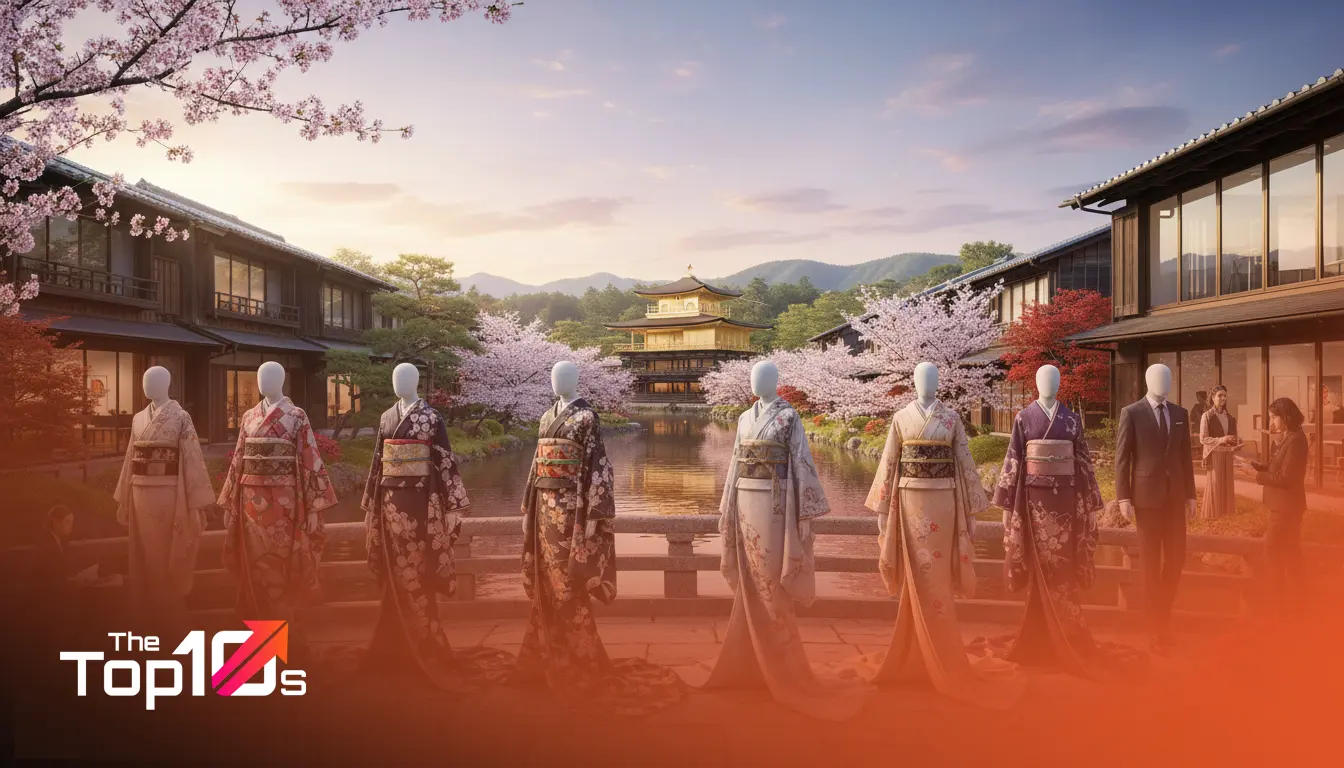
Kyoto does something to your sense of style that few other cities can replicate. You walk down a cobblestone street in Gion, expecting to see only traditional kimonos, but then you turn a corner and spot someone wearing structured, avant-garde streetwear constructed from centuries-old indigo fabric. That intersection—where 1,200 years of craftsmanship meets sharp, modern rebellion—is exactly what makes the fashion scene here so compelling.
Finding the right creative mind in this city isn’t just about buying clothes. It is about understanding a philosophy. The best fashion designers in Kyoto don’t just sketch silhouettes; they act as custodians of textile history while pushing the boundaries of what wearable art can look like. Whether you are a brand owner looking for inspiration, a retailer sourcing unique pieces, or simply someone who appreciates high-level construction, the talent pool here runs deep.
You might be wondering where to start looking in a city that guards its secrets so closely. While the bold energy of nearby cities is tempting—you can see how different the vibe is by checking out the top 10 fashion designers in Osaka—Kyoto offers a quieter, deeper introspection in its apparel. We have curated a list of the most influential design forces currently shaping this ancient capital.
Quick Takeaways: Kyoto Fashion
- Textile First: Most Kyoto designers start with the fabric (often Nishijin-ori or Kyo-Yuzen) before the cut.
- Gender Neutrality: Many local labels focus on fluid silhouettes that work across gender lines.
- Slow Fashion: “Newness” is less important here than durability and aging potential.
- Modern Fusion: Expect to see kimono collars integrated into trench coats and hoodies.
How We Identified Leading Fashion Designers
Selecting the top creative talent in a city known for its privacy requires more than a quick internet search. We analyzed the local industry based on four distinct pillars that signal genuine authority and design integrity.
First, we looked at textile mastery. In Kyoto, a designer who doesn’t understand the weave and weft of their material rarely lasts. We prioritized professionals who have direct relationships with local mills and dye houses. Second, we examined longevity and brand evolution. We sought out names that have survived the hype cycle and built a consistent visual language over the years.
Third, we considered global-local balance. The designers on this list often show in Paris or Tokyo but keep their production and creative heart firmly planted in Kyoto. Finally, we reviewed client reception. We looked for designers whose work is praised not just for aesthetics, but for wearability and construction quality by the people who actually buy and wear it.
List of 10 Best Fashion Designers in Kyoto
| SNO | Name | Best For |
|---|---|---|
| 1 | Koichi Watanabe | Professionals who want comfortable, sophisticated clothing that works in both creative and corporate settings. |
| 2 | Katsuji Wakisaka | People who love color and want to incorporate traditional Japanese elements (like split-toe shoes) into casual wardrobes. |
| 3 | Akira Minagawa | Those who view clothing as a long-term investment and appreciate storytelling in embroidery. |
| 4 | Kazuhiro Kameda | Lovers of vintage prints and bold, intricate patterns who want comfortable summer wear. |
| 5 | Taiga Takahashi | Fashion purists and collectors who care about how a garment was stitched as much as how it looks. |
| 6 | Daisuke Yokoyama | Streetwear enthusiasts who want something with more cultural depth and texture than a standard logo hoodie. |
| 7 | The KAPITAL Design Team | Those seeking statement pieces that look like they have lived a hundred lives. |
| 8 | Kakishibu Artisans of Kyoto | Eco-conscious consumers who avoid synthetic chemicals. |
| 9 | Kazuyuki Kumagai | Fans of “dark fashion” and sleek, monochromatic looks. |
| 10 | Milena Taran | Individuals who prefer a bohemian, artisan aesthetic. |
Top 10 Fashion Designers In Kyoto
1. Koichi Watanabe (Rainmaker Kyoto)
Koichi Watanabe is arguably the face of modern Kyoto tailoring. After honing his skills at prestigious houses, he established Rainmaker to redefine what standard menswear looks like. His approach is architectural yet fluid, often removing stiff interlinings to create jackets that drape like cardigans while retaining a formal silhouette.
Specialization: Modern Tailoring & Menswear
Experience: 15+ Years
Notable Strength: Creating “new classics” by stripping away unnecessary details from traditional western tailoring.
Best Suited For: Professionals who want comfortable, sophisticated clothing that works in both creative and corporate settings.
2. Katsuji Wakisaka (SOU・SOU)
You cannot talk about Kyoto design without mentioning the vibrant world of SOU・SOU. As the textile designer behind the brand, Katsuji Wakisaka brings a distinctly Scandinavian-influenced joy to traditional Japanese footwear (jikatabi) and apparel. His patterns are instantly recognizable—bold numbers, oversized flowers, and whimsical shapes.
Specialization: Textile Design & Modern Japanese Wear
Experience: 40+ Years (formerly with Marimekko)
Notable Strength: Revitalizing traditional Japanese production methods through pop-art aesthetics.
Best Suited For: People who love color and want to incorporate traditional Japanese elements (like split-toe shoes) into casual wardrobes.
3. Akira Minagawa (minä perhonen)
While his brand has a global footprint, Akira Minagawa’s connection to Kyoto is profound, with one of his most significant flagship spaces located here. Minagawa doesn’t just design clothes; he designs the fabric from scratch. His process is slow, emotional, and deeply connected to nature. He often sketches by hand, ensuring the imperfections of the drawing transfer to the final embroidery.
Specialization: Women’s Ready-to-Wear & Lifestyle
Experience: 25+ Years
Notable Strength: Narrative-driven textiles that gain character the longer they are worn.
Best Suited For: Those who view clothing as a long-term investment and appreciate storytelling in embroidery.
4. Kazuhiro Kameda (Pagong)
Kazuhiro Kameda took a historic dyeing factory that was struggling to survive and transformed it into a vibrant fashion label. Pagong is famous for applying Kyo-Yuzen (traditional kimono dyeing techniques) to western clothing like aloha shirts and cut-and-sew tops. Kameda’s vision saved a dying art form by giving it a new canvas.
Specialization: Kyo-Yuzen Dyeing on Western Casuals
Experience: 20+ Years in apparel (family history spans a century)
Notable Strength: Adapting extremely complex silk-dyeing techniques for cotton and everyday wear.
Best Suited For: Lovers of vintage prints and bold, intricate patterns who want comfortable summer wear.
5. Taiga Takahashi
One of the younger, more conceptual names on this list, Taiga Takahashi treats fashion design like archaeology. He operates between Kyoto and New York but draws heavily on the Japanese concept of time and preservation. His garments are often reproductions of century-old American sportswear, but constructed using deadstock Japanese fabrics and dyeing techniques found in Kyoto.
Specialization: Archival Reproduction & Conceptual Menswear
Experience: ~7 Years
Notable Strength: Obsessive attention to historical hardware, stitching, and fabric aging.
Best Suited For: Fashion purists and collectors who care about how a garment was stitched as much as how it looks.
6. Daisuke Yokoyama (Sasquatchfabrix)
Daisuke Yokoyama masters the art of friction. His design ethos involves smashing together American skate culture with traditional Japanese workwear. While the brand has a massive cult following in Tokyo, the aesthetic is deeply rooted in the “wabi-sabi” sensibilities often associated with Kyoto’s creative undercurrent. He utilizes local craftsmanship to create pieces that look intentionally worn-in.
Specialization: Avant-Garde Streetwear
Experience: 20+ Years
Notable Strength: Integrating traditional “Noragi” (farm wear) silhouettes into modern street fashion.
Best Suited For: Streetwear enthusiasts who want something with more cultural depth and texture than a standard logo hoodie.
7. The KAPITAL Design Team (Kiro Hirata)
Although headquartered in nearby Okayama, the creative force of KAPITAL is inextricably linked to the Kansai region’s denim and dye culture, with Kyoto serving as a major retail and inspiration hub for their “Kountry” line. The design direction focuses on “boro” (patchwork) and sashiko stitching. They treat denim not as blue jeans, but as a canvas for complex folk art.
Specialization: Denim & Artisanal Remake
Experience: 20+ Years
Notable Strength: The “skeleton” motifs and intricate patchwork that mimics vintage repairs.
Best Suited For: Those seeking statement pieces that look like they have lived a hundred lives.
8. Kakishibu Artisans of Kyoto (Various Studios)
Rather than a single person, this spot acknowledges the collective of designers focusing on Kakishibu (persimmon tannin dyeing). Modern studios in Kyoto are taking this reddish-brown dye, traditionally used for waterproofing, and applying it to modern canvas bags, coats, and hats. Designers in this niche prioritize the sun-curing process which makes every single item unique.
Specialization: Natural Dyeing & Accessories
Experience: Centuries of collective tradition
Notable Strength: Creating organic, earth-tone garments that darken and strengthen with sunlight exposure.
Best Suited For: Eco-conscious consumers who avoid synthetic chemicals.
9. Kazuyuki Kumagai (Attachment/Kazuyuki Kumagai)
Kazuyuki Kumagai is a master of minimalism. While he operates on a national scale, his frequent utilization of Kyoto’s traditional craftsmen for specific collections earns him a place here. He strips clothing down to its bare essentials but uses intricate cutting techniques to ensure movement. His work often features raw hems and specialized linen blends favored in the Kyoto climate.
Specialization: Minimalist Drapery & Tech-wear fusion
Experience: 25+ Years
Notable Strength: Pattern cutting that spirals around the body to reduce seam discomfort.
Best Suited For: Fans of “dark fashion” and sleek, monochromatic looks.
10. Milena Taran (Taran.)
Kyoto attracts creatives from everywhere, and Milena Taran is a prime example. Her jewelry and apparel brand draws inspiration from the natural textures found in Kyoto’s forests and gardens. While primarily known for metalwork, her foray into apparel often involves natural fibers and relaxed, earthy aesthetics that mirror the city’s slow pace.
Specialization: Jewelry & Natural Fiber Apparel
Experience: 10+ Years
Notable Strength: Organic shapes that feel dug from the earth rather than manufactured.
Best Suited For: Individuals who prefer a bohemian, artisan aesthetic.
What Defines a Great Fashion Designer in Kyoto?
Kyoto is not a city that rewards fast fashion. A truly great designer here understands the concept of Monozukuri—the art of making things. This goes beyond simple manufacturing; it implies a dedication to continuous improvement and respect for the materials.
The defining characteristic is usually the relationship with the fabric. In many fashion capitals, a designer sketches a dress and then finds a fabric to match. In Kyoto, the process often reverses. The designer sees a bolt of hand-woven silk or a specifically dyed indigo cotton and allows the material to dictate the shape of the garment. This results in clothing that moves better and lasts longer.
Furthermore, great Kyoto designers balance weight and seasonality. The city creates a unique climate challenge—steamy, humid summers and bone-chilling winters. The top professionals understand how to layer natural fibers like linen, silk, and wool to maintain comfort without sacrificing the sharp aesthetic the city is known for.
How to Choose the Right Fashion Designer for Your Needs
Identifying the right talent for your project or wardrobe requires looking past the window display. Here is a framework to help you make the right choice.
Assess Your “Texture Tolerance”
Kyoto fashion often relies on raw, textured fabrics. Are you comfortable wearing stiff raw denim, textured hemp, or slubby silk? Some designers prioritize the “hand-feel” of heritage fabrics which can feel rough initially but soften over time. If you prefer instant softness and stretch, look for designers specializing in modern knits or fusion fabrics.
Define the End Use
Are you looking for a “conversation piece” or a “daily driver”? Brands like Pagong or SOU・SOU offer visually striking items that stand out immediately. In contrast, designers like Koichi Watanabe (Rainmaker) offer subtle details that only reveal themselves upon close inspection. Know whether you want to be seen from across the street or appreciated up close.
Check the Production Timeline
Because many Kyoto designers rely on local artisans for dyeing and weaving, stock is often limited and production cycles are slow. If you are a buyer for a boutique, ask about lead times early. It is not uncommon for a specific dyed fabric to take months to produce because it relies on specific weather conditions for drying.
Frequently Asked Questions
Can I visit these designers’ studios in Kyoto?
Many designers listed, such as SOU・SOU and Rainmaker, have flagship stores that are open to the public. However, smaller ateliers often require an appointment. It is always best to check their Instagram or website before showing up, as some operate out of private machiya (traditional townhouses).
Is Kyoto fashion significantly more expensive than Tokyo fashion?
Not necessarily, but the value proposition is different. In Kyoto, you are often paying for the textile production and artisanal dyeing processes. While a t-shirt might cost more here, it is likely dyed by hand using techniques that take weeks, rather than mass-printed.
Do these designers offer custom or made-to-measure services?
Rainmaker and several independent kimono-remake artists often provide made-to-measure services. However, ready-to-wear is the standard for most larger brands. If you need bespoke work, you will likely need to visit the shop in person for fittings.
Are there sustainable fashion options in Kyoto?
Absolutely. Kyoto is arguably the hub of Japanese sustainable fashion because the culture inherently dislikes waste (mottainai). Look for “Upcycled Kimono” brands or designers using natural dyes like indigo and persimmon, which have a minimal environmental footprint compared to synthetic dyes.
What is “Kyo-Yuzen” and why do designers mention it?
Kyo-Yuzen is a traditional dyeing technique developed in Kyoto in the 17th century, known for painting dye directly onto cloth to create picturesque designs. Contemporary designers prize it because it allows for incredibly detailed, painterly graphics on modern clothing.
Conclusion
Choosing a fashion designer in Kyoto is an investment in history as much as it is in personal style. The names on this list represent a bridge between the ancient imperial court’s aesthetic standards and the functional needs of modern life. Whether you are drawn to the architectural tailoring of Rainmaker or the whimsical textiles of SOU・SOU, you are buying into a lineage of craftsmanship that refuses to cut corners.
Take your time exploring these collections. Feel the fabrics. Ask about the dyeing process. When you find the designer whose philosophy aligns with yours, you aren’t just getting a piece of clothing—you’re getting a piece of Kyoto to take home with you.