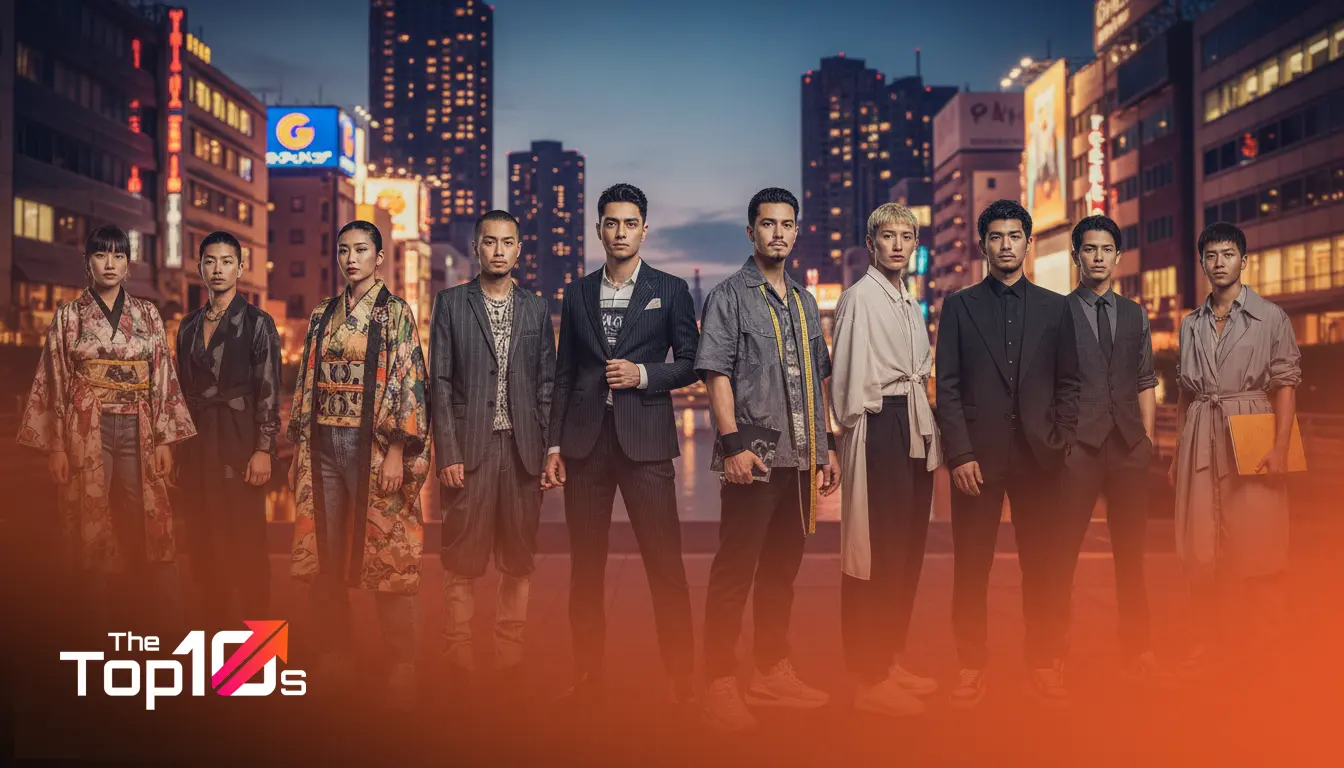
Osaka doesn’t whisper; it roars. While other fashion capitals might prioritize minimalist restraint or rigid traditions, Japan’s “Kitchen of the Nation” serves up a fashion scene that is loud, unapologetic, and technically brilliant. If you are looking for a fashion designer in Osaka, you aren’t just looking for someone who can sketch a dress or tailor a suit. You are looking for a creative partner who understands the distinct “Kansai spirit”—a blend of rebellious street culture, world-class denim craftsmanship, and a flair for the theatrical.
For brands, retailers, and individual style enthusiasts, tapping into the Osaka design network means accessing a lineage of creators who aren’t afraid to break rules. From the neon-soaked streets of Amerikamura (Amemura) to the quiet, dusty ateliers of denim masters, the talent here is diverse. But finding the right fit can be overwhelming. The local industry operates differently than in Europe or North America, placing a heavier emphasis on textile innovation and distinct subcultural tribes.
Quick Takeaways: The Osaka Design Scene
- Denim Dominance: Osaka is the global heartbeat of high-end vintage reproduction denim (The Osaka 5).
- Street vs. Structure: The city excels in two extremes: hyper-casual streetwear and intricate, avant-garde costume design.
- Vibrant Aesthetics: Expect bolder colors, animal prints, and experimental layering compared to eastern Japan.
- Heritage Roots: Many top modern designers hail from multi-generational textile families in the region.
How We Identified Leading Fashion Designers
Selecting the top talent in a city as chaotic and creative as Osaka requires looking beyond Instagram follower counts. Our assessment focuses on creators who have left a tangible mark on both the local economy and the global fashion conversation. We looked for professionals who demonstrate a mastery of material—specifically the region’s famous cotton and wool textiles—and a unique design philosophy that separates them from the pack.
We also considered the “accessibility factor.” While some designers on this list are legends accessible only through high-end boutiques, others run active studios where collaboration is possible. We analyzed their recent collections, their influence on the “Amemura” street style, and their reputation among peers in the Kansai region. This list represents a mix of historic pillars who defined the Osaka look and contemporary innovators pushing it forward.
List of 10 Best Fashion Designers in Osaka
| SNO | Name | Best for |
|---|---|---|
| 1 | Michiko Koshino | High-concept streetwear, club-inspired aesthetics, and functional sportswear. |
| 2 | Hidehiko Yamane (Evisu) | Premium denim enthusiasts and brands seeking heritage workwear aesthetics. |
| 3 | Hidenori Kumakiri (Beautiful People) | Conceptual ready-to-wear and complex pattern-making projects. |
| 4 | Verdy | Graphic-heavy streetwear, pop-ups, and merchandise collaborations. |
| 5 | Hitoshi Korogi and Keiko Miyakoshi (Roggykei) | Stage costumes, avant-garde editorial pieces, and unique leather accessories. |
| 6 | Yoshiyuki Hayashi (Resolute) | Tailored denim fits and textile-focused casual wear. |
| 7 | Hiroko Koshino | Luxury womenswear, resort wear, and artistic prints. |
| 8 | Masahiro Nakagawa (20471120) | Sustainable fashion concepts, upcycling, and narrative-driven collections. |
| 9 | The Ring Jacket Creative Team | High-end menswear, soft tailoring, and innovative wool fabrics. |
| 10 | The Amemura Indie Scene | Custom vintage reworks and sustainable streetwear. |
Top 10 Fashion Designers in Osaka
Here are ten creatives who embody the energy, craftsmanship, and innovation of Osaka’s fashion industry.
1. Michiko Koshino
You cannot talk about Osaka fashion without bowing to the Koshino legacy. Michiko Koshino is arguably the most rebellious of the famous three sisters. She rose to fame by defining the clubwear aesthetic of the 80s and 90s. While she spent years in London, her DNA is pure Osaka—bold, humorous, and practical.
She is best known for her “inflatable” jackets and heavy use of technical fabrics like nylon and vinyl. Her work perfectly suits brands or individuals looking for sportswear that doubles as art. She doesn’t just design clothes; she designs movement and atmosphere.
Best For: High-concept streetwear, club-inspired aesthetics, and functional sportswear.
2. Hidehiko Yamane (Evisu)
If denim had a godfather in Osaka, it would likely be Hidehiko Yamane. As the founder of Evisu, he put Japanese denim on the global map. His approach to design is obsessive, focusing on vintage looms and deep indigo dyeing techniques that mass production abandoned decades ago.
Yamane’s design signature is the hand-painted seagull logo, a touch that brought a playful, pop-art vibe to serious workwear. His influence established Osaka as the “Denim Capital of the World.” He represents the artisan designer who prioritizes the fabric’s integrity over fleeting trends.
Best For: Premium denim enthusiasts and brands seeking heritage workwear aesthetics.
3. Hidenori Kumakiri (Beautiful People)
While his brand has gained massive traction in Paris and Tokyo, Hidenori Kumakiri is a product of the Kansai fashion education system. His design ethos revolves around “Kids Wear for Everyone”—a technical feat of pattern making where garments can be worn by adults or children depending on the fit preference.
Kumakiri is a master of pattern manipulation. He approaches design like an architect, deconstructing standard silhouettes (like the trench coat or rider’s jacket) and rebuilding them with new proportions. His work is intellectual but highly wearable.
Best For: Conceptual ready-to-wear and complex pattern-making projects.
4. Verdy
Verdy is the graphic designer turned fashion icon who currently rules the street scene. Hailing from Osaka, his projects “Girls Don’t Cry” and “Wasted Youth” have become cultural phenomenons. He bridges the gap between graphic design, typography, and apparel.
Unlike traditional couturiers, Verdy’s strength lies in hype, community building, and emotional connection through text. His simple, emotive slogans on hoodies and tees have created a cult following. He represents the new wave of designers where the brand message is as vital as the cloth.
Best For: Graphic-heavy streetwear, pop-ups, and merchandise collaborations.
5. Hitoshi Korogi and Keiko Miyakoshi (Roggykei)
If you saw Lady Gaga wearing a stunning, architectural piece that looked like it came from another galaxy, it might have been Roggykei. Based in Osaka, this duo creates avant-garde fashion that focuses on circular silhouettes and alternative materials.
They maintain a studio in Osaka rather than moving to the capital, preserving their unique creative isolation. Their accessories and garments often use leather and wool in structural ways that defy gravity. They prove that high fashion doesn’t need a Paris zip code.
Best For: Stage costumes, avant-garde editorial pieces, and unique leather accessories.
6. Yoshiyuki Hayashi (Resolute)
Another titan of the “Osaka 5” denim movement, Hayashi was the brain behind the seminal brand Denime before launching Resolute. His philosophy is distinct from Yamane’s; Hayashi pursues the perfect, slender 1960s silhouette rather than heavy vintage reproduction.
He designs for the wearer who wants jeans to fit like tailored trousers. His obsession with the “fluff” of the cotton and the specific fading potential of the indigo makes him more of a textile scientist than a typical fashion designer. He represents the relentless pursuit of a single, perfect product.
Best For: Tailored denim fits and textile-focused casual wear.
7. Hiroko Koshino
The eldest of the Koshino sisters, Hiroko brings a sense of art and calligraphy to fashion. Her designs are deeply influenced by traditional Japanese aesthetics but interpreted through a modern, cosmopolitan lens. She treats fabric like a canvas.
Her work often features loose, flowing silhouettes that prioritize comfort without sacrificing elegance. She utilizes advanced printing techniques to transfer ink-wash painting styles onto silk and synthetics. She is the go-to for sophisticated, artistic luxury.
Best For: Luxury womenswear, resort wear, and artistic prints.
8. Masahiro Nakagawa (20471120)
Though his legendary brand 20471120 is a hallmark of 90s Harajuku, Nakagawa’s roots and recent revival efforts are tied to the Kansai energy. He is a pioneer of upcycling, famously doing “Tokyo Recycle Project” shows where attendees exchanged clothes to be remade.
Nakagawa designs with a narrative focus, often creating characters and stories that the clothes inhabit. His style mixes anime influences with punk DIY aesthetics. He is ideal for projects that require a strong counter-cultural narrative or sustainable upcycling angles.
Best For: Sustainable fashion concepts, upcycling, and narrative-driven collections.
9. The Ring Jacket Creative Team
We list this as a collective because Ring Jacket, founded in Osaka in 1954, changed the game for Japanese tailoring. The designers behind this house created a “ready-to-wear” suit that feels bespoke. They developed their own fabrics, like “Balloon Wool,” to combat the humid Osaka summers.
The design team here focuses on soft tailoring—removing the heavy padding of British suits to create something lighter and more fluid, similar to Neapolitan tailoring but with Japanese precision. They represent the pinnacle of Osaka’s business attire.
Best For: High-end menswear, soft tailoring, and innovative wool fabrics.
10. Yamane’s Spiritual Successors (The Amemura Indie Scene)
Osaka’s creative energy is currently thriving in the small, independent studios of Amerikamura. While no single name dominates, a collective of young designers is reshaping vintage remakes. Shops and labels like Pigsty or smaller indie creators are taking vintage Americana and deconstructing it.
These designers excel at “boro” (patchwork) aesthetics and custom one-off pieces. They are the grassroots answer to fast fashion, focusing on uniqueness and hand-repairs. If you are comparing the flamboyant Kansai spirit with the capital’s more restrained or avant-garde approach, check out our analysis of the top 10 fashion designers in Tokyo to see the difference.
Best For: Custom vintage reworks and sustainable streetwear.
What Defines a Great Fashion Designer in Osaka?
The “Osaka identity” in fashion is difficult to pin down, but it usually involves a rejection of the boring. A great designer here understands the local love for comedy and entertainment; clothes are often conversation starters. You won’t find the somber, all-black intellectualism that pervades some other circles. Instead, you find texture, clash, and wit.
Material knowledge is also non-negotiable here. Because the Kansai region is historically a textile hub (with wool production in Izumiotsu and towels in Imabari nearby), the best designers have deep relationships with mills. They don’t just pick fabrics from a swatch book; they often commission custom weaves. This technical foundation allows their wildest designs to remain durable and high-quality.
How to Choose the Right Fashion Designer for Your Needs
Finding the right creative partner involves more than just liking their portfolio. You need to align your logistical needs with their artistic temperament.
- Assess the “Vibe” Match: Osaka designers can be direct. If you prefer a highly formal, reserved business relationship, a streetwear icon from Amemura might not be the best fit. Conversely, if you want bold innovation, don’t choose a traditional tailor.
- Check Production Capabilities: Some designers listed above operate purely as artists (making one-off pieces), while others have infrastructure for mass production. Clarify whether you need a single gown or a run of 500 denim jackets.
- Look at the longevity: In the fast-moving world of street fashion, brands come and go. Designers like the Koshinos or the denim masters have stood the test of time, offering stability that newer hype-beast designers cannot guarantee.
- Fabric Sourcing: Ask potential designers about their access to local mills. One of the biggest advantages of hiring in Osaka is the ability to source incredible textiles without import duties. A good designer should be able to leverage these local connections for you.
Frequently Asked Questions
Is fashion in Osaka different from Tokyo?
Yes, significantly. Osaka is generally considered more colorful, expressive, and commercially aggressive. While Tokyo leans towards minimalist or highly conceptual avant-garde styles, Osaka embraces “loud” fashion, heavily influenced by American streetwear and vintage culture.
Where can I find these designers’ shops in Osaka?
Most high-end designer boutiques are clustered in the Shinsaibashi and Umeda districts. For streetwear and younger independent designers, Amerikamura (American Village) and Orange Street (Tachibana-dori) are the go-to areas.
Are Osaka fashion designers expensive?
It varies wildly. A bespoke suit from a house like Ring Jacket or custom denim from Evisu is a premium investment due to the craftsmanship involved. However, the city is also full of up-and-coming talent in the vintage rework scene who offer unique pieces at more accessible price points.
What is the “Osaka 5” in fashion terms?
The Osaka 5 refers to five legendary denim brands based in Osaka (Evisu, Fullcount, Warehouse, Studio D’Artisan, and Denime) that are credited with launching the global vintage denim revival in the 1990s.
Can I hire these designers for custom work?
Many independent designers and tailors in Osaka accept private commissions, especially in the bridal, denim, and suiting sectors. It is best to contact their studios directly or visit their flagship stores to discuss bespoke projects.
Next Steps for Your Fashion Journey
Connecting with the top fashion designers in Osaka opens a door to a world where tradition meets rebellion. Whether you are hunting for the perfect pair of selvedge jeans that will last a lifetime, or seeking a creative director to inject energy into a new brand, the talent is here.
Don’t just browse online. If you can, visit the ateliers. Touch the fabrics. The magic of Osaka fashion isn’t just in how it looks on a screen, but in the weight of the denim and the precision of the stitch. Start by identifying the specific niche you are interested in—be it heritage workwear or futuristic couture—and reach out to the studios that define that space. Your next great style evolution is waiting in Kansai.