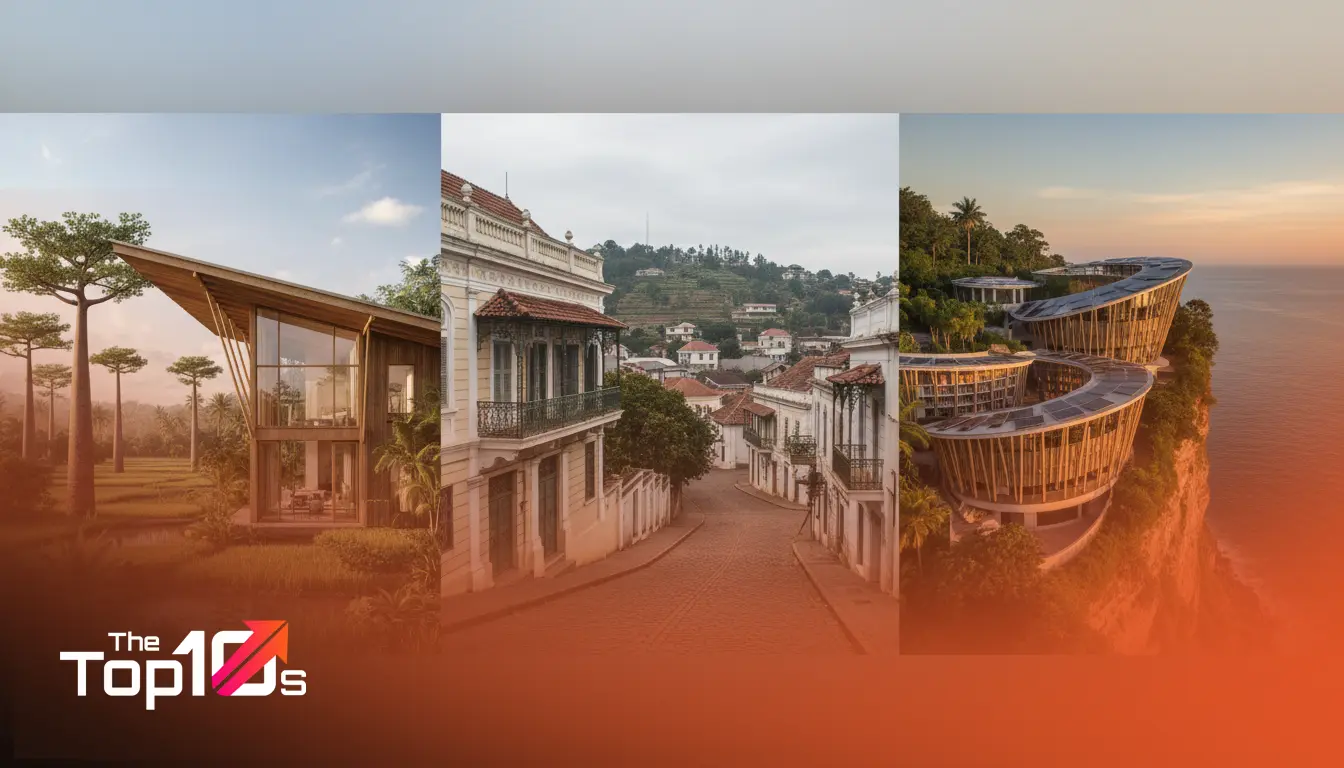
Building in Madagascar presents a unique set of challenges and opportunities that you won’t find anywhere else. You aren’t just dealing with blueprints and aesthetics; you are navigating distinct topography, a tropical climate that demands cyclone-resistant structures, and a rich cultural heritage that blends traditional Malagasy techniques with colonial and modern influences. Whether you are planning a boutique hotel in Nosy Be, a commercial complex in Antananarivo, or a family residence in the highlands, the professional you choose to lead your project makes all the difference.
The difference between a stalled project and a masterpiece often comes down to the architect’s ability to interpret your vision while respecting the local environment. It is about finding someone who understands that ventilation is just as important as the view, and that sourcing local materials like granite or local brick can save your budget without sacrificing quality.
Quick Takeaways: hiring in Madagascar
- Local Expertise Matters: Madagascar’s climate varies wildly from the coast to the highlands; your architect must understand these micro-climates.
- Regulatory Navigation: The permitting process in places like Antananarivo can be complex. Experienced firms handle this bureaucracy for you.
- Material Sourcing: Top architects know how to utilize local resources to reduce import costs and lower the carbon footprint.
- Scope Definition: Always clarify if the firm handles just the design or offers full project supervision (Maîtrise d’Oeuvre).
Finding the right partner involves looking beyond a flashy portfolio. You need a strategist who can translate your ideas into concrete reality while adhering to safety standards and zoning laws. Below, we explore the professionals who are currently shaping the built environment of the Red Island.
How We Identified Leading Architects
Selecting the professionals for this list was not a random process. We analyzed the market based on several critical indicators that define reliability and design excellence in the region. We looked at firms and individuals who have demonstrated consistency over time, rather than just one-hit wonders.
Our research focused on the depth of their portfolios. Did they have experience with complex sites? We also considered their standing within the local construction community. Architects who maintain strong relationships with reliable contractors and engineers tend to deliver smoother projects. Furthermore, we examined their adaptability. The ability to switch between high-end commercial projects and sensitive residential renovations indicates a versatile skill set.
Finally, we looked for professionals who prioritize sustainable practices. Given Madagascar’s unique biodiversity, architects who design with the environment in mind—rather than against it—scored higher in our evaluation.
List of 10 Best Architects in Madagascar
| Name | Best For |
|---|---|
| Cabinet Dubois | Corporate developers and large-scale commercial projects requiring strict regulatory compliance. |
| Trano Architecture | High-end residential clients and boutique hospitality developers. |
| Symbion Madagascar | International investors and complex hospitality projects. |
| AT.R.I.A Architecture | Heritage renovations and culturally sensitive residential projects. |
| Eco-Architects Madagascar | Eco-lodges and environmentally conscious homeowners. |
| Architecture & Bâtiment (A&B) | Industrial projects and functional residential developments. |
| Cabinet d’Architecture Ralahy | Public sector projects, schools, and healthcare facilities. |
| Archi-Concept | Urban infill projects and commercial interiors. |
| Pro-Immo Design & Build | Diaspora clients and those seeking a streamlined design-build service. |
| Mada Architecture Studio | Custom private villas and bespoke renovations. |
Top 10 Architects in Madagascar
The following list represents a cross-section of established talent and innovative studios operating across Madagascar. These professionals vary in size and focus, but all share a commitment to architectural quality.
1. Cabinet Dubois
In the landscape of Malagasy architecture, Cabinet Dubois stands as a pillar of experience. Based in Antananarivo, this firm has built a reputation over decades for handling large-scale institutional and commercial projects. Their approach is often characterized by a blend of functional modernism and climatic adaptation.
They are particularly strong in project management. For clients who are worried about the logistics of building in the capital, Dubois offers a reassuring level of organizational structure. Their portfolio suggests a deep understanding of urban planning regulations, making them a safe pair of hands for corporate headquarters or public buildings.
Best For: Corporate developers and large-scale commercial projects requiring strict regulatory compliance.
2. Trano Architecture
If you are looking for contemporary aesthetics that wouldn’t look out of place in Sydney or Cape Town, Trano Architecture is a name that frequently comes up. They tend to push the envelope regarding form and materials, moving away from traditional colonial styles toward cleaner, sharper lines.
Their strength lies in residential luxury. They understand the modern homeowner’s desire for open-plan living and seamless indoor-outdoor transitions—a style that works perfectly in Madagascar’s coastal regions. They often utilize glass and steel in ways that maximize natural light while mitigating heat gain.
Best For: High-end residential clients and boutique hospitality developers.
3. Symbion Madagascar
As part of a larger Pan-African group, Symbion brings international standards to the local market. Their presence in Madagascar benefits from a vast network of resources and expertise gathered from projects across the continent. You can see their influence in major hospitality and office developments.
Symbion is known for technical precision. They utilize advanced Building Information Modeling (BIM) systems, which helps in minimizing errors during the construction phase. For international investors, working with a firm that operates on global documentation standards can provide significant peace of mind.
Best For: International investors and complex hospitality projects.
4. AT.R.I.A Architecture
AT.R.I.A distinguishes itself through a strong focus on contextual design. Rather than imposing a foreign structure onto a site, they tend to study the topography and local culture to inform their designs. This results in buildings that feel like they belong to the land.
Their team is adept at renovation and rehabilitation, a crucial skill in cities like Antananarivo where heritage preservation is becoming increasingly important. They manage to modernize spaces without erasing their historical soul, a delicate balance that requires both technical skill and artistic sensitivity.
Best For: Heritage renovations and culturally sensitive residential projects.
5. Eco-Architects Madagascar
As the name implies, this firm places sustainability at the core of its philosophy. In a country where energy costs can be high and grid reliability varies, Eco-Architects focuses on passive design principles. They orient buildings to maximize natural ventilation and use thermal mass to regulate indoor temperatures naturally.
They are also proponents of using locally sourced materials, such as compressed earth blocks and treated bamboo. This not only supports the local economy but also reduces the project’s carbon footprint. Their designs often feature rainwater harvesting systems and solar integration as standard elements.
Best For: Eco-lodges and environmentally conscious homeowners.
6. Architecture & Bâtiment (A&B)
A&B has carved out a niche for delivering solid, reliable structures with a focus on engineering integrity. While some firms prioritize form, A&B places a heavy emphasis on function and durability. This is particularly valuable in Madagascar’s cyclone-prone areas.
Their portfolio includes a mix of industrial facilities and mid-range residential complexes. They are known for being pragmatic regarding budgets, often finding cost-effective solutions that do not compromise structural safety. Their communication style is direct, which helps in managing expectations regarding timelines and costs.
Best For: Industrial projects and functional residential developments.
7. Cabinet d’Architecture Ralahy
This firm represents the established guard of Malagasy design. With a portfolio that spans many years, they have extensive knowledge of the administrative hurdles involved in construction. Their design style leans towards the traditional but has evolved to incorporate modern amenities.
They are particularly well-regarded for their work in the educational and healthcare sectors. Designing schools and clinics requires a specific understanding of flow, hygiene, and durability, areas where Cabinet Ralahy has demonstrated consistent competence.
Best For: Public sector projects, schools, and healthcare facilities.
8. Archi-Concept
Archi-Concept focuses on the user experience. Their designs often prioritize how people move through and interact with a space. This makes them a strong contender for retail and office interiors where flow and atmosphere directly impact business success.
They bring a fresh perspective to urban density issues in the capital, finding creative ways to maximize space on small or irregular plots. Their creative use of vertical space and light wells transforms cramped lots into airy, livable environments.
Best For: Urban infill projects and commercial interiors.
9. Pro-Immo Design & Build
While often associated with real estate development, the design arm of Pro-Immo offers integrated solutions that appeal to clients who want a single point of contact. By combining architectural design with construction management, they aim to streamline the often fragmented building process.
This “turnkey” approach reduces the friction between architect and contractor. For clients who are not based in Madagascar full-time, having one entity responsible for both the drawing and the building can significantly reduce stress and communication gaps.
Best For: Diaspora clients and those seeking a streamlined design-build service.
10. Mada Architecture Studio
A smaller, boutique practice that punches above its weight, Mada Architecture Studio is known for personalized service. They limit the number of projects they take on to ensure the principal architects remain hands-on with every detail. This intimacy results in highly bespoke homes.
Their style is eclectic, often blending industrial chic with tropical warmth. They are not afraid to use raw concrete and exposed brick, softening these hard materials with timber and lush landscaping. It represents a modern Malagasy aesthetic that is gaining popularity among younger professionals.
Best For: Custom private villas and bespoke renovations.
What Defines a Great Architect in Madagascar?
Architecture in Madagascar requires more than just a good eye for composition. The “Great Island” demands technical versatility. A top-tier professional here understands the distinct difference between building on the humid, cyclone-battered East Coast versus the arid, dry South.
Mastery of Climate Control
The best designs in Madagascar don’t rely solely on air conditioning. Great architects utilize varangues (verandas) and deep overhangs to protect walls from torrential rains and direct sun. They understand how to orient a building to capture the trade winds (Alizés) for natural cooling. If you are looking at broader developments across the continent, comparing styles with the top 10 architects in Cameroon can offer perspective on how Francophone African design adapts to these tropical challenges.
Material Intelligence
Importing materials to Madagascar is expensive and time-consuming. Leading architects know how to work with what is available. This means using local granite, sustainably sourced rosewood or pine, and the iconic red brick of the highlands. They know which quarries produce the best stone and which brick kilns offer the most durable products.
Regulatory Knowledge
The administrative side of building in Madagascar can be opaque. A great architect acts as your advocate. They know the zoning laws in the Plan d’Urbanisme Directeur (PUDi) and can navigate the permit process at the Commune Urbaine without unnecessary delays. According to the World Bank, ease of doing business involves understanding local regulatory frameworks, which is where a local expert becomes invaluable.
How to Choose the Right Architect for Your Needs
Making the final decision can feel overwhelming. Here is a practical framework to help you evaluate your options.
Define Your Priorities
Are you driven by budget, timeline, or design uniqueness? A large firm like Symbion might offer speed and standardization, while a studio like Mada Architecture might offer unique design at a slower pace. Be honest about what matters most to you before you interview anyone.
The Portfolio Test
Don’t just look at the renders (computer images). Ask to see photos of completed buildings that are at least five years old. Madagascar’s weather is harsh; you want to see how their material choices hold up against humidity and sun over time. Does the wood rot? Does the paint peel? A building that ages gracefully is the sign of a thoughtful architect.
Communication Style
Language can be a barrier. Ensure your architect is fluent in your preferred language, be it French, English, or Malagasy. More importantly, ask how they handle updates. Will they send weekly photo reports? do they use WhatsApp for quick queries? Clear communication channels prevent small misunderstandings from becoming expensive mistakes.
Frequently Asked Questions
Do I need a licensed architect for residential homes in Madagascar?
Yes, for most formal construction projects, especially within urban areas, you are required to submit plans stamped by a recognized architect to obtain a building permit (Permis de Construire). This ensures the structure meets local safety and zoning codes.
How much do architects charge in Madagascar?
Fees vary significantly based on reputation and project complexity. Typically, fees range between 5% and 12% of the total construction cost. Some firms may offer a fixed fee for smaller, well-defined projects. Always clarify if this fee includes site supervision or just the design phase.
Can architects in Madagascar handle the construction phase?
Many architects offer “Maîtrise d’Oeuvre,” which means they supervise the construction site to ensure the contractor follows the plans. However, they are usually not the builders themselves. For a single point of responsibility, look for “Design-Build” firms.
How long does the design and permitting process take?
You should budget at least 2 to 4 months for the design development and another 2 to 6 months for permit approval, depending on the municipality’s efficiency and the complexity of your project.
Is sustainable architecture expensive in Madagascar?
Not necessarily. While high-tech solutions like solar panels have an upfront cost, passive design strategies—like proper orientation and natural ventilation—cost nothing extra if planned from the start and can save you thousands in electricity bills over the years.
Next Steps for Your Project
Choosing an architect is the first tangible step toward bringing your vision to life in Madagascar. It is a partnership that will last for months, if not years, so the chemistry needs to be right. Start by creating a shortlist from the professionals mentioned above. Visit their websites, look for their recent work on social media, and set up initial consultations.
When you meet them, pay attention to how much they listen versus how much they talk. The right architect will be more interested in your lifestyle and your land than in showing off their own awards. Secure a partner who respects the local context, understands your budget, and has the technical capability to deliver a safe, beautiful structure in this unique island environment.