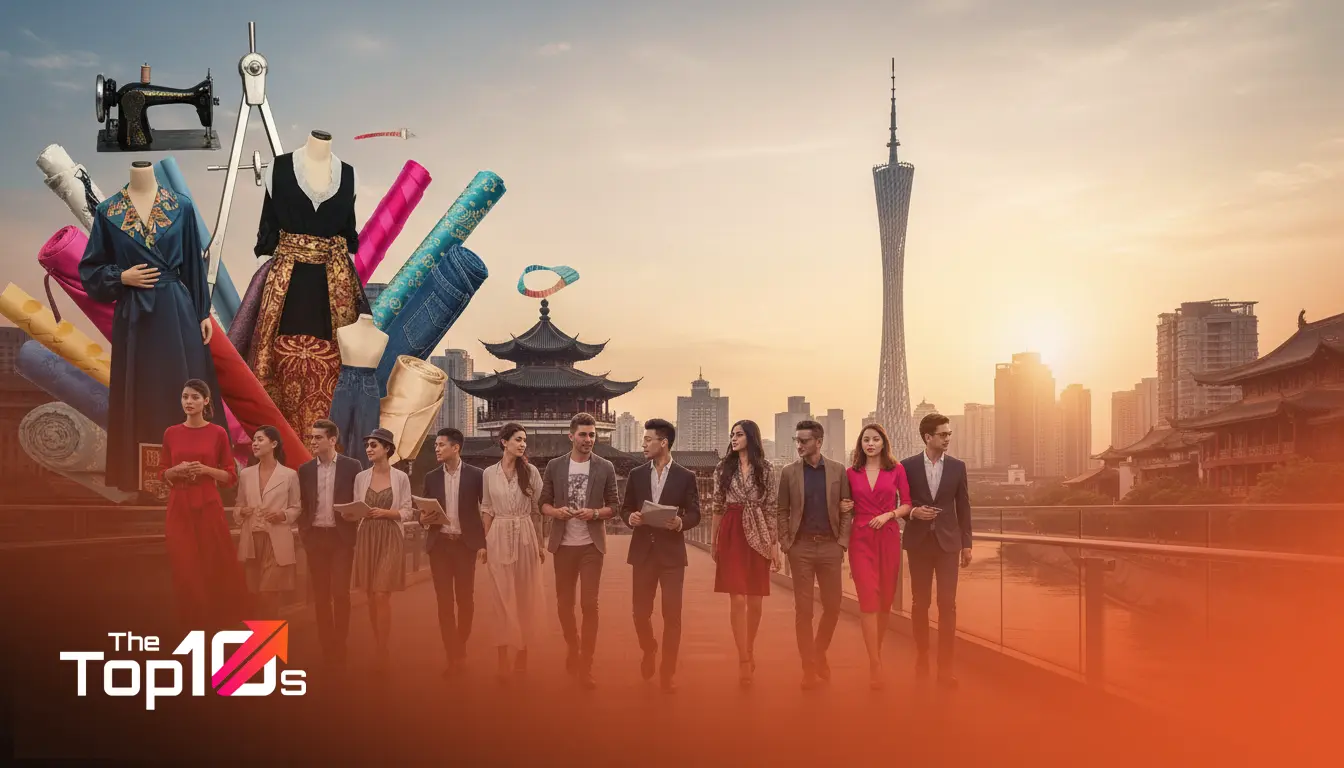
You might think of Guangzhou primarily as the world’s wholesale clothing rack—a massive engine of manufacturing where speed often trumps originality. But if you stop there, you are missing the real story. Underneath the hum of sewing machines and the endless aisles of fabric markets like Zhongda, a distinct creative revolution is happening.
Guangzhou isn’t just making clothes anymore; it is designing them with a unique flavor that blends Lingnan tradition with hyper-modern streetwear and tech-focused functional apparel. Finding the right talent here, however, can feel like searching for a specific needle in a stack of needles. The sheer volume of production can obscure the true artisans and visionaries working in the city.
Quick Takeaways: The Guangzhou Design Scene
- Supply Chain Mastery: Designers here have unrivaled access to raw materials, often allowing for faster prototyping and unique fabric development.
- Pragmatic Creativity: Unlike the purely avant-garde scenes elsewhere, Guangzhou fashion often balances artistic expression with extreme commercial wearability.
- Tech Integration: With the Greater Bay Area’s tech influence, you will see a higher concentration of functional fabrics and smart-wear concepts.
- Cultural Fusion: Top names frequently weave Cantonese heritage (Lingnan culture) into modern silhouettes.
Whether you are a buyer looking for the next breakout label, a brand owner seeking a creative director, or a fashion enthusiast wanting to understand the pulse of Southern China, knowing who leads the pack is essential. We have analyzed the market to highlight the top fashion designers in Guangzhou who are rewriting the rules of Cantonese style.
How We Identified Leading Fashion Designers
Selecting the most influential figures in a city as dynamic as Guangzhou requires looking beyond Instagram follower counts or flashy runway shows. The fashion ecosystem here is deeply rooted in the ability to execute, not just ideate. Our selection process prioritized professionals who demonstrate a mastery of the entire garment lifecycle.
First, we looked at material expertise. In a city that serves as a global textile hub, a top-tier designer must have an intimate relationship with fabrics. We favored creatives who push boundaries with textile manipulation, sustainable sourcing, or technological integration.
Second, we evaluated market longevity and adaptability. The Southern Chinese market moves at a breakneck pace. Designers who have sustained relevance over multiple seasons while evolving their aesthetic show a resilience that creates trust. We analyzed their presence in major trade shows, their standing within local industry associations, and the consistency of their collections.
Finally, we considered cultural synthesis. The most compelling work in Guangzhou currently comes from those who respect the region’s deep history while designing for a global future. This list reflects a mix of established veterans who built the foundation and innovative voices shaping the next decade.
List of 10 Best Fashion Designers in Guangzhou
| SNO | Name | Best for |
|---|---|---|
| 1 | Deng Zhaoping | Buyers and clients interested in “National Chin-Chic” trends who want authentic cultural storytelling rather than superficial motifs. |
| 2 | Lin Jinliang | Retailers looking for collections that balance high-fashion looks with actual market viability. |
| 3 | Rico Manchit Au (Rico Lee) | Enthusiasts of tech-wear, gorpcore, and brands looking for functional innovation. |
| 4 | Alice Yu | Private clients needing bespoke bridal or evening wear, and luxury buyers looking for high-touch craftsmanship. |
| 5 | Qu Tingnan | Those who appreciate “Art-to-Wear” and bohemia-luxe aesthetics. |
| 6 | Chen Wen | Brands and buyers focused on casual luxury and denim innovation. |
| 7 | Fang Fang | Professional women and boutiques catering to an upscale, mature demographic. |
| 8 | San Miu | Buyers looking for high-quality knitwear that spans multiple seasons. |
| 9 | Tommy Zhong | Concept stores and editorial stylists looking for edgy, intellectual fashion. |
| 10 | Zhao Huizhou | Department store buyers and those looking for established, reliable luxury brands. |
Top 10 Fashion Designers in Guangzhou
1. Deng Zhaoping
If you want to understand the soul of Guangzhou fashion, you have to look at Deng Zhaoping. She is widely regarded as a pioneer who effectively bridges the gap between intangible cultural heritage and modern retail. Her work often focuses on the “Lingnan” aesthetic—the specific cultural identity of Guangdong province.
Notable Strengths: Her genius lies in application. She doesn’t just display traditional art; she weaves it into wearable pret-a-porter. You will often see elements of Cantonese embroidery or Gambiered Guangdong Silk (a distinct local fabric) utilized in contemporary cuts. She has been a significant force in bringing eco-friendly, locally rooted fashion to the national stage.
Best Suited For: Buyers and clients interested in “National Chin-Chic” trends who want authentic cultural storytelling rather than superficial motifs.
2. Lin Jinliang
Lin Jinliang represents the commercial powerhouse side of Guangzhou’s design capability. As a prominent figure in the Guangdong Association of Fashion Designers, his influence extends beyond just sketching; he understands the business of fashion better than almost anyone. His aesthetic tends to be bold, confident, and unapologetically geared towards the modern urban consumer.
Notable Strengths: Versatility is key here. Lin has demonstrated an ability to move between menswear and womenswear with fluidity. His designs often feature strong architectural lines and a command of color that stands out in a retail environment. He is a designer who designs to sell, not just to show.
Best Suited For: Retailers looking for collections that balance high-fashion looks with actual market viability.
3. Rico Manchit Au (Rico Lee)
While many designers look to the past, Rico Lee looks resolutely forward. He has carved out a massive niche in the “Urban Tech” sector. Guangzhou is a hub for functional fabric production, and Rico leverages this proximity to create outerwear that performs as well as it looks.
Notable Strengths: This is where fashion meets engineering. His pieces often utilize waterproof membranes, reflective materials, and ergonomic articulation. Yet, unlike standard hiking gear, his silhouettes are sharp, tailored, and fit for a cyberpunk runway. He proves that technical apparel doesn’t have to look clunky.
Best Suited For: Enthusiasts of tech-wear, gorpcore, and brands looking for functional innovation.
4. Alice Yu
Moving away from ready-to-wear and into the realm of dreams, Alice Yu creates magic with needle and thread. Specializing in haute couture and bridal wear, her studio focuses on the painstaking details that define luxury. In a city known for mass production, her work is a defiant statement of slow fashion.
Notable Strengths: Her draping techniques and beadwork are exceptional. Alice understands the female form intimately, creating gowns that structure and flow simultaneously. She often sources lace and silk that rival European ateliers, proving that Guangzhou craftsmanship operates at the highest tier.
Best Suited For: Private clients needing bespoke bridal or evening wear, and luxury buyers looking for high-touch craftsmanship.
5. Qu Tingnan
Qu Tingnan is known for an aesthetic that feels like a watercolor painting coming to life. He is a master of fusing folklore with fashion. His approach is often described as poetic, utilizing the flow of fabrics to mimic the ink washes of traditional Chinese painting.
Notable Strengths: Color theory is his playground. He isn’t afraid of vibrant, clashing hues, yet he manages to harmonize them through texture. His collections often feel organic, using natural fibers (linen, cotton, silk) to create relaxed, breathable silhouettes that suit the humid Southern climate perfectly.
Best Suited For: Those who appreciate “Art-to-Wear” and bohemia-luxe aesthetics.
6. Chen Wen
You cannot talk about Guangdong fashion without talking about denim. The region is one of the world’s largest denim producers, and Chen Wen is the master of this material. He treats denim not just as a fabric for jeans, but as a canvas for sculpture.
Notable Strengths: His ability to manipulate washes, distress, and structure denim is unparalleled locally. He pushes the material into evening wear, jackets, and avant-garde shapes. He understands the chemistry of dyeing and the physics of weaving, allowing him to create denim textures that look entirely new.
Best Suited For: Brands and buyers focused on casual luxury and denim innovation.
7. Fang Fang
Fang Fang brings a quiet elegance to the Guangzhou list. Her design philosophy typically revolves around sophistication and subtlety. She designs for the career woman who wants to express personality without shouting. It is polished, professional, but never boring.
Notable Strengths: Tailoring. Her jackets and trousers fit impeccably. She has a knack for adding a single, twisted detail—an asymmetrical collar, a unique button placement—that elevates a standard garment into a designer piece. It represents the maturation of the Guangzhou fashion identity.
Best Suited For: Professional women and boutiques catering to an upscale, mature demographic.
8. San Miu
San Miu creates knitwear that challenges the perception of what yarn can do. While many associate knits with winter, San Miu develops lightweight, breathable structures suitable for the sub-tropical climate of Guangzhou. This label represents the tactile side of the industry.
Notable Strengths: Texture interaction. San Miu mixes yarns of different tensions and gloss levels to create 3D effects within the fabric itself. The designs are often cozy yet structural, providing comfort without sacrificing the silhouette.
Best Suited For: Buyers looking for high-quality knitwear that spans multiple seasons.
9. Tommy Zhong
Representing the younger, international generation, Tommy Zhong (often operating between the UK and Guangzhou) brings a global perspective back to the source. His work is experimental, often developing his own fabrics from scratch to ensure total originality.
Notable Strengths: The surface design of his garments is often bespoke. He might trap loose threads inside sheer organza or create custom jacquards. His work feels like it belongs in a London gallery but is executed with the manufacturing might of Guangzhou.
Best Suited For: Concept stores and editorial stylists looking for edgy, intellectual fashion.
10. Zhao Huizhou
Zhao Huizhou is a heavyweight in the industry, often focused on the intersection of heritage and high fashion. She has presented on global stages (like Milan Fashion Week), representing the high standard of modern Chinese design. Her label, EACHWAY, is a testament to the scalability of designer vision.
Notable Strengths: She excels at creating “East meets West” without it feeling forced. Her cuts are modern and Western-friendly, but the details—a mandarin collar here, a knot button there—whisper of her origins. She represents the confident, established face of Guangzhou design.
Best Suited For: Department store buyers and those looking for established, reliable luxury brands.
What Defines a Great Fashion Designer in Guangzhou?
The criteria for greatness in Guangzhou differ slightly from Paris or New York. Here, a designer cannot just be an artist; they must be a product developer. The proximity to the wholesale markets of Liuhua and the fabric mills of Haizhu District means that the best designers are those who get their hands dirty in the supply chain.
A top-tier Guangzhou designer understands speed and scalability. The local culture is fast. Trends hit the streets here weeks before they saturate other markets. Therefore, a great designer here has a reactive capability—they can see a shift in consumer mood and translate it into a garment in record time without sacrificing quality.
Furthermore, there is a distinct regional flavor to consider. The climate in Guangzhou is hot and humid for much of the year. This dictates fabric choices. Great designers here master the use of breathable silks, linens, and high-tech moisture-wicking synthetics. They understand that luxury must also be comfortable in 30-degree heat.
For a broader perspective on how Chinese design hubs differ, comparing the pragmatic, supply-chain-focused approach of Guangzhou with the Top 10 Fashion Designers in Shanghai reveals a fascinating contrast between commercial agility and high-concept luxury branding.
How to Choose the Right Fashion Designer for Your Needs
Collaborating with a designer in this region requires a strategic approach. It is not enough to simply like their portfolio; you must align on logistics and vision.
1. Assess Their Manufacturing Connection
Ask directly about their production capabilities. Do they have an in-house atelier, or do they outsource to a factory? If you are a buyer looking for volume, you need a designer with strong factory relationships (like Lin Jinliang or Chen Wen). If you need a one-off gown, you need someone with an internal team of seamstresses (like Alice Yu).
2. Look for Niche Specialization
Guangzhou is a city of specialists. Don’t hire a denim expert to design your bridal wear. The supply chains for these two categories are completely different. Verify that their portfolio matches the specific category of garment you need.
3. Communication Style
The business culture here is direct and transactional. Ensure the designer is willing to communicate frequently during the prototyping phase. The best designers will send you fabric swatches and videos of the drafting process, not just final sketches.
4. Understand their “Handwriting”
Every designer has a signature “handwriting” or aesthetic DNA. Are they minimalists? Maximalists? Do they focus on structure or drape? Don’t try to force a designer to work against their natural grain. If you want tech-wear, go to Rico Lee; don’t ask a traditional silk designer to replicate a Gore-Tex jacket.
Frequently Asked Questions
Is it cheaper to hire a fashion designer in Guangzhou compared to Shanghai or Beijing?
Generally, yes. While top talent commands high fees everywhere, Guangzhou’s proximity to raw materials lowers the overhead costs for prototyping and sample making. You often get more value for your money regarding material quality and production speed here.
Can these designers handle small batch production?
Most independent designers in Guangzhou are very open to small batch production (MOQs of 50-100 pieces) or made-to-measure orders. The ecosystem here is built on flexibility, unlike the massive export-only factories that require thousands of units.
Do Guangzhou designers speak English?
It varies. Designers with international education (like Tommy Zhong) or those who attend global fashion weeks speak fluent English. However, older masters or locally focused designers might require a translator. It is always safe to ask about their preferred communication method upfront.
What is the lead time for a custom design collection?
Speed is Guangzhou’s superpower. While a Western designer might need 4-6 months, a Guangzhou-based team can often go from concept to finished sample collection in 4-6 weeks, provided the fabrics are locally available.
Where can I see their work in person?
Many of these designers have showrooms in the T.I.T Creative Park (a hub for fashion brands) or participate in Guangzhou Fashion Week. Some also have flagship boutiques in high-end malls like Taikoo Hui or IGC.
Final Thoughts on Guangzhou’s Fashion Talent
The fashion narrative in Guangzhou is shifting. It is moving away from the “Made in China” label that implies anonymous mass production and toward a “Designed in Guangzhou” identity that stands for innovation, speed, and cultural depth. The designers listed here are the architects of that shift.
Engaging with the fashion scene here offers a unique advantage: the ability to turn ideas into reality faster than almost anywhere else on earth. Whether you are seeking the intricate heritage of Deng Zhaoping or the futuristic utility of Rico Lee, the talent is here. Your next step is to reach out, visit the showrooms, and experience the tactile reality of their work. In a digital world, the physical mastery found in Guangzhou’s studios is a refreshing reminder of what fashion is actually about.