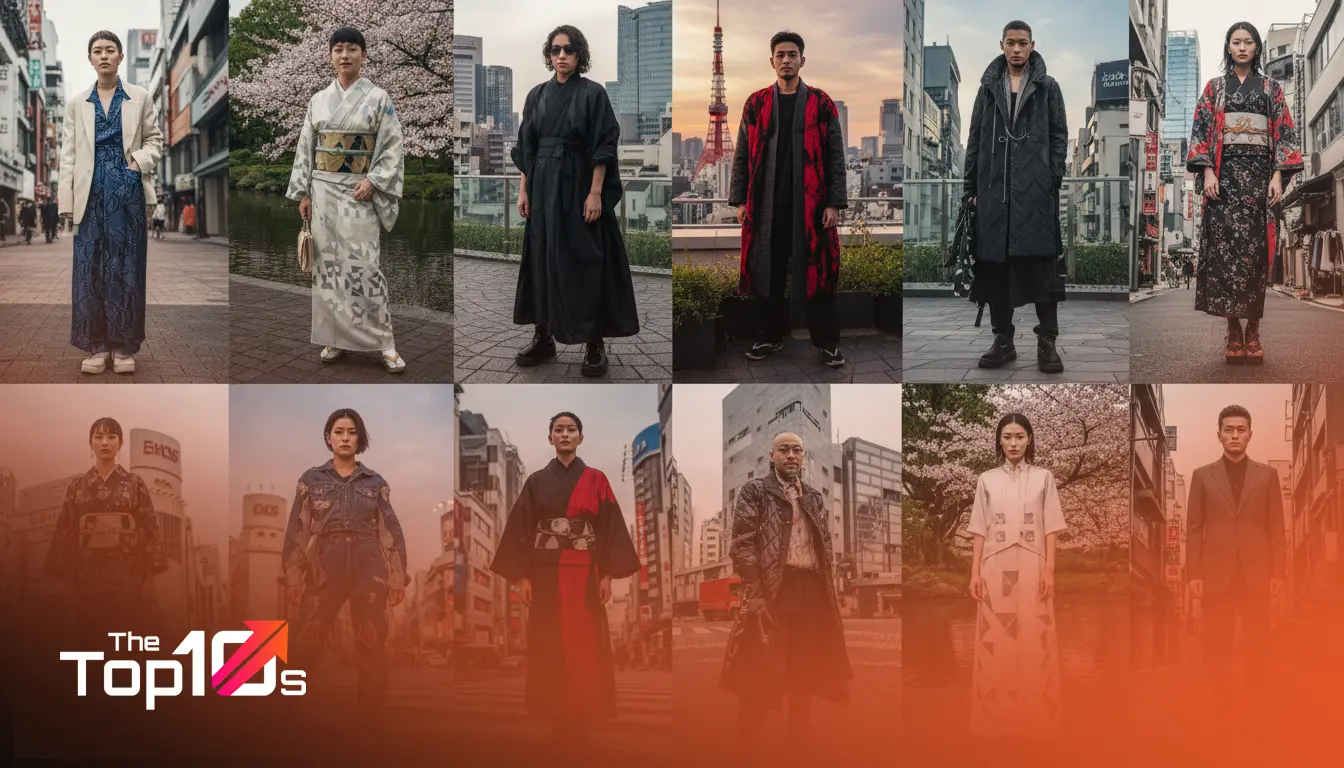
Walk through the streets of Aoyama or Harajuku, and you quickly realize something: Tokyo doesn’t just participate in fashion; it deconstructs it, rebuilds it, and sends it back out to the world in an entirely new form. For retailers, buyers, and serious fashion enthusiasts, understanding who drives this creative engine is essential.
Finding the right design talent in Japan’s capital isn’t just about looking for famous labels. It involves understanding a philosophy that prioritizes textile innovation, intricate pattern-making, and a distinct blend of rebellion and tradition. Whether you are looking for avant-garde inspiration, high-end streetwear, or structural mastery, the talent pool here is incredibly deep.
You might be wondering where to start in a city that moves this fast. We have analyzed the scene to highlight the professionals shaping the industry right now. These are the names defining aesthetics, pushing material science, and setting the global agenda from their Tokyo studios.
Quick Takeaways: Tokyo Design Landscape
- Innovation over Trend: Tokyo designers often prioritize textile engineering and structural experiments over fleeting seasonal trends.
- Hybrid Aesthetics: Expect a heavy mix of high-concept avant-garde and premium, functional streetwear.
- Collaboration is Key: Many top designers operate via “collab culture,” frequently partnering with global brands (like Nike or Moncler) to reach wider audiences.
- Craftsmanship First: The “Made in Japan” tag carries weight because of the obsessive attention to stitching, dyeing, and fabric quality.
How We Identified Leading Fashion Designers
Selecting the most influential figures in such a dense market requires looking beyond Instagram follower counts. We focused on professionals who demonstrate sustained impact and technical proficiency. Our evaluation process considered the longevity of their careers and their ability to stay relevant in a notoriously fickle industry.
We looked for designers who command respect within the local ecosystem—those who have solid relationships with Japan’s legendary textile mills and production houses. We also examined their versatility. The names on this list range from those handling couture-level construction to those mastering ready-to-wear logistics. Finally, we considered global resonance: how well does their Tokyo-based perspective translate to international markets? The result is a curated group representing the highest tier of Japanese fashion creativity.
List of 10 Best Fashion Designers in Tokyo
| SNO | Name | Best for |
|---|---|---|
| 1 | Rei Kawakubo (Comme des Garçons) | Those seeking intellectual fashion, avant-garde pieces, and investment-grade apparel that acts as wearable art. |
| 2 | Chitose Abe (Sacai) | Consumers who want functional clothing with a distinct twist, and buyers looking for high-end collaborations (like her work with Nike). |
| 3 | Yohji Yamamoto | People who appreciate drape, volume, and gender-neutral tailoring that ignores fleeting trends. |
| 4 | Jun Takahashi (Undercover) | Streetwear enthusiasts graduating to luxury fashion and those who love narrative-driven clothing. |
| 5 | Junya Watanabe | Men and women who appreciate workwear aesthetics elevated through extreme technical skill. |
| 6 | Kunihiko Morinaga (Anrealage) | Tech-forward buyers, stage performers, and anyone wanting to experience the next evolution of textile science. |
| 7 | Hiromichi Ochiai (Facetasm) | A younger demographic and retailers looking for bold, statement pieces that embody modern Harajuku. |
| 8 | Masayuki Ino (Doublet) | Consumers who want to spark conversations and aren’t afraid to look playful. |
| 9 | Yoon Ahn (Ambush) | Fans of luxury streetwear, bold accessories, and unisex styling. |
| 10 | Tomo Koizumi | Editorial stylists, celebrities, and special occasions requiring high-impact visuals. |
Top 10 Fashion Designers in Tokyo
1. Rei Kawakubo (Comme des Garçons)
You cannot discuss Tokyo fashion without starting here. Rei Kawakubo is less of a designer and more of a conceptual architect. Since founding Comme des Garçons in the late 1960s, she has systematically challenged every rule regarding how clothes should fit the human body.
Why she matters: Her work often ignores standard silhouettes, favoring bumps, lumps, and asymmetry that question distinct beauty norms. For buyers and fashion students, Kawakubo represents the pinnacle of artistic integrity. She leads a vast empire of sub-labels, proving that high-concept art can also be a commercially viable business.
Best suited for: Those seeking intellectual fashion, avant-garde pieces, and investment-grade apparel that acts as wearable art.
2. Chitose Abe (Sacai)
Chitose Abe mastered the art of “hybridization.” Before launching Sacai, she cut her teeth working under Rei Kawakubo and Junya Watanabe. Her signature approach involves splicing two completely different garments together—think a classic trench coat fused with a cable-knit sweater.
Why she matters: Abe creates clothes that look interesting from every angle. A jacket might look like a blazer from the front but transition into a pleated dress shirt in the back. This technical ability to mix textures and fabrics makes her a favorite among retailers who want items that have immediate “hanger appeal” and structural complexity.
Best suited for: Consumers who want functional clothing with a distinct twist, and buyers looking for high-end collaborations (like her work with Nike).
3. Yohji Yamamoto
If Kawakubo is the architect, Yohji Yamamoto is the poet. Known for his mastery of the color black and oversized silhouettes, Yamamoto designs with a focus on how fabric moves around the body rather than how it clings to it. His career spans decades, yet his aesthetic remains timeless.
Why he matters: He brought Japanese tailoring to Paris and never left. His partnership with Adidas for the Y-3 line was one of the first true bridges between luxury fashion and sportswear, a model that dominates the industry today. His garments offer a sense of protection and dignity to the wearer.
Best suited for: People who appreciate drape, volume, and gender-neutral tailoring that ignores fleeting trends.
4. Jun Takahashi (Undercover)
Jun Takahashi brings the spirit of punk rock into high fashion. His brand, Undercover, started in the backstreets of Harajuku and grew into a Paris Fashion Week staple. Takahashi blends rebellion with elegance, often using his collections to tell dark, cinematic stories.
Why he matters: He creates a bridge between street culture and high-concept design. His clothes often feature graphic prints, zippers, and bondage elements, but they are constructed with couture-level care. He coined the phrase “We Make Noise, Not Clothes,” which perfectly summarizes his disruptive approach.
Best suited for: Streetwear enthusiasts graduating to luxury fashion and those who love narrative-driven clothing.
5. Junya Watanabe
Another protégé of the Comme des Garçons school, Junya Watanabe is often called a “techno-couturier.” He is obsessed with fabrics—specifically synthetic materials and how they can be manipulated. His work often explores classic items like denim jeans or trench coats, reinventing them through complex patchwork and folding techniques.
Why he matters: Watanabe creates complex garments that remain wearable. He might take a standard Levi’s jacket and reconstruct it with tweed, leather, and wool, creating something familiar yet entirely new. His understanding of pattern cutting is arguably among the best in the world.
Best suited for: Men and women who appreciate workwear aesthetics elevated through extreme technical skill.
6. Kunihiko Morinaga (Anrealage)
For those interested in the future of fashion, Kunihiko Morinaga is the name to watch. His brand, Anrealage, sits at the intersection of technology and apparel. He gained global fame for using photochromic fabrics that change color when exposed to UV light.
Why he matters: Morinaga challenges the definition of what clothing can do. He doesn’t just design for the naked eye; he designs for the digital age, creating clothes that look different on camera or under specific lighting. His experiments with shape shifting and light reactive materials push the industry forward.
Best suited for: Tech-forward buyers, stage performers, and anyone wanting to experience the next evolution of textile science.
7. Hiromichi Ochiai (Facetasm)
Hiromichi Ochiai captures the current energy of Tokyo street style better than almost anyone else. Facetasm is known for its “more is more” aesthetic, layering prints, textures, and colors in a way that feels chaotic but is actually carefully calculated.
Why he matters: He was the first Japanese finalist for the LVMH Prize, signaling his acceptance by the European luxury establishment. His clothes are fun, youthful, and refuse to be categorized. He captures the freedom of Tokyo youth culture, where there are no rules about what matches.
Best suited for: A younger demographic and retailers looking for bold, statement pieces that embody modern Harajuku.
8. Masayuki Ino (Doublet)
Fashion can often take itself too seriously, but Masayuki Ino is here to fix that. His brand, Doublet, is infused with humor and wit. He won the LVMH Prize in 2018, proving that funny fashion can also be serious business.
Why he matters: Ino is a master of embroidery and surprise. He creates compressed t-shirts that look like instant noodle packages or hoodies with faces that appear when you zip them up completely. Despite the jokes, the quality of the knitting and embroidery is exceptional.
Best suited for: Consumers who want to spark conversations and aren’t afraid to look playful.
9. Yoon Ahn (Ambush)
Yoon Ahn represents the new guard of Tokyo designers. Starting with experimental jewelry, her label Ambush expanded into full ready-to-wear collections. She is a self-taught designer who understands the power of hype and celebrity endorsement authentically.
Why she matters: She bridges the gap between Tokyo cool and American hip-hop culture. Her designs are sleek, utilitarian, and heavy on hardware. Her success led to her appointment as the jewelry designer for Dior Men, solidifying her status as a global tastemaker.
Best suited for: Fans of luxury streetwear, bold accessories, and unisex styling.
10. Tomo Koizumi
Tomo Koizumi exploded onto the scene relatively recently, gaining overnight fame after a show in New York supported by Marc Jacobs. He is known for one specific thing: massive, colorful, ruffled organza dresses.
Why he matters: In an era of minimalism and beige loungewear, Koizumi offers pure, unadulterated joy and volume. He treats fabric like sculpture. While his pieces are often more suited for red carpets than sidewalks, his influence on color and maximalism has rippled through the industry.
Best suited for: Editorial stylists, celebrities, and special occasions requiring high-impact visuals.
What Defines a Great Fashion Designer in Tokyo?
Understanding the “Tokyo touch” helps in evaluating whether a designer fits your needs. The local fashion culture here values a specific set of criteria that differs from Milan or New York.
Material Mastery
Japan produces some of the world’s finest denim, wool, and synthetic fibers. A top-tier designer in Tokyo doesn’t just pick fabrics from a swatch book; they often work directly with mills to develop proprietary textiles. If the fabric feels ordinary, the designer likely isn’t at the top of the local food chain.
The “Wabi-Sabi” Aesthetic
Many Japanese creators embrace imperfection. You might see raw hems, exposed stitching, or asymmetry. This isn’t sloppy workmanship; it is a deliberate design choice rooted in the philosophy that nothing is perfect or permanent. This approach adds a layer of human touch to the garments.
Contextual Awareness
Great Tokyo designers understand the balance between the city’s cramped urban spaces and the desire for personal expression. If you are comparing Asian fashion hubs, looking at how Hangzhou designers tackle modern aesthetics offers a fascinating contrast to Tokyo’s approach, but the Tokyo method remains distinct in its blend of hyper-modernity and heritage.
How to Choose the Right Fashion Designer for Your Needs
Finding the right creative partner or brand involves asking the right questions. Whether you are stocking a boutique or building a personal wardrobe, consider these factors.
Assess the Production Scale
Are you looking for bespoke, one-off pieces, or ready-to-wear collections? Designers like Tomo Koizumi operate almost exclusively in the realm of custom/costume, while Sacai and Undercover have robust production lines capable of fulfilling large retail orders.
Check the Collaborative History
In Tokyo, versatility is a sign of strength. Look at the designer’s portfolio. Have they collaborated with sportswear giants? Have they done interior design? A designer with a diverse collaboration history is usually more adaptable and commercially savvy, which is crucial if you are looking for a business partnership.
Evaluate the Silhouette
Be honest about the end-user. Tokyo fashion often favors oversized, boxy, or deconstructed fits which can be intimidating for conservative markets. Ensure the designer’s core silhouette aligns with the comfort levels of your target audience.
Frequently Asked Questions
Is Tokyo fashion generally more expensive than European fashion?
Not necessarily. While avant-garde brands like Comme des Garçons are priced similarly to European luxury houses, Tokyo has a massive market for high-quality mid-tier brands. You often get better fabric quality for the price in Japan compared to Western counterparts due to local textile production.
Do these designers offer custom or bespoke services?
Most of the major names listed (like Yohji Yamamoto or Sacai) focus on ready-to-wear collections available in boutiques. However, younger independent designers and smaller ateliers in districts like Daikanyama often accept private commissions.
Where can I buy these designers’ collections in Tokyo?
The best places to view these collections are the flagship stores in Aoyama, Dover Street Market in Ginza, and department stores like Isetan in Shinjuku, which is famous for its extensive support of local talent.
How does sizing work with Japanese designers?
Japanese sizing tends to run smaller than US or European sizing. However, many avant-garde designers (like Yamamoto) use “free size” or oversized cuts that are intended to fit a wide range of body types.
Are sustainable practices common among Tokyo designers?
Yes, sustainability is inherent in Japanese culture through the concept of “mottainai” (avoiding waste). Many designers upcycle vintage garments or use natural dyeing techniques (like indigo) that are less harmful to the environment.
Final Thoughts on Tokyo’s Design Scene
Tokyo remains one of the most exciting places in the world for apparel. The designers listed here are not just making clothes; they are proposing new ways of living and interacting with our environment. From the technological experiments of Anrealage to the punk poetry of Undercover, the spectrum of creativity is vast.
When choosing a designer to follow, buy from, or work with, look for that spark of innovation. The best Tokyo fashion designers will always challenge you to rethink what a garment can be. Take your time exploring their collections, feel the fabrics, and appreciate the intense labor that goes into every stitch. Your wardrobe—and your perspective on style—will be better for it.