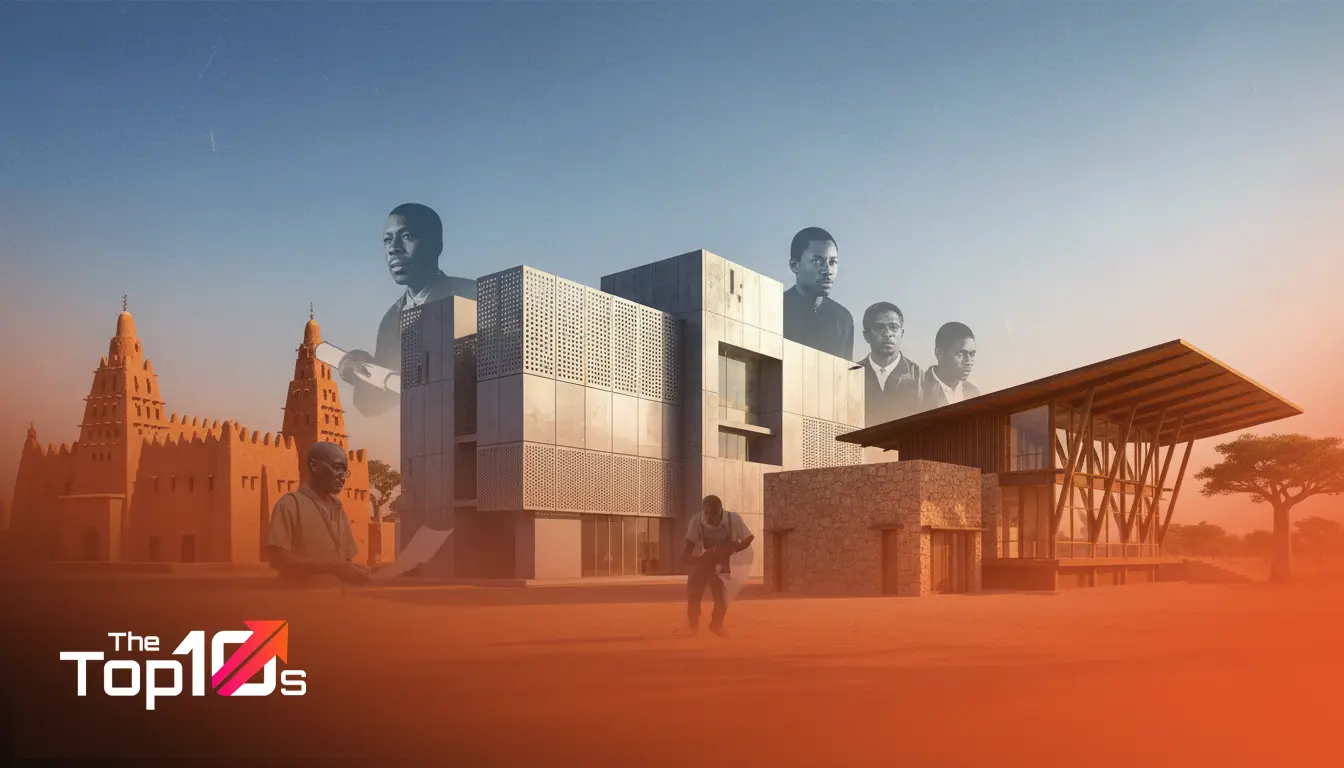
You’re standing on a plot of land in Bamako, perhaps in the bustling ACI 2000 district or a quieter suburb, envisioning a structure that doesn’t just shelter you but inspires you. It’s a common scenario, yet the bridge between that mental image and a physical building is built entirely on one decision: who you hire to design it.
Mali presents a unique canvas for design professionals. We aren’t just talking about aesthetic preferences here; we are dealing with the Sahelian climate, intense heat, distinct rainy seasons, and a rich heritage of Sudano-Sahelian earth architecture that is world-renowned. Building here requires a professional who understands how to balance modern concrete aspirations with traditional thermal efficiency.
Whether you are planning a commercial complex near the Niger River or a family residence, finding the right partner is critical. This guide introduces you to the professionals shaping the skyline of Mali today, helping you navigate your options with clarity.
Quick Takeaways: Hiring in Mali
- Climate is King: The best designs prioritize passive cooling and airflow to handle Mali’s temperatures.
- Regulatory Navigation: Bamako’s building codes can be complex; local experience is non-negotiable for permit approval.
- Material Matters: Look for architects who know when to use imported materials and when to leverage local resources like laterite stone or stabilized earth blocks.
- Scope Definition: Clearly distinguish whether you need just the design (plans) or full project supervision (maîtrise d’œuvre).
How We Identified Leading Architects
Selecting the top tier of design talent involves looking past flashy 3D renderings and examining the substance of a firm’s work. Our evaluation process focuses on the realities of construction in West Africa. We looked for professionals who demonstrate a consistent track record of delivering projects that stand the test of time—both structurally and stylistically.
We analyzed public portfolios, project diversity, and the ability to navigate local urban planning constraints. A significant factor in our assessment was the balance between innovation and practicality. Does the architect design buildings that are actually buildable within the local supply chain? We also considered their reputation for project management, as the ability to coordinate contractors in Mali is just as vital as drawing a beautiful facade. The following list represents firms and individuals who have established themselves as reliable authorities in the Malian architectural sector.
List of 10 Best Architects in Mali
| Name | Best For |
|---|---|
| Cabinet K2A (Karembé Architecture & Aménagement) | Clients looking for a modern, international aesthetic within the city. |
| Tolo Architectes (Lamine Tolo) | Developers and institutions needing reliable, large-scale project execution. |
| CAD (Cabinet d’Architecture et de Design) | Homeowners who prioritize comfort and energy efficiency. |
| Groupe 4 Architecture | Investors planning multi-story commercial or retail spaces. |
| Cabinet d’Architecture et d’Urbanisme (CAU) | Corporate headquarters and government contracts. |
| Arcade Mali | Clients with existing properties needing modernization or specific renovation work. |
| BEAC (Bureau d’Etudes d’Architecture et de Construction) | Industrial projects, warehouses, and functional commercial spaces. |
| Fare Architecture | Retailers and homeowners wanting a “statement” property. |
| Yamoussa Berthé (Contextual Design Focus) | Cultural projects or homes that want to reflect Malian identity. |
| Eco-Build Mali (Emerging Sustainable Practice) | Environmentally conscious clients and NGOs. |
Top 10 Architects In Mali
These professionals and firms represent a mix of established veterans and dynamic studios, each bringing a different flavor to Mali’s built environment.
1. Cabinet K2A (Karembé Architecture & Aménagement)
Cabinet K2A sits comfortably at the forefront of modern architectural practice in Bamako. They have carved out a reputation for delivering sleek, contemporary designs that appeal to both corporate clients and high-end residential homeowners. Their work often features clean lines and a sophisticated use of glass and concrete, yet they remain grounded in the local context.
Area of Specialization: High-end Residential and Corporate Offices.
Experience: 15+ Years.
Notable Strengths: Their strength lies in spatial optimization. K2A excels at making urban plots feel spacious, maximizing natural light while mitigating direct solar gain.
Best For: Clients looking for a modern, international aesthetic within the city.
2. Tolo Architectes (Lamine Tolo)
Lamine Tolo and his firm are frequently cited when discussing projects that require a high degree of technical rigor. This practice is known for a disciplined approach to design, ensuring that the structural integrity and functionality of the building are never sacrificed for style. Tolo Architectes often engages in institutional and public-facing projects, which demands a thorough understanding of public safety codes and flow management.
Area of Specialization: Public Infrastructure and Institutional Buildings.
Experience: 20+ Years.
Notable Strengths: Project management and adherence to strict timelines. They have a reputation for keeping complex projects on track.
Best For: Developers and institutions needing reliable, large-scale project execution.
3. CAD (Cabinet d’Architecture et de Design)
CAD focuses heavily on the user experience. Their portfolio suggests a philosophy that buildings are meant to be lived in, not just looked at. They often incorporate bioclimatic principles, using the building’s orientation to naturally cool interior spaces—a critical skill in the Sahel. Their residential projects often feature covered terraces and courtyards that act as transitional spaces between the harsh exterior and cool interior.
Area of Specialization: Bioclimatic Residential and Mixed-Use Developments.
Experience: 12+ Years.
Notable Strengths: Sustainable design practices that lower long-term energy costs for the owner.
Best For: Homeowners who prioritize comfort and energy efficiency.
4. Groupe 4 Architecture
As a multidisciplinary team, Groupe 4 operates with a philosophy of collaboration. They are often involved in urbanization projects and larger master planning efforts. Their approach considers the building in relation to the street and the neighborhood, rather than as an isolated object. This holistic view makes them a preferred partner for commercial developments that require parking solutions, traffic flow analysis, and public access.
Area of Specialization: Urban Planning and Commercial Complexes.
Experience: 18+ Years.
Notable Strengths: Integrating complex engineering requirements with architectural form.
Best For: Investors planning multi-story commercial or retail spaces.
5. Cabinet d’Architecture et d’Urbanisme (CAU)
CAU is one of the more seasoned entities in the Malian market. With a portfolio that spans decades, they have weathered the changes in construction technology and regulations. Their designs often carry a sense of gravitas and permanence. They are particularly adept at administrative buildings and headquarters, where the image of the company needs to be projected through the architecture.
Area of Specialization: Administrative and Government Buildings.
Experience: 25+ Years.
Notable Strengths: Deep knowledge of administrative procedures and reliable, classic design.
Best For: Corporate headquarters and government contracts.
6. Arcade Mali
Arcade Mali distinguishes itself through versatility. They are just as comfortable designing a private villa in Badalabougou as they are renovating an existing structure for commercial use. Renovation and adaptive reuse are tricky endeavors in Mali due to the age of some structures, but Arcade has demonstrated a knack for breathing new life into older buildings while modernizing their utility.
Area of Specialization: Renovation and Private Villas.
Experience: 10+ Years.
Notable Strengths: Creativity in constrained spaces and renovation expertise.
Best For: Clients with existing properties needing modernization or specific renovation work.
7. BEAC (Bureau d’Etudes d’Architecture et de Construction)
BEAC operates with a strong engineering backbone. In Mali, where soil conditions can vary—especially near the river banks—having an architectural team that works closely with structural engineers is a massive advantage. Their designs are pragmatic, efficient, and robust. While they do produce aesthetically pleasing work, their primary focus appears to be durability and structural soundness.
Area of Specialization: Industrial and Technical Facilities.
Experience: 20+ Years.
Notable Strengths: Technical precision and structural feasibility.
Best For: Industrial projects, warehouses, and functional commercial spaces.
8. Fare Architecture
Fare Architecture brings a touch of artistic flair to the table. They are often associated with projects that require a unique visual identity. Their designs frequently experiment with facade textures and lighting, making their buildings stand out at night as well as during the day. Despite this artistic bent, they remain grounded in the realities of the Bamako construction market.
Area of Specialization: Boutique Commercial and Luxury Residential.
Experience: 8+ Years.
Notable Strengths: Visual identity and facade design.
Best For: Retailers and homeowners wanting a “statement” property.
9. Yamoussa Berthé (Contextual Design Focus)
Architects like Yamoussa Berthé are part of a movement that respects the vernacular architecture of West Africa while utilizing modern tools. There is an appreciation for how traditional Malian architecture handles heat, and you will often see this influence in the shading devices and ventilation strategies employed in his projects. It is modernism, but with a distinct local soul.
Area of Specialization: Cultural and Contextual Residential.
Experience: 15+ Years.
Notable Strengths: Blending cultural heritage with modern amenities.
Best For: Cultural projects or homes that want to reflect Malian identity.
10. Eco-Build Mali (Emerging Sustainable Practice)
Representing the newer wave of design professionals, firms focusing on “Eco-Build” principles are gaining traction. This entry represents the collective of younger architects in Bamako advocating for compressed earth blocks (CEB) and solar integration from day one. They challenge the notion that “modern” must equal “glass box,” proving that local materials can be luxurious and durable.
Area of Specialization: Sustainable and Eco-friendly Construction.
Experience: 7+ Years.
Notable Strengths: Low carbon footprint designs and passive cooling techniques.
Best For: Environmentally conscious clients and NGOs.
What Defines a Great Architect in Mali?
Architecture in Mali is about more than drafting blueprints; it is about mastering the environment. The distinction between a good architect and a great one often comes down to their understanding of “thermal comfort.”
A great architect doesn’t just install an air conditioner; they design the building to reduce the need for one. They utilize orientation, wind catchers, and appropriate shading to keep the interior livable even when the power goes out. This approach mirrors the broader regional trends seen across West Africa. For instance, if you look at the architectural developments in Benin, you see a similar return to climate-responsive design, proving that this is a continental shift, not just a local fad.
Furthermore, excellence in the Malian context involves navigating the supply chain. Cement, steel, and glass can fluctuate in price. A skilled professional anticipates these market shifts and suggests materials that are available and maintainable. They also understand the chaotic charm of Bamako’s urban sprawl, designing walls and entrances that provide privacy and security without turning the home into a fortress.
Finally, communication is paramount. The construction workforce in Mali is diverse, speaking Bambara, French, and various local dialects. A great architect bridges the gap between the technical drawings and the masons on-site, ensuring that the vision isn’t lost in translation.
How to Choose the Right Architect for Your Needs
Making the final hiring decision can feel overwhelming. Here is a practical framework to help you evaluate your options.
1. Match the Portfolio to Your Project
If you are building a hospital, a firm famous for luxury villas might not be the right fit, regardless of their fame. Ask to see projects specifically in your category. If they haven’t built it before, do they have a consultant on their team who has?
2. Ask About “Maîtrise d’Œuvre”
In Mali, design and supervision are often separate services. Some clients only buy the plans (conception) to save money, then manage the build themselves. This is often where projects fail. Ask the architect about their site supervision fees. Having the designer inspect the rebar before concrete is poured is the best insurance policy you can buy.
3. Discuss Local Regulations Early
Ask a specific question: “What are the current setback requirements for this neighborhood?” A knowledgeable architect will know the zoning laws for areas like ACI 2000, Faladié, or Hippodrome off the top of their head. Their ability to answer this indicates their experience with city planning authorities.
4. Verify Technology Use
Does the architect use BIM (Building Information Modeling) or basic CAD? While 2D drawings are fine, 3D modeling helps you identify clashes—like a beam hitting a window—before you start building. It also helps you visualize the final product, which is crucial if you aren’t used to reading blueprints.
Frequently Asked Questions
How much does an architect cost in Mali?
Architectural fees in Mali generally range between 5% and 10% of the total construction cost, depending on the complexity of the project and the reputation of the firm. For smaller residential projects, some architects may agree to a lump sum fee rather than a percentage.
Do I need an architect for a residential house in Bamako?
Legally, for buildings above a certain size or complexity, you are required to have plans signed by a registered architect to obtain a building permit (Permis de Construire). Beyond legality, an architect ensures structural safety and functionality.
What is the difference between an architect and a site engineer?
The architect focuses on the design, functionality, aesthetics, and human flow of the space. The engineer calculates the loads, beam sizes, and foundation requirements to ensure the building stands up. In Mali, these two often work closely together, and many firms offer both services in-house.
Can architects in Mali build with earth/mud bricks?
Yes, many modern architects in Mali are reviving the use of Stabilized Compressed Earth Blocks (BTC). These are durable, aesthetically pleasing, and offer superior thermal insulation compared to cement blocks. Organizations like UNESCO have long championed the value of earth architecture in the region.
How long does the design process take?
For a standard family home, the design phase—from initial sketches to final permit-ready drawings—typically takes 6 to 10 weeks. This allows time for client feedback and revisions.
Next Steps for Your Project
The foundation of a successful project lies in the planning. Your next step isn’t to buy cement; it’s to start conversations. Reach out to three firms from the list above that resonate with your style. Schedule a consultation and bring your site survey and a list of your needs.
Pay attention to who listens more than they speak. The architect who asks about your lifestyle, your budget constraints, and your long-term goals is the one who will design a building that truly serves you. Building in Mali is an adventure—choose a guide who knows the terrain.