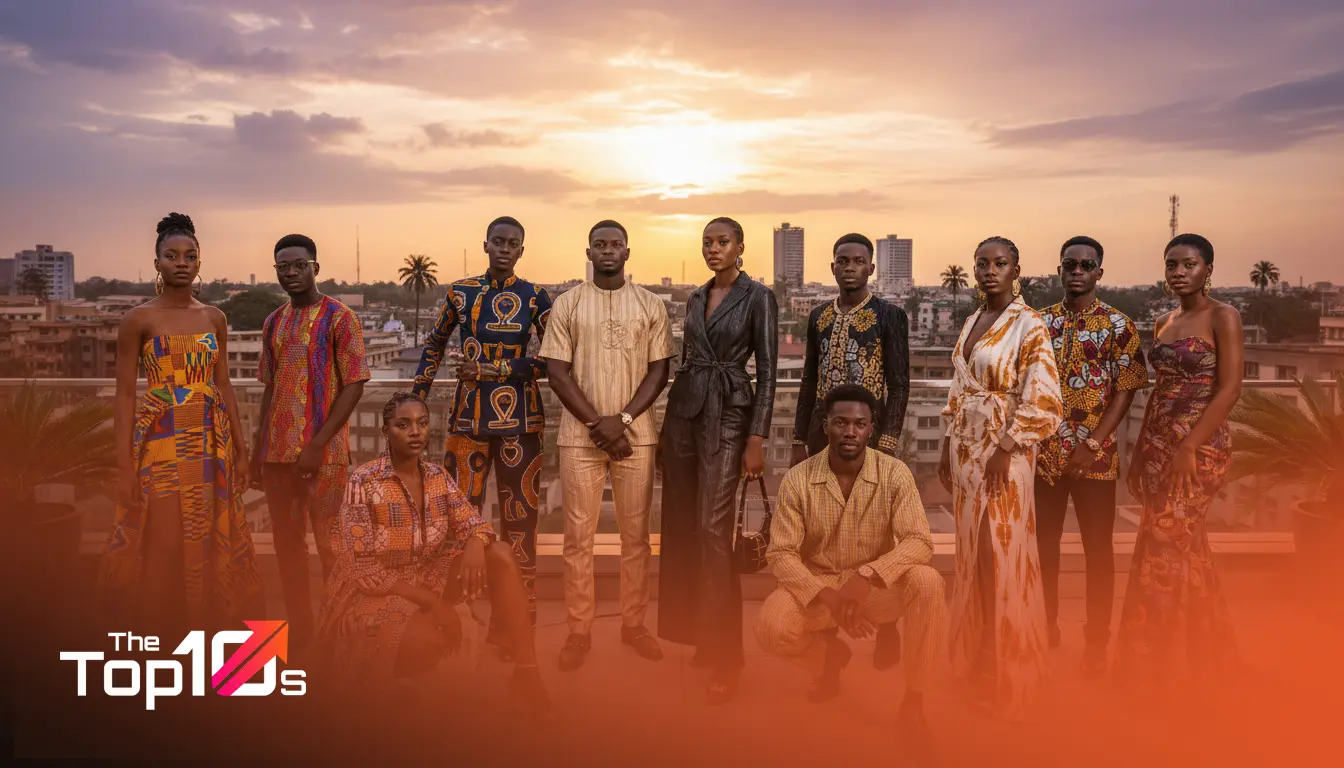
Walk down Oxford Street in Osu on a Friday afternoon, and you will notice something immediately: style in Accra is not a spectator sport. It is an active, vibrant conversation. The days when “fashion” simply meant imported labels are long gone. Today, the Ghanaian capital pulses with a distinct aesthetic that merges heritage techniques with sharp, contemporary silhouettes.
For anyone seeking to elevate their wardrobe, finding the right creative partner is essential. Whether you need a bespoke gown for a wedding at the Kempinski or sharp corporate wear that respects “Traditional Friday” culture without looking dated, the talent pool here is deep. But with so many tailors, boutiques, and studios popping up from East Legon to Cantonments, distinguishing true design authority from simple garment construction can be tricky.
This guide cuts through the noise. We are looking at the visionaries who understand fabric movement, the technicians who have mastered the perfect fit, and the artists putting Ghanaian fashion on the global map. If you are looking for the best fashion designers in Accra to bring a specific vision to life, you are in the right place.
Quick Takeaways: The Accra Fashion Scene
- Bespoke is Standard: Unlike Western markets, custom sizing is the norm here, not the exception.
- Fabric First: Top designers often create their own textiles or have exclusive partnerships for batik and kente.
- Timelines Matter: High-end couture takes time. Expect a minimum 4-6 week lead time for complex commissions.
- Fusion is Key: The leading aesthetic currently blends structural European tailoring with African textures.
How We Identified Leading Fashion Designers
Selecting the names for this list required more than just scrolling through Instagram feeds. Popularity on social media does not always translate to garment quality or professional service. To compile this group of experienced fashion design professionals in Accra, several distinct metrics were analyzed.
First, we looked at consistency in craftsmanship. A great designer produces high-quality work repeatedly, not just once for a viral photo. We examined the finishing details—lining, stitching, and fit—that separate luxury from fast fashion. Second, we considered creative identity. The designers listed below do not just copy trends; they set them. They have a recognizable signature that acts as their brand DNA.
Finally, we evaluated professional standing. This involves client feedback regarding reliability, communication, and the overall studio experience. It also considers participation in major industry events like Glitz Africa Fashion Week and recognition within the broader West African apparel trade.
List of 10 Best Fashion Designers in Accra
| SNO | Name | Best for |
|---|---|---|
| 1 | Aisha Ayensu (Christie Brown) | The cosmopolitan woman who wants to make a statement in the boardroom or at a high-profile cocktail event |
| 2 | Kabutey and Sumaiya Dzietror (Pistis Ghana) | Brides and gala attendees who want a “Cinderella moment” with a distinctly African soul |
| 3 | Kwaku Bediako (Chocolate Clothing) | The modern gentleman who values precision tailoring and wants to look dignified without wearing a Western suit |
| 4 | Nelly Hagan-Deegbe (Duaba Serwa) | The artsy, confident woman who appreciates construction and wants a garment that serves as a conversation starter |
| 5 | Ophelia Crossland | Women seeking timeless elegance for anniversaries, birthdays, or prestigious church functions |
| 6 | Atto Tetteh | The creative professional or the man who wants to experiment with color while keeping a masculine silhouette |
| 7 | Oheneba Yaw Boamah (Abrantie The Gentleman) | Corporate executives and groomsmen looking for a uniform, polished look |
| 8 | Phyllis Taylor (Sika Designs) | The eco-conscious shopper who loves vintage silhouettes and vibrant, hand-made textiles |
| 9 | C Casey (Yartel) | Clients who want to show off their curves and make a bold, sexy statement |
| 10 | Steve French | Musicians, artists, and bold personalities who view fashion as performance art |
Top 10 Fashion Designers in Accra
The following individuals and fashion houses represent the upper echelon of Ghanaian style. Each brings a unique perspective to apparel, ranging from avant-garde storytelling to precise sartorial elegance.
1. Aisha Ayensu (Christie Brown)
Few names carry as much weight in the contemporary African fashion narrative as Christie Brown. Founded by Aisha Ayensu, this label was pivotal in reimagining how traditional print could be worn on the global stage. Ayensu creates pieces that speak to the modern woman who wants to wear her heritage without looking like a costume.
Area of Specialization: Contemporary women’s ready-to-wear and bespoke accessories.
Why They Stand Out: The genius of Christie Brown lies in the details. You will often see intricate button work, structured corsetry mixed with flowy skirts, and accessories that serve as armor-like statement pieces. The brand successfully bridges the gap between the runway and practical, wearable art.
Best Suited For: The cosmopolitan woman who wants to make a statement in the boardroom or at a high-profile cocktail event.
2. Kabutey and Sumaiya Dzietror (Pistis Ghana)
If there is a royal wedding or a high-society red carpet event happening in Accra, chances are Pistis is involved. This husband-and-wife duo has mastered the art of the gown. They have moved beyond simple fabric manipulation to create their own textiles, particularly their signature hand-beaded Kente velvet, which has become a status symbol in itself.
Area of Specialization: Luxury bridal and haute couture evening wear.
Why They Stand Out: Structure and opulence. Their gowns are engineered to support and flatter the female form with internal corsetry that rivals European luxury houses. Their ability to modernize Kente cloth by stripping it down and re-beading it onto sheer fabrics is technically brilliant.
Best Suited For: Brides and gala attendees who want a “Cinderella moment” with a distinctly African soul.
3. Kwaku Bediako (Chocolate Clothing)
Menswear in Ghana was often limited to stiff kaftans or ill-fitting suits until designers like Kwaku Bediako stepped in. Chocolate Clothing brought a sharpness to men’s fashion that attracted celebrities, politicians, and business moguls. The philosophy here is that African luxury should be clean, sharp, and commanding.
Area of Specialization: Premium menswear, Agbada, and Kaftans.
Why They Stand Out: The cut is everything. Bediako understands the male physique, ensuring that tunics and shirts drape correctly across the shoulders. He often employs monochromatic palettes with subtle, intricate embroidery that whispers luxury rather than shouting it.
Best Suited For: The modern gentleman who values precision tailoring and wants to look dignified without wearing a Western suit.
4. Nelly Hagan-Deegbe (Duaba Serwa)
Duaba Serwa is not for those who want to blend in. Nelly Hagan-Deegbe has carved out a niche that borders on architectural fashion. Her work is instantly recognizable through her signature “origami” pleating technique. This texture-heavy approach gives her garments a tactile quality that is rare in the local market.
Area of Specialization: High-end women’s wear and structural garments.
Why They Stand Out: Texture innovation. Instead of relying solely on print to create interest, Hagan-Deegbe uses the fabric itself—folding, twisting, and pressing it—to create patterns. This results in clothes that feel three-dimensional and incredibly modern.
Best Suited For: The artsy, confident woman who appreciates construction and wants a garment that serves as a conversation starter.
5. Ophelia Crossland
Synonymous with elegance, Ophelia Crossland has been a mainstay in the industry for years. As a Swarovski partner, her work often features intricate crystal embellishments that catch the light beautifully. She has a romantic approach to design, often utilizing lace, chiffon, and intricate detailing to create feminine, ethereal silhouettes.
Area of Specialization: Luxury women’s wear and embellished kaftans.
Why They Stand Out: The embellishment work is world-class. Crossland does not just glue stones onto fabric; the beadwork is integrated into the design pattern. Her garments often have a regal quality, drawing inspiration from Ghanaian royalty and Victorian aesthetics.
Best Suited For: Women seeking timeless elegance for anniversaries, birthdays, or prestigious church functions.
6. Atto Tetteh
Atto Tetteh is one of the trusted fashion designers near Accra who tells stories through clothes. His brand is built on providing men with a sense of confidence. While he produces excellent suits, his casual wear and destination collections often steal the show, utilizing stripes, bold colors, and relaxed fits that suit the tropical climate perfectly.
Area of Specialization: Contemporary menswear and unisex casual luxury.
Why They Stand Out: The storytelling element. Each collection is usually rooted in a specific cultural narrative or memory. Furthermore, his understanding of color theory allows him to mix hues that most men would shy away from, yet he makes them look masculine and approachable.
Best Suited For: The creative professional or the man who wants to experiment with color while keeping a masculine silhouette.
7. Oheneba Yaw Boamah (Abrantie The Gentleman)
The name “Abrantie” literally translates to “Gentleman,” and the brand lives up to the moniker. Oheneba Yaw Boamah focuses on African geometry and distinct cuts. He was one of the pioneers in modernizing traditional print for corporate wear, proving that a man can wear African print to a board meeting and command respect.
Area of Specialization: Bespoke menswear and corporate African wear.
Why They Stand Out: Geometric precision. His designs often feature clean lines, blocks of print against solid colors, and unique pocket detailing. It is a very structured look that appeals to men who like order and symmetry in their wardrobe.
Best Suited For: Corporate executives and groomsmen looking for a uniform, polished look.
8. Phyllis Taylor (Sika Designs)
While many designers focus on pomp and pageantry, Phyllis Taylor turns her gaze toward sustainability and ethical production. Sika Designs is renowned for utilizing traditional batik techniques. The brand has a global cult following because the clothes are incredibly wearable, flattering, and breathable.
Area of Specialization: Sustainable women’s wear and hand-dyed batik.
Why They Stand Out: The fabrication is unique. By employing local artisans to hand-dye fabrics, every piece has a human touch. The silhouettes are often retro-inspired—think 50s full skirts and fitted bodices—which offer a timeless appeal that transcends seasonal trends.
Best Suited For: The eco-conscious shopper who loves vintage silhouettes and vibrant, hand-made textiles.
9. Casey (Yartel)
In recent years, Yartel has surged in popularity, particularly among the younger, fashion-forward crowd. If you are looking for the “snatched” waist effect, this is the design house to visit. Yartel has mastered the art of the corset and the mermaid silhouette, making him a favorite for reception dresses and red carpet appearances.
Area of Specialization: Evening wear and corsetry.
Why They Stand Out: Fit engineering. Yartel understands curves intimately. The construction of the garments often involves heavy structuring to manipulate the silhouette, giving clients an exaggerated hourglass figure that is highly coveted in the local fashion scene.
Best Suited For: Clients who want to show off their curves and make a bold, sexy statement.
10. Steve French
Steve French represents the new wave of Ghanaian fashion—experimental, brave, and unconstrained by gender norms. His work is often viewed as art, playing with volume, unconventional materials, and whimsical themes. He challenges the status quo of what Ghanaian fashion is “supposed” to look like.
Area of Specialization: Avant-garde and conceptual fashion.
Why They Stand Out: Pure creativity. You go to Steve French not for a basic skirt, but for a piece of theatre. He often deconstructs traditional silhouettes and reassembles them in unexpected ways, using art as a medium for social commentary.
Best Suited For: Musicians, artists, and bold personalities who view fashion as performance art.
What Defines a Great Fashion Designer in Accra?
Understanding the local context is crucial when evaluating talent in this region. A top-tier designer in Accra does more than sketch; they act as a bridge between tradition and modernity. One significant factor is fabric intelligence. Accra is humid. Great designers know how to line a garment so it holds its shape without causing the wearer to overheat.
Furthermore, the ability to navigate cultural nuance is vital. In Ghana, clothing is communication. Funerals, weddings, and naming ceremonies all have specific dress codes and color symbolism. An expert designer understands these unwritten rules and ensures your garment is appropriate for the occasion while still being stylish.
Lastly, it comes down to client collaboration. The best outcomes happen when the designer listens to the client’s needs rather than imposing a vision that doesn’t fit the client’s lifestyle. It is about balancing the designer’s signature aesthetic with the wearer’s comfort.
How to Choose the Right Fashion Designer for Your Needs
Selecting a designer is a personal journey. To ensure you do not waste time or fabric, consider these practical steps before committing to a commission.
Assess Your Timeline Honest
If you have an event in two weeks, do not approach a couture house that requires six weeks for beading. Be upfront about your deadline. If you are in a rush, look for brands that offer “ready-to-wear” (RTW) collections rather than bespoke services.
Review Their Portfolio for Consistency
Look at their tagged photos on social media, not just their curated feed. How do the clothes look on real clients with different body types? A designer who can only dress a size 2 model may not have the technical skills to tailor for a curvier figure. You can find more resources on vetting portfolios here.
Understand the Production Process
Ask specifically about fittings. A good bespoke experience usually requires at least two or three fittings. If a designer claims they can make a complex gown without seeing you once after measurements, be cautious. Great fit happens in the adjustment phase.
Discuss Budget and Sourcing
Clarify whether the consultation fee is deductible from the final cost. Also, ask about fabric sourcing. Does the designer provide the fabric, or do you need to buy it from Woodin or Vlisco yourself? Misunderstandings here often lead to friction later.
Frequently Asked Questions
Do fashion designers in Accra charge for consultations?
Yes, many high-end designers charge a consultation fee. This filters serious clients from window shoppers. However, this fee is often deducted from the final bill if you proceed with the commission.
Can I get a custom dress made if I am not in Ghana?
Several top designers, including Christie Brown and Pistis, have systems for international clients. This usually involves a virtual consultation and a detailed measurement guide. However, for extremely fitted bridal wear, physical fittings are always recommended.
What is the difference between a tailor and a fashion designer?
A tailor generally sews a garment based on a picture you provide. A fashion designer creates an original concept, advises on what suits your body type, understands fabric science, and manages the entire creative direction of the look.
How long does it take to get a bespoke suit or dress in Accra?
For a standard bespoke suit or dress, plan for 2-4 weeks. For bridal or complex beaded gowns, 3-6 months is the standard industry recommendation to allow for fabric sourcing and multiple fittings.
Are sustainable fashion options available in Accra?
Absolutely. Brands like Sika Designs and others focus heavily on ethical production, using locally sourced cotton, recycled materials, and fair-trade labor practices.
Next Steps for Your Wardrobe
Upgrading your style is an investment in your personal brand. The designers listed above represent the pinnacle of creativity in Accra, but the “best” one is the one that aligns with your specific taste and needs. Do not just admire their work from afar—engage with them.
Start by identifying the event or purpose for your garment. Browse the current collections of the designers that caught your eye. Schedule a consultation and pay attention to how they communicate with you. The right partnership will result in clothing that doesn’t just fit your body, but fits your life perfectly.