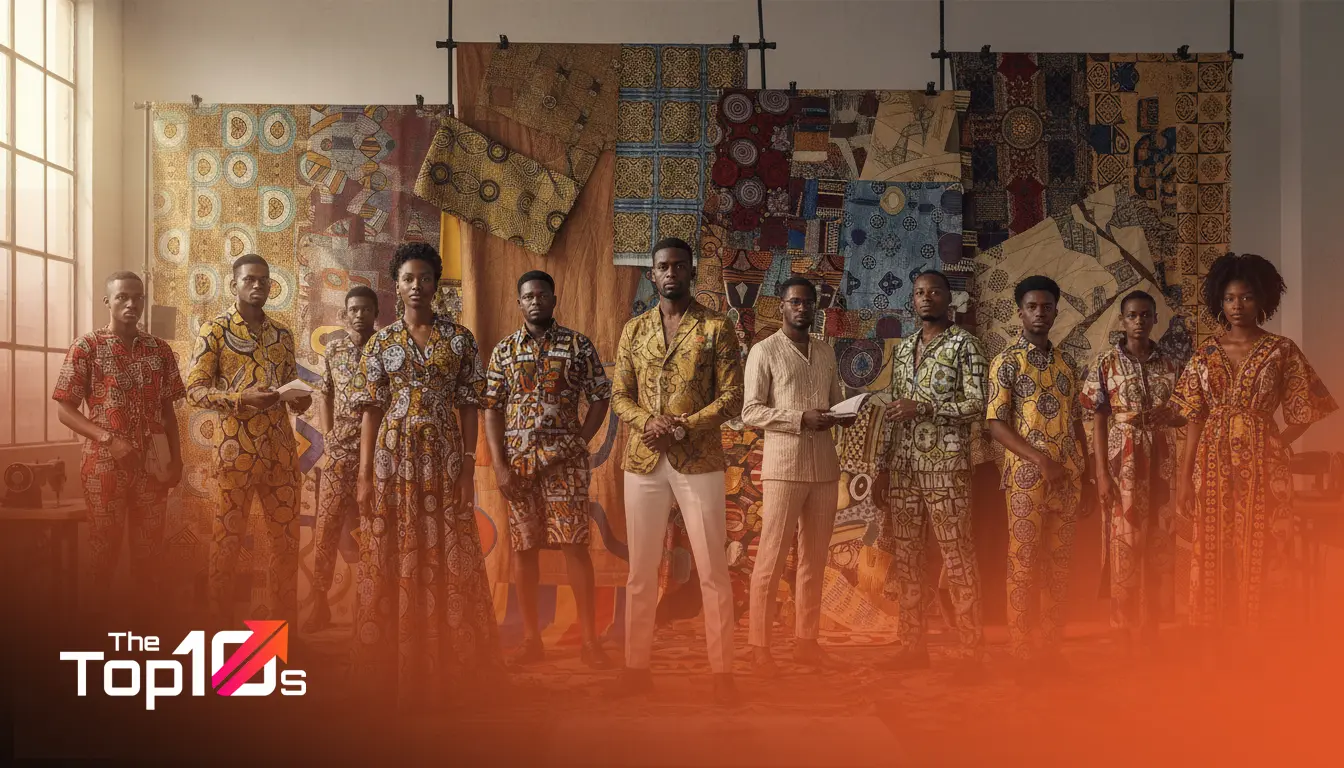
Cameroon often earns the nickname “Africa in miniature” because of its geographical diversity, but that title applies just as accurately to its style. From the intricate embroidery of the Northwest to the vibrant wax prints of the littoral regions, the aesthetic here isn’t singular—it’s a massive, colorful collision of cultures. If you are looking to understand the heartbeat of Central African style, you have to look at the people sketching the patterns and cutting the cloth.
Finding the right creative partner for your wardrobe isn’t just about who has the most Instagram followers. It’s about finding someone who understands fabric movement, respects cultural heritage, and possesses the technical skill to make a garment sit perfectly on your frame. Whether you need a bespoke suit for a boardroom meeting in Douala or a gown that turns heads in Yaoundé, the talent pool here runs deep.
We are going to walk through the designers who are defining the current fashion landscape in Cameroon. These aren’t just tailors; they are visionaries blending ancestral techniques with modern silhouettes.
Quick Takeaways
- Heritage meets Modernity: The top designers successfully blend traditional fabrics (like Toghu and Ndop) with contemporary cuts.
- Global Recognition: Many listed here have showcased in Paris, New York, and Lagos, proving their international viability.
- Diverse Specializations: The list ranges from high-end Haute Couture to accessible ready-to-wear and sharp menswear.
- Consultation is Key: The best results come from designers who prioritize client collaboration over rigid templates.
How We Identified Leading Fashion Designers
Selecting the top talent in a creative industry involves looking past the hype. Our criteria focused on substance over flash. We analyzed the consistency of their collections over the last five years. A great designer doesn’t just produce one hit dress; they deliver quality season after season.
We also looked at craftsmanship. In fashion, the inside of the garment matters as much as the outside. We considered peer reviews from within the Central African textile industry and feedback from clients regarding durability and fit. Finally, we evaluated their ability to innovate. We looked for creatives who are pushing boundaries with local materials rather than simply copying trends seen in European capitals.
List of 10 Best Fashion Designers in Cameroon
| SNO | Name | Best For |
|---|---|---|
| 1 | Imane Ayissi | Collectors and individuals looking for museum-worthy statement pieces. |
| 2 | Kibonen Nfi | The global traveler who wants to wear their heritage proudly but comfortably. |
| 3 | Anna Ngann Yonn (Kreyann) | High-powered executives and First Ladies. |
| 4 | Martial Tapolo | Red carpet events and galas where blending in is not an option. |
| 5 | Claude Kameni (Lavie by CK) | Bold brides and celebrities seeking viral fashion moments. |
| 6 | Louis Fame | Grooms and men who care about the details of a lapel. |
| 7 | Sarah Divine-Garba (Maison d’Afie) | Brunch dates, garden weddings, and vacation wardrobes. |
| 8 | Dio Ali | Artists, musicians, and the creative class. |
| 9 | Defustel Ndjoko | The man who believes shoes make the outfit. |
| 10 | Sasha Ngu (Sasha’s Collection) | Bridesmaids and party guests who need to look stunning on a deadline. |
Top 10 Fashion Designers in Cameroon
This list represents a mix of established legends and unstoppable rising forces. Each brings a distinct flavor to the table.
1. Imane Ayissi
You cannot discuss Cameroonian fashion without mentioning Imane Ayissi. Based in Paris but deeply rooted in his heritage, Ayissi holds the distinction of being the first designer from sub-Saharan Africa to join the official haute couture calendar. His work is more than clothing; it is art.
Specialization: Haute Couture, Sustainable Luxury
Experience: 20+ years
Why He Stands Out: Ayissi refuses to use standard wax prints, which he considers a colonial import. Instead, he utilizes indigenous African textiles like Kente, Manjak, and Obom (bark cloth). His ability to turn rigid bark into flowing, elegant drapery is a testament to his technical mastery.
Best For: Collectors and individuals looking for museum-worthy statement pieces.
2. Kibonen Nfi
Kibonen Nfi is the creative force behind the label Kibonen NY. She is widely credited with modernizing the “Toghu,” the traditional regalia of the Northwest region. Before her intervention, Toghu was largely reserved for traditional ceremonies; now, it appears on global red carpets.
Specialization: Ethical Fashion, Contemporary Ready-to-Wear
Experience: 12+ years
Why She Stands Out: Her strength lies in cultural translation. She takes heavy, intricate embroidery and reimagines it on lighter, wearable fabrics suitable for the modern office or evening events. Her commitment to fair trade production in Bamenda adds a layer of social responsibility to her brand.
Best For: The global traveler who wants to wear their heritage proudly but comfortably.
3. Anna Ngann Yonn (Kreyann)
Anna Ngann Yonn is the powerhouse behind the Kreyann fashion house. She represents the gold standard for Cameroonian luxury ready-to-wear. Her aesthetic is sophisticated, polished, and unapologetically feminine.
Specialization: Luxury Ready-to-Wear, Corporate Chic
Experience: 15+ years
Why She Stands Out: Kreyann cuts are impeccable. Anna understands the female form and structures her garments to enhance it without restricting movement. She often mixes rich velvets with lighter chiffons, creating textures that feel expensive to the touch.
Best For: High-powered executives and First Ladies (literally—she has dressed many).
4. Martial Tapolo
If fashion is architecture, Martial Tapolo is a master builder. Known for his dramatic flair, Tapolo’s work is often characterized by structural complexity and rich textures. He creates gowns that command attention the moment the wearer enters a room.
Specialization: Haute Couture, Evening Wear
Experience: 15+ years
Why He Stands Out: His use of leather, raffia, and lace in single garments is distinct. While many designers play it safe with fabric combinations, Tapolo takes risks that pay off. His finishing is notably rigorous, often rivaling European luxury houses.
Best For: Red carpet events and galas where blending in is not an option.
5. Claude Kameni (Lavie by CK)
Claude Kameni exploded onto the scene with a vibrancy that captured the American entertainment industry. Although she operates largely out of the US, her DNA is 100% Cameroonian. Her designs are loud, joyful, and mathematically precise in their print placement.
Specialization: Print-heavy Gowns, Bridal, Swimwear
Experience: 8+ years
Why She Stands Out: Pattern matching is difficult. Pattern matching on curved silhouettes is nearly impossible for amateurs, but Kameni makes it look easy. She creates hourglass shapes using the geometry of the fabric print itself.
Best For: Bold brides and celebrities seeking viral fashion moments.
6. Louis Fame
Louis Fame is a refreshing voice in a market that often focuses heavily on womenswear. He brings a sharp, dandy-esque aesthetic to men’s fashion in Cameroon. His work proves that men’s style goes far beyond the basic black suit.
Specialization: Bespoke Menswear, Androgynous Cuts
Experience: 10+ years
Why He Stands Out: His tailoring is razor-sharp. Fame creates jackets that fit close to the body without puckering. He isn’t afraid of color, often dressing men in pastels, rich maroons, and patterned trousers while maintaining masculine elegance.
Best For: Grooms and men who care about the details of a lapel.
7. Sarah Divine-Garba (Maison d’Afie)
Maison d’Afie, led by Sarah Divine-Garba, offers a softer, more romantic take on Cameroonian fashion. Her designs often feel breezy and effortless, masking the complex construction underneath.
Specialization: Neo-African Romanticism, Resort Wear
Experience: 9+ years
Why She Stands Out: Sarah excels at storytelling through clothes. Her collections often reference specific eras of African history but update them for 2024 and beyond. She uses breathable fabrics that make sense for the tropical climate.
Best For: Brunch dates, garden weddings, and vacation wardrobes.
8. Dio Ali
Dio Ali is the name to whisper if you want cool, understated elegance. His brand resonates with a younger, trend-conscious demographic that rejects stiff tradition in favor of fluidity and swag.
Specialization: Urban Luxe, Gender-Fluid Concepts
Experience: 7+ years
Why He Stands Out: Ali strips away the unnecessary. His designs are often monochromatic or dual-tone, relying on the cut rather than the print to make a statement. It is minimalism with an African soul.
Best For: Artists, musicians, and the creative class.
9. Defustel Ndjoko
Defustel operates at the intersection of Italian craftsmanship and Cameroonian flair. Based in Belgium but intensely active in Cameroon, he focuses on shoes and accessories that complement high-end tailoring. He embodies the philosophy of “Sapeurs.”
Specialization: Luxury Footwear, Accessories, Gentleman’s Lifestyle
Experience: 10+ years
Why He Stands Out: While not a clothing designer in the traditional sense of gowns, his influence on the “total look” of the Cameroonian man is undeniable. He collaborates with Italian artisans to produce quality that lasts decades.
Best For: The man who believes shoes make the outfit.
10. Sasha Ngu (Sasha’s Collection)
Sasha Ngu has carved out a massive niche in the commercial sector. She bridges the gap between high fashion and accessible trends. Her work is ubiquitous at Cameroonian weddings and parties.
Specialization: Bridal, Party Wear, Commercial Fashion
Experience: 6+ years
Why She Stands Out: Sasha listens to the market. She identifies what silhouettes are trending globally and interprets them with a local twist immediately. Her turnaround times and ability to scale production set her apart.
Best For: Bridesmaids and party guests who need to look stunning on a deadline.
What Defines a Great Fashion Designer in Cameroon?
Understanding the local fashion ecosystem helps you appreciate the skill involved. In Cameroon, a designer cannot simply sketch; they must be a master of logistics. Sourcing high-quality zippers, linings, and authentic fabrics can be a challenge. A great designer here is resourceful.
Furthermore, cultural intelligence is mandatory. The best designers understand the semiotics of cloth—knowing that wearing a specific Ndop pattern communicates authority, while certain wax prints signify marriage or mourning. Greatness is defined by the ability to respect these codes while preventing the fashion from looking like a costume. It is about balancing the weight of tradition with the lightness of modern living.
How to Choose the Right Fashion Designer for Your Needs
Picking a name from a list is easy, but getting the result you want requires a bit more strategy. Here is how to narrow down your choice.
Match the Aesthetic to the Occasion
Do not hire a minimalist like Dio Ali if you want a heavy, beaded traditional wedding gown. Look at the designer’s portfolio. If 90% of their work is structural suits, don’t ask them for a flowing chiffon dress. Play to their strengths.
Understand the Timeline
Custom fashion is not fast fashion. “Made in Cameroon” excellence takes time. Ask about lead times immediately. A complex beaded gown by Martial Tapolo might require months of work, whereas a ready-to-wear piece from Kreyann could be available immediately.
Discuss Sourcing Early
Ask the designer: “Do you provide the fabric, or do I?” Some designers, like Imane Ayissi, work exclusively with their own sourced textiles to maintain quality. Others are happy to work with a wax print you purchased, provided it meets their quality standards.
Frequently Asked Questions
How much does a custom dress cost from a top Cameroonian designer?
Prices vary wildly based on the name and complexity. A ready-to-wear piece might start around 50,000 to 100,000 XAF ($80-$160), while bespoke couture from a name like Martial Tapolo or Imane Ayissi can run into the millions of XAF (thousands of dollars). Always discuss budget upfront.
Do these designers ship internationally?
Yes, most of the designers listed, particularly Kibonen NY, Lavie by CK, and Kreyann, have established logistics for international shipping. However, shipping costs from Central Africa can be significant, so factor that into your total budget.
Can I order online or do I need to visit the atelier?
While many have websites or active Instagram pages for ordering, bridal and high-end bespoke wear usually require at least one physical fitting. If you are abroad, some designers are skilled at working with measurements sent digitally, but this carries a risk regarding fit.
Is Cameroonian fashion sustainable?
Generally, yes. The “slow fashion” nature of the industry in Cameroon means garments are made to order or in small batches, reducing waste. Designers like Imane Ayissi and Kibonen specifically champion ethical production and eco-friendly materials.
What is the most popular fabric used by these designers?
While Ankara (wax print) is common, top-tier designers are increasingly using Toghu (velvet with embroidery), Ndop (blue and white cotton), and raffia to distinguish their luxury offerings from mass-market clothing.
Conclusion
The fashion scene in Cameroon is vibrant, professional, and increasingly influential on the world stage. Whether you are drawn to the architectural drama of Tapolo or the ethical storytelling of Kibonen, there is a creative mind here that matches your personal style.
Don’t just admire these works from a distance. Engage with the brands, ask questions about their process, and invest in a piece that tells a story. Wearing a garment from one of these designers isn’t just about looking good; it’s about wearing a piece of contemporary African history. Take a look at their portfolios, check their current availability, and start the conversation about your next signature look today.